Books by Thomas Waller
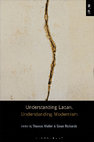
Bloomsbury, 2025
A notorious presence in French intellectual circles throughout the 20th century, Lacan was person... more A notorious presence in French intellectual circles throughout the 20th century, Lacan was personal friends with modernists such as André Breton and Salvador Dalí, and in 1923 was present at the legendary reading of Ulysses at the Shakespeare and Company bookshop by James Joyce, to whom Lacan would devote a year of his seminar in 1975-76. Lacan also contributed to several Surrealist publications, including the famous magazine Minotaure, the inaugural edition of which featured special mention of Lacan's early work on psychosis. However, despite his affinity with early 20th-century modernism, Lacan's name is still more routinely associated with the category of so-called "postmodernism," thus rendering the question of style and periodization somewhat out of focus.
Understanding Lacan, Understanding Modernism asks and responds to a series of questions, including: Is Lacan a modernist or a postmodernist, and what is the difference? How significant was the influence of modernist literature and art on the development of Lacan's ideas? How does our understanding of modernism change when viewed through a Lacanian lens?
The final section identifies key Lacaninan concepts, offering context and a discussion of their usage and relevance in current thought.
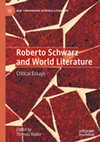
Palgrave Macmillan, 2024
First of its kind, this essay collection examines the intellectual trajectory of Latin America’s ... more First of its kind, this essay collection examines the intellectual trajectory of Latin America’s foremost literary critic and dialectician, underscoring its relevance for contemporary debates on world literature. The volume shows how Schwarz’s concrete analyses of Brazilian literature and culture offer a theoretical blueprint to understand the literary registration of capitalism’s combined and uneven development. Exploring concepts such as misplaced ideas, objective form, and volubility, the contributors show how the nuance of Schwarz’s interpretive practice can be productively remodelled into a program for world-literary studies. Throughout the volume, Schwarz’s unparalleled contributions to cultural theory, long neglected in the Anglophone academy, are rigorously and creatively debated. Roberto Schwarz and World Literature is a primer on literary criticism as concrete practice and an indispensable book for those interested in how literary form mediates social reality.
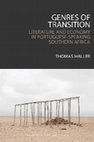
Liverpool University Press, 2024
This book argues that literary production in Portuguese-speaking southern Africa has developed di... more This book argues that literary production in Portuguese-speaking southern Africa has developed distinctive aesthetic idioms that critically respond to crises of global capitalism and related failures of post-colonial governance. Drawing from recent research at the intersection of world-systems analysis and materialist theories of world literature, it identifies and evaluates two generic trends in the post-independence literatures of Mozambique and Angola. From the mid-1980s to the early 1990s, there is a marked tendency in Mozambican literary production towards fictional representations of ghosts, spectral effects and gothic narrative techniques. In Angola, there is an analogous outburst of literary expression from the mid-1990s onwards, in which writers increasingly turn towards dystopian images of apocalypse, ecological crisis, and the disintegration of existing modes of social reproduction. Away from a restricted focus on the decline of the post-independence Marxist-Leninist state, the book contends that the upswing in these two genres of writing functions to critically register a world-systemic horizon that both surpasses and includes locally determined, national realities. The patterned repetition of spectral and dystopian forms in Portuguese-speaking southern Africa occurred at a time of heightened capitalisation, in which the region was subjected to newly expropriative forms of accumulation and ecological enclosure via integration into a reconstellated world-system headed by neoliberal finance capital.
Through close readings of texts by authors such as Mia Couto, Suleiman Cassamo, Ungulani Ba Ka Khosa, Pepetela, and Ondjaki, this book asks: What factors drove literary production towards the figure of the spectre in Mozambique and towards dystopia in Angola? What emerging energies and social contradictions found shape in these generic idioms in ways that existing vocabularies were unable to express? What does the geo-temporal passage from spectrality to dystopia tell us about the history of capitalist development in southern Africa, and about the restructuring of political-economic parameters across the globe?
Articles by Thomas Waller
Journal of Modern Literature, 2024
This article reads Mário de Sá-Carneiro’s 1913 novella A Confissão de Lúcio [Lúcio’s Confession] ... more This article reads Mário de Sá-Carneiro’s 1913 novella A Confissão de Lúcio [Lúcio’s Confession] alongside Lacan’s seemingly dissenting claim that “censorship is not resistance.” A close friend and collaborator of Fernando Pessoa, Sá-Carneiro was a key figure in the “Grupo de Orpheu” that was responsible for the introduction and development of modernism in Portuguese literature and art. A Confissão de Lúcio, Sá-Carneiro’s most famous work, is a first-person confessional narrative that tells the story of a sexual liaison between the eponymous protagonist and his friend Ricardo de Loureiro. Yet, although this liaison is the crux of the novella, it is at the same time banished from the letter of the text, which rather narrates Lúcio’s affair with Ricardo’s wife, Marta, who acts as a mediatory figure for the homosexual desire between the two men. Following Lacan’s argument that censorship is not a form of resistance to desire but rather part of its very expression, I ask: how might the doubts, hesitations, and aporia in Sá-Carneiro’s novella be read as articulations of the text’s repressed and unconscious truth?
Journal of Postcolonial Writing, 2024
Through a comparative reading of Tade Thompson’s Rosewater and Namwali Serpell’s The Old Drift, t... more Through a comparative reading of Tade Thompson’s Rosewater and Namwali Serpell’s The Old Drift, this article highlights an emergent trend in African fiction whereby writers have combined speculative aesthetic forms with a new geopolitical awareness of Africa’s changing position in the capitalist world-system. Highlighting plotlines in which Africa becomes the centre of global events, it traces a parallel movement between the emergence of a foreseeable end to USA hegemony and the liberation of speculative energies in post-2008 African fiction. The speculative texts of Thompson and Serpell encode this ambivalent futurity at the level of aesthetic form through the use of fictional strategies such as generic discontinuity and cyclical time. By capturing the reiterative cadence of capitalist history and envisioning a possible relocation of power to a new world-systemic core, these texts aesthetically register the terminal crisis of late neo-liberalism as a bifurcated moment of possibility and uncertainty.
Paragraph, 2024
Joint Winner of the Paragraph 2023-24 Best Article Prize.
Abstract: This article rereads the a... more Joint Winner of the Paragraph 2023-24 Best Article Prize.
Abstract: This article rereads the aporia in Freud's theory of mourning as a problem for representation and aesthetics. Drawing a parallel with Kant's account of the disinterested nature of aesthetic judgement, I argue that the mourner's stubborn willingness to persist in the reproduction of images of the lost object, in spite of their conscious knowledge of the irreversibility of the loss, wrests a minimal zone of autonomy from the sphere of practical interests. In dialogue with Adorno and Laplanche, I conclude by arguing that Freud's inability to adequately explain the problem of mourning is less a shortcoming of his theory of libidinal economy than it is proof of the enigmaticalness of mourning itself.
Qui Parle, 2023
This article critically compares two recent approaches to the problem of aesthetic autonomy: Dave... more This article critically compares two recent approaches to the problem of aesthetic autonomy: Dave Beech’s Art and Value and Nicholas Brown’s Autonomy. By recentering the differences between these critics’ works around Marx’s categories of subsumption, it evaluates the fraught relationship between labor and aesthetics, economy and form, art and the market. Although Beech provides a persuasive account of art’s “economic exceptionalism,” his focus on the qualitative irreducibility of artistic labor risks losing sight of what is socially unique about aesthetic production. Likewise, and inversely, while Brown’s original account of art’s internal overcoming of the commodity-form provides a generative way to rethink aesthetics in modernism’s wake, it rests on a periodizing claim for the total domination of the capitalist market that equivocates on whether artistic labor can truly be “really subsumed” under capital. The article concludes by pondering the political dimension to these theories of autonomy, which mirror in important ways debates within communization circles over subsumption, programmatism, and the aesthetics of revolution.
Portuguese Studies, 2023
This article reflects on the function of desire in the Livro do Desassossego with reference to La... more This article reflects on the function of desire in the Livro do Desassossego with reference to Lacan’s nuanced reinterpretation of Kantian ethics. Over the course of Pessoa’s posthumous magnum opus, Bernardo Soares, the book’s semi-heteronymic protagonist, often expresses his desire to escape from his hometown Lisbon and exchange the mundanity of his daily existence for spiritual and intellectual fulfilment. However, whenever Soares attempts to embark on this escape by way of dreams and the imagination, he is pervaded by an encroaching sense of attachment to the very mundanity of which he would like to free himself. These antagonistic yet mutually reinforcing desires — to stay in the city in which he loves, to escape to somewhere faraway and exotic — result in a condition of disquiet as liberating as it is paralysingly melancholic. Yet, neither does Soares 'céder sur' or 'give up on' his desire, but rather persists in the exploration of his fantasies in the same breath as he acknowledges their constitutive unrealizability. Departing from Lacan’s famous dictum that ‘the only thing of which one can be guilty is of having given up on one’s desire’, I argue that Soares’s committed pursuit of oneiric escape marks him out as an ethical subject par excellence.
Rethinking Marxism, 2023
This essay explores the homology between Lacanian psychoanalysis and the critique of political ec... more This essay explores the homology between Lacanian psychoanalysis and the critique of political economy through an engagement with the work of Alfred Sohn-Rethel and the related tradition of the neue Marx-Lekture (New Reading of Marx, or NML). Without claiming an easy compatibility between the Marxian and Lacanian fields, the article establishes a dialogue founded on difference and oversight. While the unconscious figures centrally in Sohn-Rethel's account of the non-knowledge or "practical solipsism" of the subject under capitalism, critics have yet to bring a Lacanian perspective to bear on the unconscious dimension of commodity exchange. Likewise, although Lacan's early formalization of the knotting of the Imaginary and the Symbolic offers a nuanced account of the structural impersonality of the social order, its relevance for the NML theorization of the autonomization of value relations has hitherto been overlooked. Reading Lacan "with" the NML, this essay redresses these oversights through a discussion of Slavoj Žižek's interpretation of the problem of form and method in Marx and Freud, and of Michael Heinrich's exegesis of the exchange process as developed in the first volume of Capital.
Research in African Literatures, 2022
This article reads the turn toward the fantastic and the supernatural in post-independence Angola... more This article reads the turn toward the fantastic and the supernatural in post-independence Angolan literature as a critical registration of the trajectory of neoliberal politics in the country. After positing a homology between the corruption of “ideal-type” realism in 1960s Latin America and similar experiments in post-independence Angola, I argue that the fiction of Ndalu de Almeida (Ondjaki) should be understood as a continuation of the social commitment of earlier Angolan writers, as it deploys a set of non realist aesthetic devices in order to challenge the entrenchment of political orthodoxies in the post-socialist Angolan state. To this end, I offer a reading of Ondjaki’s 2012 novel Os Transparentes, which marks a rupture in the author’s own intellectual development while also dovetailing with the recent wave of anti-governmental protests in Angola. Although the central fantastical motif of the novel — a man who is in the process of becoming transparent — has been read by critics as a critique of social inequality and kleptocratic governance, I suggest that it should rather be understood as an ambivalent registration of the encroaching feelings of disillusionment precipitated by the onset of Angola’s neoliberal era. With reference to Jacques Lacan’s concept of “the act,” I read this ambivalence as a specifically ethical dilemma and draw attention to problems of communication and narrative in radical political movements.
CLCWeb: Comparative Literature and Culture, 2022
This article offers a comparative reading of literary responses to neoliberalization in Portugues... more This article offers a comparative reading of literary responses to neoliberalization in Portuguese-speaking southern Africa. Reading the proliferation of spectral effects in the Mozambican literature of the late 1980s alongside dystopian depictions of societal collapse in contemporary Angolan fiction, its suggests that writers in the two states have used distinctive aesthetic idioms to register the reintegration of southern Africa into the neoliberal world-system. In the fiction of Mozambican writers Aldino Muianga and Aníbal Aleluia, I show how the legacy of colonial underdevelopment and its role in the transition to neoliberalism in Mozambique is figured at the level of form through spectral and broadly gothic aesthetic strategies that intimate the rise in class tensions attendant on the establishment of a new national bourgeoisie. In Angola, similarly, I read speculative novels by Pepetela and José Eduardo Agualusa as literary responses to the ecological fallout of the heightening of capitalist extractivism that has accompanied the transition from Afro-Marxism to free market capitalism in postindependence Angola. In this way, the article shows the extent to which literary production in Mozambique and Angola has been used in an attempt to register and critique the trajectory of neoliberal politics in southern Africa and its systemic relation with the restructuring of political economic parameters across the globe.
Modern Fiction Studies, 2022
Although the work of Mozambican authors has routinely been overlooked within the Anglophone acade... more Although the work of Mozambican authors has routinely been overlooked within the Anglophone academy, due in part to its use of a semiperipheral colonial language and a lack of availability in translation, the study of Mozambican texts from the period of the “long” 1980s can nevertheless offer valuable insight into both the literary coordinates of neoliberal world-culture as well as the more general strategies used by peripheral writers to mediate moments of economic transition. This article seeks to remedy this disconnect through a series of comparative readings of texts by Mia Couto, Suleiman Cassamo, and Ungulani Ba Ka Khosa.
Critique, 2021
This essay brings Jacques Derrida's Spectres of Marx (1993) into critical dialogue with the Germa... more This essay brings Jacques Derrida's Spectres of Marx (1993) into critical dialogue with the German-language school of Marxist theory known as Wertkritik. Through an engagement with value-critics such as Robert Kurz and Norbert Trenkle, as well as with figures associated with the neue-Marx Lektüre such as Moishe Postone and Alfred Sohn-Rethel, the essay makes four interrelated arguments: (1) that Derrida privileges the 'exoteric' over the 'esoteric' Marx through a lack of engagement with Marx's categorical critique of bourgeois political economy; (2) that Derrida projects aspects of Marx's early work into his reading of Capital in a way that sets up Marx as a straw dog against which Derrida launches his familiar critique of Western metaphysics; (3) that Derrida trans-historicises the category of labour and shares fundamental assumptions with the same traditional Marxism he sets out to critique; (4) that Derrida misrepresents the categories of use-value and exchange-value, to which he ascribes a teleological process when no such relationship exists. In this way, the essay seeks to contribute to the development of a concept of spectrality as an immanent characteristic of the value-form under capitalism.
Textual Practice, 2021
This paper proposes a reading of João Paulo Borges Coelho's novel Campo de Trânsito (2007) as a l... more This paper proposes a reading of João Paulo Borges Coelho's novel Campo de Trânsito (2007) as a literary response to the neoliberal financialisation of oil. Exploring the correspondence between dematerialised forms of capital and the abstraction of narrative modes, I argue that materialist motifs of petroleum extraction and workers' resistance in Borges Coelho's text register the 'porosity' of Mozambique's extractives sector, which in recent years has seen an influx of foreign investment after the discovery of globally significant quantities of oil and natural gas. Following the recent move to rethink world literature through the prism of petro-modernity (WReC 2015; Szeman 2017; Macdonald 2017), this investigation invites new angles of literary comparison for which oil would function as a necessary representational logic beyond its particular figuration as a plot-driver at the level of content.
Humanities, 2020
Putting Blue Humanities scholarship in critical dialogue with recent research on the 'cultural fi... more Putting Blue Humanities scholarship in critical dialogue with recent research on the 'cultural fix' and 'fixed labour-power' (Shapiro 2014, 2020), this article offers a comparative reading of two Portuguese-language novels in which the figure of the female water-spirit features as an index for two contrasting modes of knowing the ocean. In Jorge Amado's Mar Morto (1936), the water-spirit is registered as a passive and incomprehensible extra-human entity that looms over the poverty of the text's working-class community of dockworkers with an ominous and mysterious edge. By contrast, the water-spirit in Pepetela's novel O Desejo de Kianda (1995) is angry, active and only too immediate, seeking revenge for the extractivist violence carried out in the name of neoliberalism. Activating a broadly hydro-materialist framework, I argue that these differing conceptions of the water-spirit carry with them very different socio-ecological implications, and directly intersect with contemporary debates over hydrological crisis, the privatisation of the oceans and the enclosure of the water commons.
African Identities, Jun 4, 2020
Critical realism has a long pedigree in Marxist literary criticism. Most fully developed as an ae... more Critical realism has a long pedigree in Marxist literary criticism. Most fully developed as an aesthetic theory by Georg Lukács, it was conceptually limited by a narrow understanding of realism and the suggestion that only realist art could be critical of social reality. In an attempt to revise the rigidity and dogmatism of Lukács' theory, Michael Löwy proposed the category of 'critical irrealism' which emphasised the fact that there were many non-realist works of art that contained powerful critiques of the social order. More recently, the Warwick Research Collective (WReC) has taken up Löwy's arguments to work out the implications of critical irrealism for world-systems analysis and Trotsky's theory of combined and uneven development. This paper seeks to critically evaluate the WReC's theorisation of critical irrealism through a reading of Angolan author Ondjaki's Os Transparetes (2012). Recently published in English translation as Transparent City (2018), Ondjaki's novel is centred around a protagonist that is in the process of becoming transparent. As the novel's most salient non-realist features become a means of launching a trenchant social critique against the institutionalised corruption and industrial malpractice of Angola's 'petroleum dictatorship', it seems as if the text corroborates the WReC's conception of irrealist aesthetics as the determinate formal register of (semi-)peripherality in the capitalist world-system. However, as a category with its conceptual foundations rooted in the tradition of western European literary realism and modernism, is the relevance of critical irrealism for African literatures inherently limited? Might not the persistence of oral traditions and non-European epistemologies within texts like Os Transparentes render irrealism obsolete as an analytical category for literatures produced under non-European social conditions? Opening with an intellectual history of the concept of critical irrealism, this paper argues that the reformulation of Marxist concepts in African contexts is a productive if not vexed theoretical exercise.
The Contemporary Journal, 2019
Since the signing of the Rome General Peace Accords in 1992, Mozambique has seen a proliferation ... more Since the signing of the Rome General Peace Accords in 1992, Mozambique has seen a proliferation of new artistic production and experimentation with new materials and techniques. This article explores the ways in which the incorporation of hitherto unused aesthetic vocabularies in Mozambican contemporary art has brought about a coexistence of artistic paradigms. Focusing on the work of Gemuce and Félix Mula, I argue that this coexistence comprises a coming together of cultural forms from different social contexts, indicating a process of 'translatability’ that tracks patterns of interference across the cultural cartography of global capital and postcolonial geopolitics.
Xanthos, 2019
This article critically evaluates the only extant English translation of José Luandino Vieira’s 1... more This article critically evaluates the only extant English translation of José Luandino Vieira’s 1964 short story collection Luuanda. I argue that the text presents three clear obstacles to translation: first, the revolutionary attitude that the text has come to symbolise is specific to the political climate of the source culture; second, its language is radically experimental; and third, the form of the text is subversive only with reference to the historico-political context of its country of origin. Through a close examination of Tamara L. Bender’s attempts at negotiating these obstacles for an Anglophone readership, I explore the ways in which cultural difference can be mediated and recreated through translative practices.
Chapters by Thomas Waller
The Cambridge Companion to World-Gothic Literature, 2026
This chapter reads images of capital’s bloodsucking thirst in works of Mozambican literature as a... more This chapter reads images of capital’s bloodsucking thirst in works of Mozambican literature as an aesthetic registration of the destructive impact of capitalist extractivism upon the life and land of southern Africa. Focusing on Noémia de Sousa’s poem ‘Magaíça’ (1950) and Orlando Mendes’s novel Portagem (1966), it argues that writers have turned to spectral motifs and gothic devices as a figural means of coming to terms with the historical legacy of migrant labour in the political economy of colonial Mozambique. This cross-border economic system subordinated the interests of the Portuguese settlers to the imperatives of capitalist accumulation in neighbouring South Africa, at the same time as it ensured the continuing immiseration of the colonised population. Mobilising an aesthetics of vampirism and spectrality, Mozambican texts have limned a world-gothic critique both of the local history of semi-proletarianisation in the country, and of the insertion of the region of southern Africa into the global circuits of (post-)colonial capitalism.
Reference: Waller, Thomas (2026), 'Vampiric Exhaustion and Extractive Form: The Mozambican Miner', in The Cambridge Companion to World-Gothic Literature, eds. Rebecca Duncan and Rebekah Cumpsty. Cambridge: Cambridge University Press, 2026, pp. 117-132.
Understanding Lacan, Understanding Modernism, 2025
Reference: Waller, Thomas (2025). 'Navel-Gazing: Mário de Sá-Carneiro and Confessional Desire', i... more Reference: Waller, Thomas (2025). 'Navel-Gazing: Mário de Sá-Carneiro and Confessional Desire', in Understanding Lacan, Understanding Modernism, eds. Thomas Waller and Sinan Richards. London: Bloomsbury, 2025, pp. 121-132.



Uploads
Books by Thomas Waller
Understanding Lacan, Understanding Modernism asks and responds to a series of questions, including: Is Lacan a modernist or a postmodernist, and what is the difference? How significant was the influence of modernist literature and art on the development of Lacan's ideas? How does our understanding of modernism change when viewed through a Lacanian lens?
The final section identifies key Lacaninan concepts, offering context and a discussion of their usage and relevance in current thought.
Through close readings of texts by authors such as Mia Couto, Suleiman Cassamo, Ungulani Ba Ka Khosa, Pepetela, and Ondjaki, this book asks: What factors drove literary production towards the figure of the spectre in Mozambique and towards dystopia in Angola? What emerging energies and social contradictions found shape in these generic idioms in ways that existing vocabularies were unable to express? What does the geo-temporal passage from spectrality to dystopia tell us about the history of capitalist development in southern Africa, and about the restructuring of political-economic parameters across the globe?
Articles by Thomas Waller
Abstract: This article rereads the aporia in Freud's theory of mourning as a problem for representation and aesthetics. Drawing a parallel with Kant's account of the disinterested nature of aesthetic judgement, I argue that the mourner's stubborn willingness to persist in the reproduction of images of the lost object, in spite of their conscious knowledge of the irreversibility of the loss, wrests a minimal zone of autonomy from the sphere of practical interests. In dialogue with Adorno and Laplanche, I conclude by arguing that Freud's inability to adequately explain the problem of mourning is less a shortcoming of his theory of libidinal economy than it is proof of the enigmaticalness of mourning itself.
Chapters by Thomas Waller
Reference: Waller, Thomas (2026), 'Vampiric Exhaustion and Extractive Form: The Mozambican Miner', in The Cambridge Companion to World-Gothic Literature, eds. Rebecca Duncan and Rebekah Cumpsty. Cambridge: Cambridge University Press, 2026, pp. 117-132.