Papers by Transottomanica: Eastern European-Ottoman-Persian Mobility Dynamics
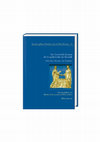
in: Cristiani orientali e Repubblica delle Lettere (XVI-XVIII sec.) / Chrétiens orientaux et République des Lettres (16e-18e s.) / Östliche Christen und die Gelehrtenrepublik (16.-18. Jh.). A cura di: Marcello Garzaniti, Vassa Kontouma, Vasilios N. Makrides, Firenze 2025, S. 50-87, 2025
Open Access Chapter:
https://media.fupress.com/files/pdf/24/15878/44268
Open Access the whole Book:
https://books.fupress.com/catalogue/cristiani-orientali-e-repubblica-delle-lettere-xvi-xviii-sec--chrtiens-orientaux-et-rpublique-des-le/14015
Beyond the Shadows of the Past? Crises in Macedonia in the Early 1900s and 2000s: Between Remembered Entanglement and Disconnection in a Transottoman Perspective, 2023
The contribution aims at explaining two phases of the discourses about the historical region of Macedonia as a paradigmatic European conflict region: The constitution of it as such at the beginning of the 20th century and its re-production or re-invention thereafter, particularly in the 2000s. The article addresses the medialisation of crises in both time frames and the interlinkage of the two phases by practices of remembrance. Even if the discourses of around 1900 are re-produced in the 21st century, this does not prove the longevity of one and the same conflict, as the settings today are to a large degree different from the 1900s. For the argument invented traditions are key, with a focus on saints such as Cyril and Methodius or Clement of Ohrid, as they have played a central role in the formulation of Bulgarian, Serbian and Macedonian interests in the historical landscape of Macedonia. Practices of remembrance and their roles in generating space and identity and in configuring the „Oriental“ and then the „Macedonian question”, in shaping their development around 1900 as well as in framing the memories connected to this time, and their roles during the crises after 1991 up to the complication of the situation by the escalation of Russian nationalist warfare against Ukraine and it’s national practices of memory will be sketched out.
Approaches to Polish-Lithuanian / Belarusian and Ukrainian History before 1800 in the Context of Local, Regional and Transregional Entanglements, in: Das historische Litauen als Perspektive für die Slavistik Verflochtene Narrative und Identitäten Herausgegeben von Monika Bednarczuk und Marion Rutz, 2022
In this short essay I explore the multilingual1 and multireligious character of the multi- national Polish-Lithuanian Commonwealth in the Early Modern period. This state was home not only to significant Catholic, Protestant, Orthodox and Jewish communities, but also to notable numbers of Armenians and Muslims. I set my study in the context of developments in historiography, which – in general works at least – has only recently turned its attention towards the abovementioned aspects of the the Early Modern Com- monwealth, even though they permeated all aspects of society. This applies, as I will show, on multiple scales, from individual cities4 through the regional level to the trans- regional. The primary focus of this study will be on the way historical research has ap- proached Poland-Lithuania, and in particular the Grand Duchy, and what imaginaries it has thus constructed. At the same time, or even more, this short piece is an outline of a prospective new approach drawing on a transregional and Transottoman perspective, influenced by the ongoing transnational turn in historiography. While historiography has played a key role in influencing current debates on memory cultures, I will only briefly touch upon those here.
This paper outlines some of the far-reaching, transregional connections that shaped Poland-Lithuania, thus pointing towards new research questions that recognition of this could inspire. Indeed, Poland and Lithuania, as well as the partitioned territories that joined the Russian Empire, should always be considered in both their local and trans- regional contexts,5 and thus in their interconnections with Rusʹ, Ruthenia, Muscovy and the Petersburg Empire, as well as with the northern Black Sea region, the Ottoman Empire and Persia.
Call for Papers: Conference Transottoman (Retro-)Perspectives, 2022
A conference to mark the conclusion of the Priority Program Transottomanica (DFG SPP 1981) and discuss new avenues of future research.
29 Feb–1 March 2024, Leipzig
At the end of 2023, the DFG Priority Program Transottomanica will draw to a close. We want to mark the end of the program with a conference that will reflect on Transottomanica’s outcomes and discuss new avenues of research.
In the past six years, Transottomanica conducted research on mobility dynamics and their spatial and societal consequences in all their dimensions between Eastern Europe and the Middle East from the early modern period to the twentieth century. We started from the observation that to date, social and (trans)cultural ties between Poland-Lithuania, Russia, the Ottoman Empire and Persia have not been the subject of systematic historical research. Therefore, the program focused on societal ties and communication practices in the context of a large transregional migration society, which emerged as a consequence of large scale mobility between these dominions. This approach promised to change our understanding of globalized European and Asian histories in a transcontinental context. Instead of constructing “one” new region, our “post-area studies” approach allowed us to look beyond the established area containers and focus on concrete contexts and fields of social interaction with different spatial and social ranges unified by the lens of mobility: Our focus was on reciprocal processes of migration, knowledge circulation, travel, trade and mobility of entire societies between Muscovy and then the Russian Empire, Poland-Lithuania, the Ottoman Empire and Persia, always including military dynamics. In the program’s publication series, we proposed a research perspective in an introductory volume (2019) and gathered preliminary results in three more volumes: Knowledge on the Move (2021), Transottoman Matters (2022), Transottoman Biographies (forthcoming 2023).
The conference will give opportunity to the working groups and research projects assembled in the program to discuss their results. Moreover, the event wants to open the horizon again and invite researchers with a similar approach to reflect on their relationship with Transottomanica. This can include a critical assessment of common concepts, a reflection on difficulties and avenues of future research that would productively enlarge and deepen the Transottoman approach.
Unfortunately, as our research developed, so did (not only) military entanglements between the Middle East and Eastern Europe, involving e.g. Syria, Iran, Russia, Turkey, Ukraine, Armenia and Azerbaijan: We are not least interested in discussing Transottoman, transregional perspectives on today’s shared history across the continents.
Having said this, we invite papers on
conceptually similar approaches such as Area Studies, Crossroads or Transregional Studies, Mobility or Migration Studies;
comparisons with/on the conceptual rivalries of partially related/overlapping (trans)epochal area studies concepts such as the Ottoman or Mediterranean World, Indian Ocean World, Eurasia, MENA or (South) Eastern Europe, Silk Roads, Caspian or Black Sea and Balkan Studies, Persianate, Islamicate, the Orthodox Commonwealth etc. seen from a meta, post-area studies, i.e. Transottoman, perspective;
hitherto less or unexplored topics in Transottoman settings from the past to the 21st century such as visuality, disease, climate, environment and animals, music, new materialism, assemblage, memory, post- and neo-imperial, post- and decolonial perspectives, imagined geopolitics, contemporary literary studies, etc.;
studies on long distance mobility dynamics or transregional shared history across and/or well beyond Transottomanica, e.g. connecting India with Europe, or Africa with Russia;
global histories of Transottoman localities, e.g. Polish, Ukrainian, Russian, Turkish, Iranian, Albanian, Greek, Armenian, Crimean Tatar Glocal history in and beyond Transottomanica etc.;
any conceptually instructive case study discussing Transottoman perspectives.
Please send a short proposal (abstract) and an academic CV by 15 April 2023 to: [email protected].
Adeligkeit, Fernhändler und Luxuswaren in transosmanischen Mobilitätsdynamiken vor 1800

Diyar. Journal of Ottoman, Turkish and Middle Eastern Studies, 2021
Transottomanica: Eastern European-Ottoman-Persian Mobility Dynamics 5
Hasmik Kirakosyan, Ani Sargsyan: On the Appropriation of Lexicographic Methods of Kemālpaşazāde’s (1468–1534) Glossary Daḳāyiḳu l-ḥaḳāyiḳ 14
Robert Born: The Ottoman Tributaries Transylvania, Wallachia, and Moldavia: Reflections on the Mobility of Objects and Networks of Actors 27
Taisiya Leber: The Early History of Printing in the Ottoman Empire through the Prism of Mobility 59
Veruschka Wagner: Mobile Actors, Mobile Slaves: Female Slaves from the Black Sea Region in Seventeenth-Century Istanbul 83
Dennis Dierks: Mediatising Violence and Renegotiating Commonality: Bosnian Muslim Press Reporting on the Italo-Turkish War (1911–1912) 105
https://www.nomos-elibrary.de/10.5771/2625-9842-2021-1-5/transottomanica-eastern-european-ottoman-persian-mobility-dynamics-jahrgang-2-2021-heft-1
Radovi : Radovi Zavoda za hrvatsku povijest Filozofskoga fakulteta Sveučilišta u Zagrebu, 2019
Recent research in historical migration studies has the potential to revise our under- standing of Early Modern societies and states. The research program Transottomanica focuses on the historical entanglement between the Middle East and Eastern Europe by examining migration processes from a transregional and transimperial perspective. In the Early Modern period, various types of migration, especially from and across inter-imperial buffer zones such as the northern Black Sea region, the Caucasus, and the Balkans, connected the Middle East and Eastern Europe. Merchants, refugees and slaves not only created an overarching migration society, especially in the cosmopolitan cities, for transregional migration was also visible in the self-description and identities of imperial elites. The effects of inter-imperial migration, which was ingrained in societal and identitarian structures, can be followed until the early 20th century.
DFG Call for Projects. Zweite Phase SPP Transottomanica 2020-2023, 2019
DFG Call for Projects. Zweite Phase SPP Transottomanica 2020-2023
Transottomanica Contents vol. 1, 2019
Transcontinental mobilities Borgolte Transottomanica , 2019
Stefan Rohdewald, Stephan Conermann, Albrecht Fuess
Transottomanica – Osteuropäisch-osmanisch-persische Mobilitätsdynamiken
Perspektiven und Forschungsstand
Introduction.Transottoman Mobility Dynamics, 2019
Einführung: Transosmanische Mobilitätsdynamiken. Mobilität als Linse für Akteure, Wissen und Objekte in
Stefan Rohdewald, Stephan Conermann, Albrecht Fuess
Transottomanica – Osteuropäisch-osmanisch-persische Mobilitätsdynamiken
Perspektiven und Forschungsstand
Mobilities/Migration in a Transottoman Society Rohdewald in Stefan Rohdewald, Stephan Conermann, Albrecht Fuess Transottomanica , 2019
Stefan Rohdewald, Stephan Conermann, Albrecht Fuess
Transottomanica – Osteuropäisch-osmanisch-persische Mobilitätsdynamiken
Perspektiven und Forschungsstand
Wissenszirkulation Neue Zugänge zur Geschichte des Wissens in Stefan Rohdewald, Stephan Conermann, Albrecht Fuess Transottomanica, 2019
Stefan Rohdewald, Stephan Conermann, Albrecht Fuess
Transottomanica – Osteuropäisch-osmanisch-persische Mobilitätsdynamiken
Perspektiven und Forschungsstand
Trade and Objects Albrecht.Fuess. , 2019
Stefan Rohdewald, Stephan Conermann, Albrecht Fuess
Transottomanica – Osteuropäisch-osmanisch-persische Mobilitätsdynamiken
Perspektiven und Forschungsstand
Transottoman Mobility Dynamics. Suraiya Faroqhi / Denise Klein / Markus Koller, 2019
Transosmanische Mobilitätsdynamiken: Akteure – Wissen – Waren
in
Stefan Rohdewald, Stephan Conermann, Albrecht Fuess
Transottomanica – Osteuropäisch-osmanisch-persische Mobilitätsdynamiken
Perspektiven und Forschungsstand
Polish-Ottoman Entanglements Hans-Jürgen Bömelburg Stefan Rohdewald in Stefan Rohdewald, Stephan Conermann, Albrecht Fuess Transottomanica – Osteuropäisch-osmanisch-persische Mobilitätsdynamiken Perspektiven und Forschungsstand, 2019
Hans-Jürgen Bömelburg Stefan Rohdewald
in
Stefan Rohdewald, Stephan Conermann, Albrecht Fuess
Transottomanica – Osteuropäisch-osmanisch-persische Mobilitätsdynamiken
Perspektiven und Forschungsstand
Russian-Ottoman Entanglements. Thomas Bohn. Christoph Witzenrath.Transottomanica. in Stefan Rohdewald, Stephan Conermann, Albrecht Fuess Transottomanica – Osteuropäisch-osmanisch-persische Mobilitätsdynamiken Perspektiven und Forschungsstand, 2019
Stefan Rohdewald, Stephan Conermann, Albrecht Fuess
Transottomanica – Osteuropäisch-osmanisch-persische Mobilitätsdynamiken
Perspektiven und Forschungsstand
Iranian Indian Ottoman Interactions. Christoph Werner in Stefan Rohdewald, Stephan Conermann, Albrecht Fuess Transottomanica – Osteuropäisch-osmanisch-persische Mobilitätsdynamiken Perspektiven und Forschungsstand, 2019
Stefan Rohdewald, Stephan Conermann, Albrecht Fuess
Transottomanica – Osteuropäisch-osmanisch-persische Mobilitätsdynamiken
Perspektiven und Forschungsstand
Ottoman Arabic Iranian Entanglements.Transottomanica. Albrecht Fuess. in: in Stefan Rohdewald, Stephan Conermann, Albrecht Fuess Transottomanica – Osteuropäisch-osmanisch-persische Mobilitätsdynamiken Perspektiven und Forschungsstand, 2019
Stefan Rohdewald, Stephan Conermann, Albrecht Fuess
Transottomanica – Osteuropäisch-osmanisch-persische Mobilitätsdynamiken
Perspektiven und Forschungsstand