Conference Presentations by Ufuk Serin
Türkiye Kentsel Morfoloji Araştırma Ağı, V. Kentsel Morfoloji Sempozyumu Bildiriler Kitabı, 2026
Trabzon’un merkez ilçesi Ortahisar’da yer alan tarihi yerleşim, Anadolu’nun en uzun süre kesintis... more Trabzon’un merkez ilçesi Ortahisar’da yer alan tarihi yerleşim, Anadolu’nun en uzun süre kesintisiz yerleşim gören alanlarından biridir. Surlar içinde ve dışında yer alan çok merkezli yerleşim yapısının Antik Çağ’dan itibaren varlığını sürdürdüğü düşünülmektedir. Kent, Bizans döneminde özellikle önem kazanmış, 1204 yılında kurulan Trabzon İmparatorluğu’na başkentlik yapmış ve bu statüsünü 1461’de Osmanlı topraklarına katılana kadar korumuştur. Trabzon İmparatorluğu döneminde, başkent olarak imparatorluk ritüelleri doğrultusunda yeniden kurgulanan kentte birçok anıtsal yapı inşa edilmiştir. Trabzon’un kentsel ve mimari mirası, Bizans, Latin, Kafkas ve Doğu kültürleri arasındaki etkileşimlerin izlerini taşır. Her ne kadar kentin Orta Çağ’a ait mirasının önemli bir bölümü günümüze ulaşamamış olsa da, bu dönemden kalan bazı önemli yapılar halen ayaktadır ve Trabzon’un kültür mirasının bel kemiğini oluşturur. 1916–1918 Rus işgali sırasında yaşanan tahribata rağmen, Trabzon Osmanlı ve Cumhuriyet dönemlerinde çok merkezli yapısını büyük ölçüde korumuştur. Ancak, 1960’lardan itibaren yapılan kıyı dolguları, tarihi dokuya aykırı inşaatlar ve bilinçli veya bilinçsiz olarak yapılan yıkımlar, hem kentin doğal peyzajını hem de tarihi dokusunu geri döndürülemez biçimde tahrip etmiştir. Bu çalışma, Trabzon’un Bizans dönemi mirasının korunması ve görünürlük kazanmasına katkı sağlamayı amaçlamaktadır. Bu bağlamda, kentin Orta Çağ’a ait kentsel dokusunu ve kültürel mirasını tanımlamak,
yorumlamak ve güncel durumu belgelemek hedeflenmektedir.
Trebizond (modern Trabzon) is one of the longest continuously inhabited cities on the Black Sea c... more Trebizond (modern Trabzon) is one of the longest continuously inhabited cities on the Black Sea coast of Türkiye, with origins dating back to at least the Hellenistic period. It is also one of the few cities that seamlessly transitioned from its Classical past through the ‘Dark Ages’ (7th-9th centuries) into modern times without major settlement interruption.
Unlike many other Byzantine cities that retreated to hilltop fortresses during the transition from Late Antiquity into the Early Middle Ages, Trebizond remained a prominent coastal stronghold. Although little archaeological evidence exists for the period before the 9th century, recent rescue excavations have revealed significant topographical transformations from Antiquity through the Middle Ages. Trebizond was a wealthy, fortified city until it was largely destroyed by barbarian tribes in the 3rd century. Literary evidence suggests that the city struggled to recover until the 6th century when comprehensive restoration work of public buildings took place under Justinian (527-565). In the post-Classical period, the city’s dispersed character was remarkably preserved. Some pre-Medieval structures and open spaces, such as the Meydan, possibly associated with the site of the Classical and Medieval agora were preserved, modified, or repurposed. Moreover, the present research hypothetically identifies two main urban axes: one connecting the ancient port and the other linking the walled city to the agora, rather than the single axis previously suggested (modern Kahramanmaraş Caddesi).
Based on architectural/archaeological, and literary evidence, and applying the methodology proposed by Charalambos Bouras (2002) for studying medieval Byzantine cities, this research uses GIS-based mapping and analysis to trace the urban evolution of Trabzon from the Late Roman period through the Byzantine Middle Ages. An examination of the city's lost and surviving medieval structures will provide insights into Trebizond’s Late Roman and Early Byzantine layout (3rd-7th centuries) and the multi-layered nature of its resilient urban heritage.
Interpret Europe Conference Proceedings, 2019
Even though the Ottoman Empire’s multicultural government policies were somewhat discriminatory, ... more Even though the Ottoman Empire’s multicultural government policies were somewhat discriminatory, the autonomic structure allowed diversification. The collapse of the Ottoman Empire and the establishment of the Turkish Republic corresponded to the rise of the nationalist ideology. With the consequences of the Lausanne Treaty and the Republic identifying itself as a nation-state, minorities living in Turkey were started to be seen as ‘subsidiary elements’ added to the state through a treaty. The governmental policies regarding minorities have thus affected the production and conservation of architectural heritage of these groups. This presentation will evaluate the ways in which the ‘national heritage’ is challenged by multicultural heritage through the example of Mardin, with its multicultural attributes conserved since the early years of the Ottoman Empire.
Istanbul Studies'17 Byzantion-Constantinople-Istanbul
The present paper is part of a larger, comprehensive (doctoral) research project entitled " An 'E... more The present paper is part of a larger, comprehensive (doctoral) research project entitled " An 'Excluded' Past between the Roman and Ottoman: The Reassessment, Valorization and Representation of Byzantine Cultural Heritage in Turkey ". This research intends to investigate numerous factors affecting understanding of Byzantium and the protection of its heritage in Turkey through selected examples of urban, rural and archaeological sites. In this context, Constantinople/Istanbul, as a metropolitan centre and the Capital of the Byzantine Empire, deserves particular attention. In the whole history of Istanbul, the Byzantine period stands out as one of the most significant episodes, but can also be seen as an 'excluded', or neglected, phase of the city, as elsewhere in urban Anatolia. This long period produced a variety of significant urban structures associated with cultural, architectural and economic developments in the city. For example, Early Christian Constantinople was very different from the city of the medieval period in terms of building types, topography and demographic structure. There is no doubt that both Medieval Constantinople and its Late or Post-Byzantine phases had their own very specific dynamics. Today, it is difficult to easily distinguish, identify and understand the cultural heritage legacy left by Byzantine Constantinople due to a variety of factors, including a lack of historical and cultural awareness and the absence of an appropriate representation and valorization policy regarding the heritage of this period. Thus, an analysis of the city's history, the changes in its topography and architectural characteristics is crucial for promoting a better understanding and interpretation of Byzantine Constantinople and its legacy. There is no doubt that a better representation of Byzantine Constantinople is equally and vitally important to keep the link between the past and the present – that is, a legacy from a rich and vastly influential period of the city's past and an implicit part of its present consciousness. The Byzantine Empire ruled Anatolia more than ten centuries and left the imprint of its influence across a wide geographical area, particularly Anatolia. In this context, Constantinople, as the Capital of the Byzantine Empire and a vital religious and cultural historical hub still housing masterpieces of Byzantine art and architectural history, deserves
Papers by Ufuk Serin
Towards an Archaeology of Devastation: Breaking/Replacing the People-Place Connection in Landscape, 2026
The settlement of Santa emerges as an outstanding example of Pontic rural heritage of the Eastern... more The settlement of Santa emerges as an outstanding example of Pontic rural heritage of the Eastern Black Sea region. Following the compulsory Population Exchange between Türkiye and Greece after the Lausanne Treaty in 1923, Santa, like numerous other such settlements, underwent a significant transformation affecting both its physical and socio-cultural fabric. With the rural depopulation in the aftermath of this compulsory exchange, most buildings, once occupied by an Orthodox Greek community (in Turkish Rum), were abandoned and gradually ruined. Although the site was resettled by a limited number of Turks, it is mainly used as a highland settlement in summer. From its current physical appearance, the site was named ‘Santa Ruins’ (Santa Harabeleri) and incongruously designated as a ‘third-grade archaeological site’ in 1999. Since then, the seasonal inhabitants literally live amongst the ‘ruins’.
Based on archival research conducted in state institutions and field surveys, this contribution explores the processes of rural depopulation and abandonment, transformation and resettlement at Santa after the Population Exchange. How did such events of dislocation and resettlement affect the local identity and ‘people-place connection’? How are these landscapes integrated within the cultural memory of the emigrant Rum population, and, equally, how are they perceived and exploited by the new settlers? This paper also argues that the rural settlement, currently referred to as the ‘Santa Ruins’, needs to be re-identified, considering its past and present attributes, as a ‘continuing cultural landscape’ (ICOMOS 2017): a settlement where traditional methods of life are merged with modern demands and where evolution continues via the existence of a local community, albeit seasonal.
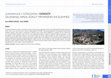
Bu çalışmada Türkiye'nin özgün, ancak nüfusunu hızla yitirmekte olan kırsal peyzajlarından biri o... more Bu çalışmada Türkiye'nin özgün, ancak nüfusunu hızla yitirmekte olan kırsal peyzajlarından biri olan Gökçeada'daki Dereköy yerleşiminin mimari mirası ve bu mirasın korunma sorunsalı irdelenmektedir. 2019-2021 arasında gerçekleştirilen arazi çalışmalarında konutların mekânsal nitelikleri, yapım teknik ve malzemeleri incelenerek köyün mimari dokusu belgelenmiş ve giderek yok olan kültürel peyzaj unsurlarına dikkat çekilmiştir. Sözlü tarih ve arşiv çalışmasıyla desteklenen araştırma, yerleşimin toplumsal geçmişini ve tarihsel bağlamını ortaya koymaktadır. Kentsel sit alanı olarak tescillenmiş olmasına rağmen Dereköy için hâlen onaylanmış bir koruma amaçlı imar planının bulunmaması, yerleşimin korunmasını zorlaştırmakta ve yapı ölçeğinde, tarihi çevreyle uyumsuz müdahalelere yol açmaktadır. Dereköy'ün geçirdiği demografik değişimler, mülkiyet sorunları ve turizm baskısı bu süreci derinleştirmektedir. Öte yandan Dereköy'ün büyük ölçüde terk edilmiş olması yapıların bir kısmının hızla yok olmasına neden olmaktadır. Bu kırsal mirasın tamamen kaybedilmemesi için acil önlemler alınması gerekmektedir.

Bu çalışmanın amacı, kırsal mimarlık mirası kapsamında, Santa Harabeleri'nin yerleşim ve geleneks... more Bu çalışmanın amacı, kırsal mimarlık mirası kapsamında, Santa Harabeleri'nin yerleşim ve geleneksel mimari dokusunun belgelenmesidir. Santa'nın oldukça geniş bir alana yayılması sebebiyle, çalışma alanı olarak, benzer yerleşim ve mimari özellikler taşıyan yedi mahalle arasından mimari çeşitlilik ve nitelik açısından öne çıkan Piştoflu Mahallesi seçilmiştir. Belgeleme çalışmaları, 2019-2023 yılları arasında yürütülen An Assessment and Re-Identification of the Rural Heritage Site of Santa (Dumanlı Köy, Gümüşhane) başlıklı Yüksek Lisans Tezi kapsamında yazarlar tarafından yapılan araştırma ve arazi çalışmalarını kapsamaktadır. Buna ek olarak, 'Türkiye'nin Kırsal Mimarlık Atlası Projesi' kapsamında, Nisan 2025'te bir arazi çalışması daha gerçekleştirilmiştir. Santa Harabeleri, Doğu Karadeniz Bölgesi'nde, Gümüşhane ili Dumanlı köyü sınırlarında yer almaktadır (Şekil 1). Santa, doğuda 2650 m yükseklikteki Ziyaret ve batıda 2550 m yükseklikteki Karakaban sıradağlarının arasında kalan derin ve dar Yanbolu Vadisi'nin üç farklı yamacında kurulmuştur (Bryer vd., 2002, s.108). Yerleşimin günümüze ulaşmasında, ulaşımı zorlayıcı topoğrafik konumu belirleyici rol oynamıştır. Santa 1400 ile 1800 metre arasında değişen rakımlarda konumlanmış yedi mahalle ve daha küçük yerleşimlerden oluşmaktadır. Zurnacılı Mahallesi, Yanbolu Vadisi'nin doğu yamacında yer alırken, diğer altı mahalle (Piştoflu, Çakallı, İşhanlı, Binatlı, Terzili ve Cinganlı) vadinin batısında bulunmaktadır. Santa'nın ne zaman kurulduğuna dair farklı görüşler bulun-
International Journal of Cultural Policy, 2024
Italy's long and stratified history offers abundant heritage resources, with Rome serving as a sh... more Italy's long and stratified history offers abundant heritage resources, with Rome serving as a showcase for the architectural embodiment of political and ideological changes over time. Among these periods, the Fascist regime under Benito Mussolini initiated extensive urban and architectural renewal projects, notably exemplified by the Foro Italico, a monumental sports complex that is still actively used. The present contribution retraces the elements constituting Fascist architectural heritage in Italy and explores how Italian people comprehend and interpret the dissonant heritage site of the Foro Italico. Departing from previous approaches, this research employs a conservation perspective, exploring, among others, architectural and socio-cultural values associated with the complex. By analysing the motives underlying its unceasing use, this study seeks to understand why citizens continue to create new experiences and memories at the site despite its contentious ideological symbolism, without undergoing modern damnatio memoriae or de-commemoration processes, thus contributing to ongoing debates on heritage management and the politics of memory.

Yıllık: Annual of Istanbul studies, Dec 30, 2023
While a number of fortifications have been attributed to the Genoese in Anatolia, the Walls of Ga... more While a number of fortifications have been attributed to the Genoese in Anatolia, the Walls of Galata are the only fortifications built entirely by them. Although the term "Genoese castle" is commonly used for most of these fortresses, even those without any trace of Genoese history, what is meant by "Genoese" architecture has not yet been fully identified or defined. This article investigates medieval building techniques and masonry traditions that the Genoese might have employed in their architectural practice. For this purpose, a comprehensive inventory of the surviving parts of the Walls of Galata to date has been created, and the building techniques of the surviving sections are investigated in detail. These techniques are analyzed through a comparison of other buildings in Galata and Genoa built by the Genoese and the Palaiologan buildings in Constantinople/Istanbul. Next, other "Genoese" fortresses in Anatolia and eastern Thrace and their building techniques and materials are similarly evaluated in the late Byzantine context. This research reveals that the Genoese essentially (re)used available building materials, adopting the building techniques and masonry traditions of the Palaiologan architecture in association with a collaboration with Byzantine masons. It concludes that the Genoese most likely introduced the use of pointed arches to Byzantine masons in Constantinople, and that the Walls of Galata are one of the earliest monuments in Istanbul where pointed arches were used.
The Byzantine ‘City’ in Asia Minor *
Routledge eBooks, Dec 21, 2023

Threats and vulnerabilities in archaeological sites. Case study: Iasos
This paper intends to analyze the factors threatening the preservation and maintenance of the arc... more This paper intends to analyze the factors threatening the preservation and maintenance of the archaeological site of Iasos and to develop proposals for the protection of the site and its monuments. Iasos is situated in Caria on the western coast of Asia Minor, and includes remnants of settlements from the Early Bronze Age to the Late Byzantine period. The peninsula, on which lies the ancient city, is designated as an ‘archaeological site to be protected’, but such a classification does not include the rest of the settlement area in the surroundings on the mainland. As a result, the present day village of Kiyikislacik occupies the area on the mainland, which was once occupied by a Hellenistic and Roman necropolis. There are many factors which severely threaten Iasos: problems related to private ownership of the land, difficulties of expropriation, environmental and human factors, increasing growth of the modern settlement on the archaeological site, growth of tourism, inadequate and inappropriate constructions and solutions of infrastructure, lack of local government’s interest and control on the area, lack of a management plan etc. The paper aims to identify and develop the appropriate administrative and management solutions to minimize the negative effects of these factors, and to be able to guarantee the protection of the archaeological heritage in a changing townscape, and to find out if and how a management plan can be applicable to Iasos. Its is worth noting that such negative factors are almost the same in a major part of the archaeological sites in Turkey.
and the individual. After outlining the scope and methodology of the volume in the introduction, ... more and the individual. After outlining the scope and methodology of the volume in the introduction, Scheid offers a very comprehensive presentation of the arguments presented by the adversaries of the polis-religion model in Chapter 1. The fallacy of the city-states' end with the coming of Rome is addressed in Chapter 2, whereas Chapter 3 discusses the place of the individual in the city-states. Chapter 4 fends off the position that civic religion was nothing but a discourse of the elite. In Chapter 5, Scheid supports the functionalist nature of the civic-religion model, which he further explores in relation to rituals in Chapter 6. Chapters 7 and 8 further demonstrate the civic nature of Roman religion by discussing occasions of impiety and oppression by the Roman political administration, as well as the different smaller scale religious activities that were also administered by a central power. Chapter 9 tackles the important issue of belief and emotion in Roman civic religion. Chapter 10 discusses the reasons for religious change in Rome-according to Scheid not based on the assumption of a different "religiosity" as the critics of the polis model maintain-whereas Chapter 11 summarizes his argumentation. Scheid's call to return to the sources is valuable and accurate considering the peculiarity of Roman religion; his erudition and ability to offer a clear and concise discussion makes the volume an indispensable source for anybody interested in Roman religion.
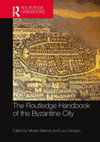
The Byzantine world contained many important cities throughout its empire. Although it was not 'u... more The Byzantine world contained many important cities throughout its empire. Although it was not 'urban' in the sense of the word today, its cities played a far more fundamental role than those of its European neighbors. This book, through a collection of twenty-four chapters, discusses aspects of, and different approaches to, Byzantine urbanism from the early to late Byzantine periods. It provides both a chronological and thematic perspective to the study of Byzantine cities, bringing together literary, documentary, and archival sources with archaeological results, material culture, art, and architecture, resulting in a rich synthesis of the variety of regional and sub-regional transformations of Byzantine urban landscapes. Organised into four sections, this book covers: Theory and Historiography, Geography and Economy, Architecture and the Built Environment, and Daily Life and Material Culture. It includes more specialised accounts that address the centripetal role of Constantinople and its broader influence across the empire. Such new perspectives help to challenge the historiographical balance between 'margins and metropolis,' and also to include geographical areas often regarded as peripheral, like the coastal urban centers of the Byzantine Mediterranean as well as cities on islands, such as Crete, Cyprus, and Sicily which have more recently yielded well-excavated and stratigraphically sound urban sites. The Routledge Handbook of the Byzantine City provides both an overview and detailed study of the Byzantine city to specialist scholars, students, and enthusiasts alike and, therefore, will appeal to all those interested in Byzantine urbanism and society, as well as those studying medieval society in general.

YILLIK. Annual of Istanbul Studies, 2023
While a number of fortifications have been attributed to the Genoese in Anatolia, the Walls of Ga... more While a number of fortifications have been attributed to the Genoese in Anatolia, the Walls of Galata are the only fortifications built entirely by them. Although the term "Genoese castle" is commonly used for most of these fortresses, even those without any trace of Genoese history, what is meant by "Genoese" architecture has not yet been fully identified or defined. This article investigates medieval building techniques and masonry traditions that the Genoese might have employed in their architectural practice. For this purpose, a comprehensive inventory of the surviving parts of the Walls of Galata to date has been created, and the building techniques of the surviving sections are investigated in detail. These techniques are analyzed through a comparison of other buildings in Galata and Genoa built by the Genoese and the Palaiologan buildings in Constantinople/Istanbul. Next, other "Genoese" fortresses in Anatolia and eastern Thrace and their building techniques and materials are similarly evaluated in the late Byzantine context. This research reveals that the Genoese essentially (re)used available building materials, adopting the building techniques and masonry traditions of the Palaiologan architecture in association with a collaboration with Byzantine masons. It concludes that the Genoese most likely introduced the use of pointed arches to Byzantine masons in Constantinople, and that the Walls of Galata are one of the earliest monuments in Istanbul where pointed arches were used.
Bizans’ta ‘Kent’ ve ‘Kırsal’: Arkeolojik Veriler Işığında Güllük (Mandalya) Körfezi
Art-Sanat
Dönemi kırsal yerleşimlerinin değişim ve dönüşümünü, başta yerel Iasos mermerinin işletimi ve ihr... more Dönemi kırsal yerleşimlerinin değişim ve dönüşümünü, başta yerel Iasos mermerinin işletimi ve ihracatı olmak üzere bölgesel geçim kaynakları ve kent ve kırsal (territorium) ilişkisi üzerinden incelemeyi ve değerlendirmeyi amaçlamaktadır. Mandalya Körfezi'ni çevreleyen ve Antik Dönem'de körfeze adını vermiş olan önemli kentsel yerleşimler arasında kuzeyde Iasos (Kıyıkışlacık) ve Kazıklı, güneyde ise Bargylia (Boğaziçi) bulunmaktadır. Bu bölgeyi merkez alan Mandalya Projesi'nden elde edilen arkeolojik veriler özellikle MÖ 6. yüzyıl ve MS 7. yüzyıl arasında yoğunlaşmakla birlikte, çok disiplinli araştırmalar burada kırsalın Geç Bronz Çağı'ndan 18. ve 19. yüzyıllara ve hatta günümüze kadar neredeyse kesintisiz olarak kullanıldığını doğrulamıştır. Bu çalışmada özellikle üstünde durulmak istenen konu, Bizans İmparatorluğu'nun başka bölgelerinde olduğu gibi, Anadolu'da da Pers ve Arap akınları başta olmak üzere, farklı faktörlerle ilişkili olarak arkeolojik verilerin azaldığı 7. ve 9. yüzyıllar arasında Mandalya Körfezi'ni çevreleyen kentler ve kırsalda yerleşim 'sürekliliği' olup olmadığıdır. Mimari ve arkeolojik nitelikli bulgular, Karia'nın bu kıyı bölgesinde yerleşim birimlerinin ve yaşamın 'kent' ve 'kırsal' arasında bir çizgide, zaman zaman kesintiye uğrayarak da olsa değişen ekonomik koşullara ve savunma gereksinimlerine uyum sağlamaya çalışarak, şekil ve nitelik değiştirerek devam ettiğini doğrular niteliktedir.
Reinterpretation, Valorization and Rehabilitation of Historic Urban Areas: The Byzantine Citadel of Ankara, in Modernization and Regionalism. Re-inventing the Urban Identity, II, eds. C. Wang, Q. Sheng, and C. Sezer, Delft: International Forum of Urbanism 2006, 956-963
Public participation in the integrated conservation of historic urban environment
Le chiese paleocristiane e bizantine di Iasos: considerazioni cronologiche e problemi relativi alla topografia cristiana



Uploads
Conference Presentations by Ufuk Serin
yorumlamak ve güncel durumu belgelemek hedeflenmektedir.
Unlike many other Byzantine cities that retreated to hilltop fortresses during the transition from Late Antiquity into the Early Middle Ages, Trebizond remained a prominent coastal stronghold. Although little archaeological evidence exists for the period before the 9th century, recent rescue excavations have revealed significant topographical transformations from Antiquity through the Middle Ages. Trebizond was a wealthy, fortified city until it was largely destroyed by barbarian tribes in the 3rd century. Literary evidence suggests that the city struggled to recover until the 6th century when comprehensive restoration work of public buildings took place under Justinian (527-565). In the post-Classical period, the city’s dispersed character was remarkably preserved. Some pre-Medieval structures and open spaces, such as the Meydan, possibly associated with the site of the Classical and Medieval agora were preserved, modified, or repurposed. Moreover, the present research hypothetically identifies two main urban axes: one connecting the ancient port and the other linking the walled city to the agora, rather than the single axis previously suggested (modern Kahramanmaraş Caddesi).
Based on architectural/archaeological, and literary evidence, and applying the methodology proposed by Charalambos Bouras (2002) for studying medieval Byzantine cities, this research uses GIS-based mapping and analysis to trace the urban evolution of Trabzon from the Late Roman period through the Byzantine Middle Ages. An examination of the city's lost and surviving medieval structures will provide insights into Trebizond’s Late Roman and Early Byzantine layout (3rd-7th centuries) and the multi-layered nature of its resilient urban heritage.
Papers by Ufuk Serin
Based on archival research conducted in state institutions and field surveys, this contribution explores the processes of rural depopulation and abandonment, transformation and resettlement at Santa after the Population Exchange. How did such events of dislocation and resettlement affect the local identity and ‘people-place connection’? How are these landscapes integrated within the cultural memory of the emigrant Rum population, and, equally, how are they perceived and exploited by the new settlers? This paper also argues that the rural settlement, currently referred to as the ‘Santa Ruins’, needs to be re-identified, considering its past and present attributes, as a ‘continuing cultural landscape’ (ICOMOS 2017): a settlement where traditional methods of life are merged with modern demands and where evolution continues via the existence of a local community, albeit seasonal.