Papers by Ulrich Hofmeister
Slavic Review, 2025
Since the beginning of Russia's war of aggression against Ukraine in 2014, a view that interprets... more Since the beginning of Russia's war of aggression against Ukraine in 2014, a view that interprets Russian-Ukrainian relations as colonialism has gained ground in historical scholarship. However, based on an analysis of the terms "colonization" and "colonialism" and a comparison between Ukrainian territories and the Governorate-General of Turkestan in late imperial Russia, this article argues for a more cautious use of the term "colonialism" in relation to Ukraine. It shows that contemporaries rarely viewed tsarist rule in Ukraine through the prism of colonialism, while in the case of Central Asia this perspective was pervasive. Moreover, tsarist policy toward Central Asia and its predominantly Muslim population was much more in line with colonial practices than it was in the case of Ukraine. While colonial rule is generally based on the institutionalization of difference, the opposite was the case in Ukraine: Ukraine was appropriated as part of the Russian nation. Therefore, this article argues that Russia's claims on Ukraine, which deny Ukraine's right to national self-determination and statehood, are not an indication of colonial subjugation, but rather of nationalist usurpation.
Urban History, 2025
Orenburg, a Russian border fortress on the Kazakh steppe founded in 1743, was the first city of t... more Orenburg, a Russian border fortress on the Kazakh steppe founded in 1743, was the first city of the Tsarist Empire that was provided with a full set of official street names. While toponymic designations in empires have often been investigated in the context of the struggle of competing national groups for visibility, the case of Orenburg provides an example of how toponymic designations served to claim a newly conquered region as an integral part of the empire. As Orenburg's street names were rarely in use in everyday life, this article argues moreover that both their orientation and representation functions were of little importance, and that their main purpose was to demonstrate the progressive governing techniques the administration had at its disposal.
The term “imperial city” so far has been used in several different and often contradicting meanin... more The term “imperial city” so far has been used in several different and often contradicting meanings and it still lacks a clear conceptualization. Notwithstanding the palpable significance of cities for all empires, there have been only a few attempts to shed light on the relationship between cities and empires. After outlining the theoretical research undertaken during the last decades on both “imperial” and “colonial cities”, this chapter argues that especially in the context of continental empires the alleged dichotomy of these two city types obscures more than it explains. It therefore suggests a new convention that understands the imperial city rather as a research perspective that can be applied to all cities that are shaped by the imperial character of the state or that contribute to the latter’s imperial form, regardless of their size and of their location. This chapter then turns more specifically to the empires of Eastern Europe and their cities. After a short characterization of these empires and their cities, it demonstrates how our proposed perspective can help unveil neglected aspects of the relationship between Eastern Europe’s empires and their cities.
The concept of “civilizing mission” served as the main legitimizing tool for Russian rule in its ... more The concept of “civilizing mission” served as the main legitimizing tool for Russian rule in its Central Asian province of Turkestan. As this paper shows, most representatives of the Tsarist Empire understood Civilization as the advance of Russian culture, so that the semantic fields of “Civilization” and “Russification” overlapped in Russian discourse on Central Asia. Especially during the 1880s and 1890s, Tsarist ideologists identified Civilization with long-term cultural, linguistic and even religious Russification of Central Asia’s Muslim population. Even though the colonial administration largely refrained from deliberate interventions into local life and thus from any actual politics of Russification or Christianization, Tsarist ideologists interpreted the concept of “civilizing mission” as an argument for national and religious homogenization. However, after the Andijan uprising in 1898, such hopes proved to be unrealistic, so that most colonial officials contented themselves with securing mere political loyalty of the native population.
Martin Aust / Julia Obertreis (Ed.): Osteuropäische Geschichte und Globalgeschichte (Stuttgart: Steiner 2014), p. 27-47.
Saeculum 61/II (2011), p. 263-282
Ich bitte, mich in Taschkent zu begraben, damit jeder weiß, dass hier echte russische Erde ist, i... more Ich bitte, mich in Taschkent zu begraben, damit jeder weiß, dass hier echte russische Erde ist, in der zu liegen sich kein Russe schämen muss."
Osteuropa 56/3 (2006), 69-93.
Was the Soviet Union a colonial power? The example of Uzbekistan shows that all of the characteri... more Was the Soviet Union a colonial power? The example of Uzbekistan shows that all of the characteristics of colonialism apply to Soviet rule in Central Asia. Substantial differences in the Soviet Union's practice of colonialism from that of West European colonial powers are explained by Moscow's unrelenting determination to integrate Uzbekistan into the greater Soviet state. In the long term, those efforts failed, and the Central Asian republics also chose to go down the road of decolonisation.
Books and Edited Volumes by Ulrich Hofmeister
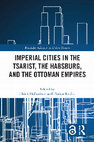
This book explores the various ways imperial rule constituted and shaped the cities of Eastern Eu... more This book explores the various ways imperial rule constituted and shaped the cities of Eastern Europe until World War I in the Tsarist, Habsburg, and Ottoman Empires.
In these three empires, the cities served as hubs of imperial rule: their institutions and infrastructures enabled the diffusion of power within the empires while they also served as the stages where the empire was displayed in monumental architecture and public rituals. To this day, many cities possess a distinctively imperial legacy in the form of material remnants, groups of inhabitants, or memories that shape the perceptions of in- and outsiders. The contributions to this volume address in detail the imperial entanglements of a dozen cities from a long-term perspective reaching back to the eighteenth century. They analyze the imperial capitals as well as smaller cities in the periphery. All of them are “imperial cities” in the sense that they possess traces of imperial rule. By comparing the three empires of Eastern Europe this volume seeks to establish commonalities in this particular geography and highlight trans-imperial exchanges and entanglements.
This volume is essential reading to students and scholars alike interested in imperial and colonial history, urban history, and European history.
Special Issues by Ulrich Hofmeister
Städte im Russländischen Imperium, 2022
Zeitschrift für Weltgeschichte, 2019
Österreichische Zeitschrift für Geschichtswissenschaften, 2017
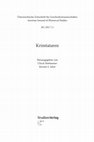
Die Annexion der Halbinsel Krim durch Russland im Frühling 2014 lenkte die öffentliche Aufmerksam... more Die Annexion der Halbinsel Krim durch Russland im Frühling 2014 lenkte die öffentliche Aufmerksamkeit zumindest für kurze Zeit auch auf das bewegte Schicksal der Krimtatarinnen und Krimtataren. Die Vorfahren dieser turksprachigen, muslimischen Bevölkerungsgruppe hatten im 15. Jahrhundert mit dem Khanat der Krim ein Herrschaftsgebilde geschaffen, das trotz seiner Abhängigkeit vom Osmanischen Reich ein bedeutender Bestandteil des frühneuzeitlichen Ost- und Ostmitteleuropas war. Doch unter russischer und später sowjetischer Herrschaft wurden die Krimtataren und Krimtatarinnen immer mehr zu Fremden im eigenen Land, bis Stalin schließlich 1944 die gesamte krimtatarische Bevölkerung von der Halbinsel deportieren ließ. Die beharrlichen Bemühungen um eine Rückkehr wurden erst seit der Perestroika teilweise von Erfolg gekrönt. Die jüngsten Ereignisse stellen diese Entwicklungen allerdings wieder in Frage.
Diese Ausgabe der Österreichischen Zeitschrift für Geschichtswissenschaften widmet sich der krimtatarischen Geschichte vom 16. bis zum 21. Jahrhundert. Sie soll dazu beitragen, die un unterschiedliche Disziplinen, Sprachräume und Wissenschaftskulturen aufgespaltene Forschung zur krimtatarischen Geschichte zusammenzubringen und darüber hinaus interessierte Kolleginnen und Kollegen sowie Fachfremden einen Einblick in aktuelle Forschungen zu krimtatarischen Themen zu geben.
Papers in Russian by Ulrich Hofmeister
Bremja Belogo Carja: Koncept civilizatorskoj missii v Turkestane, 1864-1917. In: Ma“naviy meros –... more Bremja Belogo Carja: Koncept civilizatorskoj missii v Turkestane, 1864-1917. In: Ma“naviy meros – yoshlar tadqiqodlarida (Toshkent: Akademija Nauk Respubliki Uzbekistana 2011), S. 146-152.
Восприятие русскими своей роли в Средней Азии, 1860-1917 // Россия и современный мир: Проблемы политического развития. Москва: Институт бизнеса и политики, 2010, 140-149.
D. V. Vasil’ev et al. (Ed.): Rossija i sovremennyj mir: Problemy političeskogo razvitija (Moskva: IBP 2010), S. 140-149.
Book Reviews by Ulrich Hofmeister



Uploads
Papers by Ulrich Hofmeister
Books and Edited Volumes by Ulrich Hofmeister
In these three empires, the cities served as hubs of imperial rule: their institutions and infrastructures enabled the diffusion of power within the empires while they also served as the stages where the empire was displayed in monumental architecture and public rituals. To this day, many cities possess a distinctively imperial legacy in the form of material remnants, groups of inhabitants, or memories that shape the perceptions of in- and outsiders. The contributions to this volume address in detail the imperial entanglements of a dozen cities from a long-term perspective reaching back to the eighteenth century. They analyze the imperial capitals as well as smaller cities in the periphery. All of them are “imperial cities” in the sense that they possess traces of imperial rule. By comparing the three empires of Eastern Europe this volume seeks to establish commonalities in this particular geography and highlight trans-imperial exchanges and entanglements.
This volume is essential reading to students and scholars alike interested in imperial and colonial history, urban history, and European history.
Special Issues by Ulrich Hofmeister
Diese Ausgabe der Österreichischen Zeitschrift für Geschichtswissenschaften widmet sich der krimtatarischen Geschichte vom 16. bis zum 21. Jahrhundert. Sie soll dazu beitragen, die un unterschiedliche Disziplinen, Sprachräume und Wissenschaftskulturen aufgespaltene Forschung zur krimtatarischen Geschichte zusammenzubringen und darüber hinaus interessierte Kolleginnen und Kollegen sowie Fachfremden einen Einblick in aktuelle Forschungen zu krimtatarischen Themen zu geben.
Papers in Russian by Ulrich Hofmeister
Book Reviews by Ulrich Hofmeister