Links available online only
More from Regina Derieva
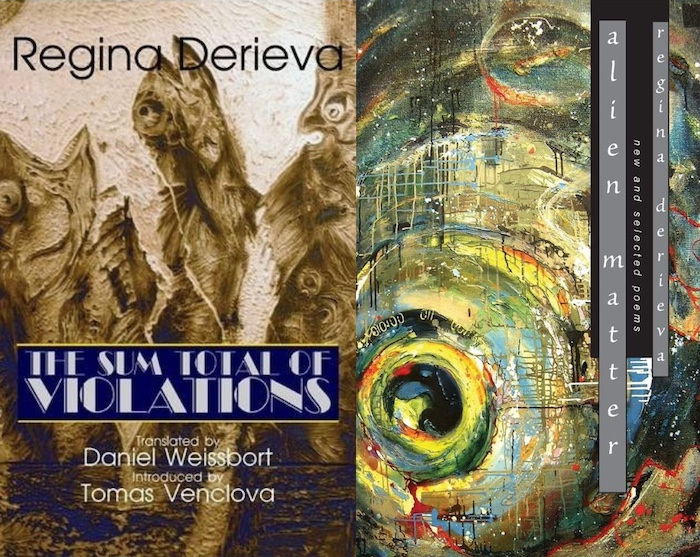
Read another poem from Derieva: "Dark Thoughts." Then find other work in English on her website and in her books: The Sum Total of Violations, Alien Matter, and Images in Black, Continuous.
More about Regina Derieva
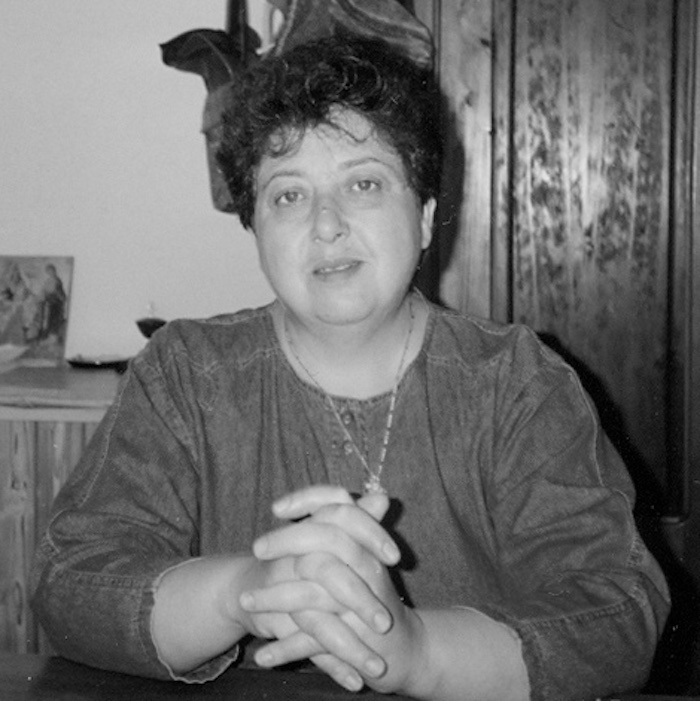
"It would be an understatement to name Regina Derieva one of the outstanding writers of the contemporary Russian diaspora," writes Tomas Venclova. Read critical essays on Derieva's work on her website and the scholar Cynthia Haven's blog.
Then, read about her family's difficulties with immigration in "A Riddle: What Is Catholic, Jewish and Stateless?," published in the New York Times.
More from Translator Valzhyna Mort
In an interview, Valzhyna Mort comments, "I’m a one-person diaspora. But then, who isn’t?" Read more of that conversation in 3:AM magazine.
Then, read other translations and poems from Mort, also published in Words Without Borders.
Finally, read Mort's poetry on the Poetry Foundation website and in the collections Factory of Tears and Collected Body, both from Copper Canyon Press. In the video below, she reads a recent poem, "Singer."
(Watch the video on YouTube.)
From Odessa to Karaganda
Get a glimpse of contemporary childhood in Derieva's birthplace of Odessa in this scene from Dmitry Khazin's documentary Odessa Motives (filmed before Russia's invasion of Ukraine):
(Watch the video on YouTube.)
Then, listen to Alexander Galich's song about Derieva's next home, Karaganda, Kazakhstan. "Karaganda, or, About the General's Daughter" tells the story of a woman who spent most of her childhood in the Karaganda prison camp and remained in the remote, barren town after her release. (Russian lyrics.)
(Watch the video on YouTube.)
Oy, Karaganda, you, Karaganda!
You're both mother and stepmother,
And to me you were always so gentle,
That I became unnecessary even to myself!
Kara-gan-da . . . !
Listen to Derieva-Inspired Music
Listen to a cantata based on a series of Derieva's poems: Armando Pierucci's De Profundis.
(Watch the video on YouTube.)
You can find another Pierucci cantata based on Derieva's work, a reading of her "spy poem" "An Honorable Profession," and more on YouTube.
Meet Derieva's Favorite Authors
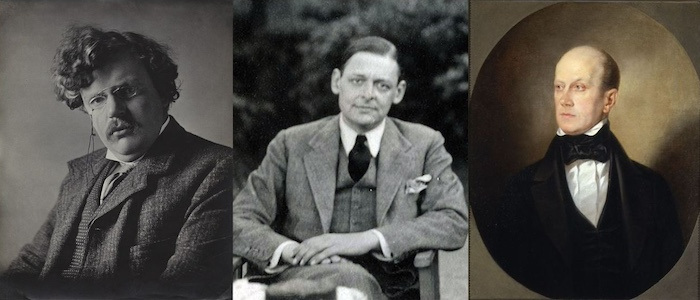
Find out more about three of Derieva's literary influences (whom she also credited for her conversion to Christianity):
- G. K. Chesterton: Like Derieva, Chesterton began life as a "precocious young writer" with a love of the sea, but "there the similarities ended." Read David P. Deavel's essay "My Face Towards the Impossible," which begins with a comparison of the two authors' lives and works. Then, read Chesterton's paradoxically anti-memorial poem "For a War Memorial." Would Chesterton have considered the objects in the Derieva poem "dead things"?
- T. S. Eliot: Read extracts of Eliot's "Four Quartets," a poem with religious themes. (You can find more poetry and a biography elsewhere on the Poetry Foundation website).
- Piotr Chaadayev: "I ask myself every time what could hinder unity, and I always come up with the same answer: an exaggerated feeling of patriotism." Listen to more quotations from his work in a clip from the documentary film Apologia of a Madman:
(Watch the video on YouTube.)
Then, find out why scholar Sarah Young launched her series of lectures on Russian thought with an exploration of Chaadayev.
China's Cultural Revolution

The poem mentions:
writing paper from the times of
the Chinese cultural
revolution, whatever you
write on it—
blood stains appear through
its tissue.
To learn more about China's Cultural Revolution, read the poem "Two or Three Things from the Past," and take a look at some of the resources in the Context and Playlist tabs.
More Writing about the Things We Carry*

- Artworks meant to remind viewers of the transience of worldly things and the inevitability of death and decay.
- Tim O'Brien's "The Things They Carried," from the eponymous collection. Unlike the objects in this poem, the soldiers' possessions are mostly whole, new, and functional. However, they, too, serve to highlight "the absurdity of things," as scholar Subarno Chattarji comments in the essay "Imagining Vietnam." You can also listen to an interview with O'Brien, in which he and other veterans talk about the "things" they still carry.
- "The Stone Guest," also from Russia, about a sculptor's wish to rid himself of everything that doesn't fit his image. What might he think of the "presents" in this poem?
- Yu Jian's poem "Two or Three Things from the Past"
- Marcel Proust’s Remembrance of Things Past (public library), in which a baked good inspires a series of recollections
- Ludmila Ulitskaya's short story "Pears from Gudauty," in which pears inspire a neighbor's xenophobic rant
*For Teaching Idea 1
More Paradoxes*

Poetry:
Prose:
Artwork: "Vanitas" paintings, meant to remind people of the ultimate worthlessness of worldly things.
*For Teaching Idea 2
More Underground Women and Men*
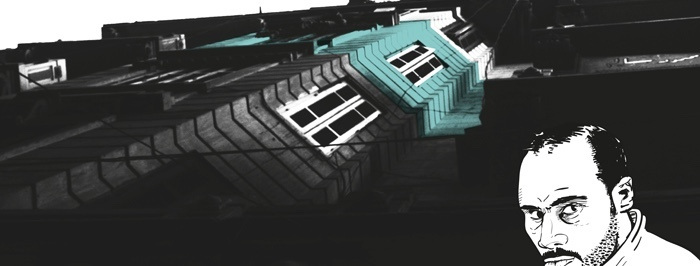
- "The Apartment in Bab el-Louk," an Egyptian graphic story about isolation in the middle of a city
- Fyodor Dostoyevsky's Underground Man, from the novella Notes From Underground (full text, audiobook)
- Ralph Ellison's Invisible Man
- Surfacing, by Margaret Atwood, a novel about a woman leaving "civilization"
- "The Ones Who Walk Away from Omelas," by Ursula K. Le Guin, a story that asks: Why would anyone reject a utopia?
- On the Road, by Jack Kerouac
- The Member of the Wedding, by Carson McCullers
- "Alone," by Edgar Allan Poe
*For Teaching Idea 3
More Unity and Disunity*

*For Teaching Idea 4