Edited works by Ursula Muenster
In: Soziale Ästhetik, Atmosphäre und Medialität: Beiträge aus der Ethnologie. Lit Verlag: Berlin,... more In: Soziale Ästhetik, Atmosphäre und Medialität: Beiträge aus der Ethnologie. Lit Verlag: Berlin, 61-72, ISBN 978-3-643-13911-5
Sustainability at Dead-Ends: The Future of Hope in Rural Japan Bridget Love 61 65 71 79 87 95 Asi... more Sustainability at Dead-Ends: The Future of Hope in Rural Japan Bridget Love 61 65 71 79 87 95 Asian Environments Asian Environments
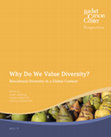
Martin, Gary, Diana Mincyte and Ursula Münster (eds.) 2012. Why do we Value Diversity? Biocultural Diversity in a Global Context . Munich: Rachel Carson Center for Environment and Society.
"The concept of biocultural diversity was introduced by ethno-
biologists to argue that the vari... more "The concept of biocultural diversity was introduced by ethno-
biologists to argue that the variation within ecological systems
is inextricably linked to cultural and linguistic differences. It has
generated much interesting research and has influenced the
politics of conservation. However, it is not without its critics. In
this volume of RCC Perspectives, scholars from a wide range of
fields reflect on the definition, impact, and possible vulnerabilities
of the concept. Understandings of biocultural diversity have had
and will have a significant impact on resource use and conserva-
tion, and on the transformation of landscapes. While the concept
may help preserve what we value, we must ensure that it does
not lead to forms of cultural or ecological imperialism."
Around the world, fields and forests are increasingly dominated by the market, mediated by scienc... more Around the world, fields and forests are increasingly dominated by the market, mediated by science, and subjected to new modes of transnational environmental governance. This volume of RCC Perspectives presents ethnographic insights into the impacts of such environmental globalization. As agriculture seeks new methods to provide for a growing population, and as forest conservation becomes increasingly contested, local and indigenous communities must balance their needs and desires with the demands of a variety of external agents, from academics and bureaucrats to governments and international agribusinesses.
Papers by Ursula Muenster
Environmental Humanities, 2019
This article provides the first international overview and detailed discussion of teaching in the... more This article provides the first international overview and detailed discussion of teaching in the environmental humanities (EH). It is divided into three parts. The first offers a series of regional overviews: where, when, and how EH teaching is taking place. This part highlights some key regional variability in the uptake of teaching in this area, emphasizing important differences in cultural and pedagogical contexts. The second part is a critical engagement with some of the key challenges and opportunities that are emerging in EH teaching, centering on how the field is being defined, shared concepts and ideas, interdisciplinary pedagogies, and the centrality of experimental and public-facing approaches to teaching. The final part of the article offers six brief summaries of experimental pedagogies from our authorship team that aim to give a concrete sense of EH teaching in practice.
Fields and Forests: Ethnographic Perspectives on Environmental Globalization
Around the world, fields and forests are increasingly dominated by the market, mediated by scienc... more Around the world, fields and forests are increasingly dominated by the market, mediated by science, and subjected to new modes of transnational environmental governance. This volume of RCC Perspectives presents ethnographic insights into the impacts of such environmental globalization. As agriculture seeks new methods to provide for a growing population, and as forest conservation becomes increasingly contested, local and indigenous communities must balance their needs and desires with the demands of a variety of external agents, from academics and bureaucrats to governments and international agribusinesses.
Environmental Humanities, 2016
Across the world, elephant endotheliotropic herpesvirus is increasingly killing elephant calves a... more Across the world, elephant endotheliotropic herpesvirus is increasingly killing elephant calves and threatening the long-term survival of the Asian elephant, a species that is currently facing extinction. This article presents three open-ended stories of elephant care in times of death and loss: at places of confinement and elephant suffering like the zoos in Seattle and Zürich as well as in the conflict-ridden landscapes of South India, where the country's last free-ranging elephants live. Our stories of deadly viral-elephant-human becomings remind us that neither human care, love, and attentiveness nor techniques of control and creative management are sufficient to fully secure elephant survival. The article introduces the concept of "viral creep" to explore the ability of a creeping, only partially knowable virus to rearrange relations among people, animals, and objects despite multiple experimental human regimes of elephant care, governance, and organization. The viral creep exceeds the physical and intellectual contexts of human interpretation and control. It reminds us that uncertainty and modes of imaging are always involved when we make sense of the world around us.
Multispecies Ethnography
Oxford Bibliographies Online Datasets

“Lantana Invades Teak Plantations and Turns Elephants Violent”. In: Tsing, Anna L.; Deger, Jennifer; Saxena, Alder Keleman and Feifei Zou (eds.), The Feral Atlas: The More-Than-Human Anthropocene. Stanford University Press.
The Feral Atlas, 2020
Feral Atlas invites you to explore the ecological worlds created when nonhuman entities become ta... more Feral Atlas invites you to explore the ecological worlds created when nonhuman entities become tangled up with human infrastructure projects. Seventy-nine field reports from scientists, humanists, and artists show you how to recognize “feral” ecologies, that is, ecologies that have been encouraged by human-built infrastructures, but which have developed and spread beyond human control. These infrastructural effects, Feral Atlas argues, are the Anthropocene.
Playful, political, and insistently attuned to more-than-human histories, Feral Atlas does more than catalog sites of imperial and industrial ruin. Stretching conventional notions of maps and mapping, it draws on the relational potential of the digital to offer new ways of analyzing—and apprehending—the Anthropocene; while acknowledging danger, it demonstrates how in situ observation and transdisciplinary collaboration can cultivate vital forms of recognition and response to the urgent environmental challenges of our times.
Environmental Humanities, 2019
This article provides the first international overview and detailed discussion of
teaching in the... more This article provides the first international overview and detailed discussion of
teaching in the environmental humanities (EH). It is divided into three parts. The first offers a series of regional overviews: where, when, and how EH teaching is taking place. This part highlights some key regional variability in the uptake of teaching in this area, emphasizing important differences in cultural and pedagogical contexts. The second part is a critical engagement with some of the key challenges and opportunities that are emerging in EH teaching, centering on how the field is being defined, shared concepts and ideas, interdisciplinary pedagogies, and the centrality of experimental and public-facing approaches to teaching. The final part of the article offers six brief summaries of experimental pedagogies from our authorship team that aim to give a concrete sense of EH teaching in practice.
Across the world, elephant endotheliotropic herpesvirus is increasingly killing elephant calves a... more Across the world, elephant endotheliotropic herpesvirus is increasingly killing elephant calves and threatening the long-term survival of the Asian elephant, a species that is currently facing extinction. This article presents three open-ended stories of elephant care in times of death and loss: at places of confinement and elephant suffering like the zoos in Seattle and Zürich as well as in the conflict-ridden landscapes of South India, where the country's last free-ranging elephants live. Our stories of deadly viral-elephant-human becomings remind us that neither human care, love, and attentiveness nor techniques of control and creative management are sufficient to fully secure elephant survival. The article introduces the concept of " viral creep " to explore the ability of a creeping, only partially knowable virus to rearrange relations among people, animals, and objects despite multiple experimental human regimes of elephant care, governance, and organization. The viral creep exceeds the physical and intellectual contexts of human interpretation and control. It reminds us that uncertainty and modes of imaging are always involved when we make sense of the world around us.
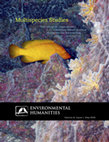
Scholars in the humanities and social sciences are experimenting with novel ways of engaging with... more Scholars in the humanities and social sciences are experimenting with novel ways of engaging with worlds around us. Passionate immersion in the lives of fungi, microorganisms , animals, and plants is opening up new understandings, relationships, and account-abilities. This introduction to the special issue offers an overview of the emerging field of multispecies studies. Unsettling given notions of species, it explores a broad terrain of possible modes of classifying, categorizing, and paying attention to the diverse ways of life that constitute worlds. From detailed attention to particular entities, a multiplicity of possible connection and understanding opens up: species are always multiple, multiplying their forms and associations. It is this coming together of questions of kinds and their multiplici-ties that characterizes multispecies studies. A range of approaches to knowing and understanding others—modes of immersion—ground and guide this research: engagements and collaborations with scientists, farmers, hunters, indigenous peoples, activists, and artists are catalyzing new forms of ethnographic and ethological inquiry. This article also explores the broader theoretical context of multispecies studies, asking what is at stake—epistemo-logically, politically, ethically—in learning to be attentive to diverse ways of life. Are all lively entities biological, or might a tornado, a stone, or a volcano be amenable to similar forms of immersion? What does it mean to live with others in entangled worlds of contingency and uncertainty? More fundamentally, how can we do the work of inhabiting and coconstituting worlds well? In taking up these questions, this article explores the cultivation of " arts of attentiveness " : modes of both paying attention to others and crafting meaningful response.
This paper explores the collaboration of humans and elephants in South Indian wildlife conservati... more This paper explores the collaboration of humans and elephants in South Indian wildlife conservation. Drawing on ethnography within the Indian forest department and among elephant handlers in Wayanad, Kerala, it highlights the largely invisible work relationship between indigenous forest labourers and captive elephants, and their essential contribution to wildlife management. Extending ethnographic attention beyond an exclusively human realm, I show that human and elephant relations have been co-constituted while working together for the forest department. Their working partnership, situated in the historical nature-cultures of logging, teak extraction, and conservation, has created ambivalent intimacies between humans and elephants, containing both mutual violence and affect. By highlighting the importance of work relationships, history, and questions of power for multi-species studies, this article argues that human–animal relations are not only shaped by individual intimacies, but also by danger, risk, and aggression, situated within a region’s larger political ecology.
Münster, Ursula. 2016. “Challenges of Coexistence: Human-Elephant Conflicts in Wayanad, Kerala, South India.” In Conflict, Neogotiation, Coexistence: Human-Elephant Relations in South Asia, edited by Piers Locke and Jane Buckingham, 272–99. Delhi: Oxford University Press.
This paper explores how environmental labour in nature conservation has shaped the subjectivities... more This paper explores how environmental labour in nature conservation has shaped the subjectivities of subaltern forest workers at the Wayanad Wildlife Sanctuary in Kerala, South India. Since colonial times, indigenous adivasis living at the forest boundary in Wayanad have had a close working relationship with the Indian Forest Department. Forest governance at the sanctuary is built on the expertise and physical hardships of these adivasi workers, whose experiences nonetheless have been largely neglected in the history and ethnography of Indian forest conservation. The successive colonial and post-colonial governments have depended on the environmental knowledge and skills of so-called forest tribes to manage and govern the region’s protected forests. I argue
that the daily routine of working in the sphere of forestry and wildlife conservation has deeply influenced the self-conception and subjectivities of former hunters and gatherers, who refer to themselves as forest workers, or kattu panikkar in Malayalam.
Multispecies ethnography is a rubric for a more-than-human approach to ethnographic research and ... more Multispecies ethnography is a rubric for a more-than-human approach to ethnographic research and writing rapidly gaining discursive traction in anthropology and cognate fields. The term is deployed for work that acknowledges the interconnectedness and inseparability of humans and other life forms, and thus seeks to extend ethnography beyond the solely human realm. Multispecies investigations of social and cultural phenomena are attentive to the agency of other-than-human species, whether they are plants, animals, fungi, bacteria, or even viruses, which confound the species concept. This entails a challenge to the humanist epistemology upon which conventional ethnography is predicated, specifically its ontological distinctions between nature and culture, human and nonhuman, subject and object. Multispecies ethnography must thus be seen as a part of a larger quest in the social sciences and humanities to replace dualist ontologies by relational perspectives, to overcome anthropocentrism by pointing to the meaningful agency of nonhuman others, and to highlight the intersections between ecological relations, political economy, and cultural representations. Multispecies ethnography however, not only acknowledges that humans dwell in a world necessarily comprising other life forms but also contends that their entanglements with human lives, landscapes, and technologies must be theoretically integrated into any account of existence. The authors of this article wish to thank Eben Kirksey, Thom van Dooren, and two anonymous reviewers.


Uploads
Edited works by Ursula Muenster
biologists to argue that the variation within ecological systems
is inextricably linked to cultural and linguistic differences. It has
generated much interesting research and has influenced the
politics of conservation. However, it is not without its critics. In
this volume of RCC Perspectives, scholars from a wide range of
fields reflect on the definition, impact, and possible vulnerabilities
of the concept. Understandings of biocultural diversity have had
and will have a significant impact on resource use and conserva-
tion, and on the transformation of landscapes. While the concept
may help preserve what we value, we must ensure that it does
not lead to forms of cultural or ecological imperialism."
Papers by Ursula Muenster
Playful, political, and insistently attuned to more-than-human histories, Feral Atlas does more than catalog sites of imperial and industrial ruin. Stretching conventional notions of maps and mapping, it draws on the relational potential of the digital to offer new ways of analyzing—and apprehending—the Anthropocene; while acknowledging danger, it demonstrates how in situ observation and transdisciplinary collaboration can cultivate vital forms of recognition and response to the urgent environmental challenges of our times.
teaching in the environmental humanities (EH). It is divided into three parts. The first offers a series of regional overviews: where, when, and how EH teaching is taking place. This part highlights some key regional variability in the uptake of teaching in this area, emphasizing important differences in cultural and pedagogical contexts. The second part is a critical engagement with some of the key challenges and opportunities that are emerging in EH teaching, centering on how the field is being defined, shared concepts and ideas, interdisciplinary pedagogies, and the centrality of experimental and public-facing approaches to teaching. The final part of the article offers six brief summaries of experimental pedagogies from our authorship team that aim to give a concrete sense of EH teaching in practice.
that the daily routine of working in the sphere of forestry and wildlife conservation has deeply influenced the self-conception and subjectivities of former hunters and gatherers, who refer to themselves as forest workers, or kattu panikkar in Malayalam.