Books by Vernon W Cisney
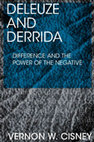
Few thinkers from the twentieth century have had a greater impact on the contemporary continental... more Few thinkers from the twentieth century have had a greater impact on the contemporary continental tradition in philosophy than Jacques Derrida and Gilles Deleuze. While their respective areas of research overlapped greatly in terms of content, and extended into domains political, literary, and artistic, they are still best known for their respective attempts to theoretically formulate a non-dialectical conception of difference (différance in Derrida’s case and difference-in-itself in Deleuze’s). Yet, while a great deal of scholarly work has explored the ethical and political comparisons between the two, none has specifically attempted to compare or contrast their concepts of difference. This book draws such a distinction between Derrida and Deleuze, by examining each with respect to Hegel and Nietzsche, differentiating them on the basis of the criticisms they level against Hegel, as well as their valorizations of Nietzsche, and the ways in which they understand Nietzsche’s thought to surpass that of Hegel.
Look for this book with Edinburgh University Press in 2018!
Among French intellectuals of the late twentieth century, Jacques Derrida stood apart as one of t... more Among French intellectuals of the late twentieth century, Jacques Derrida stood apart as one of the most controversial and influential. Published in 1967, Voice and Phenomenon marks a crucial turning point in Derrida’s thinking: it is the culmination of a fifteen-year long engagement with the phenomenological tradition, and it introduces the concepts and themes that would mark the project that would become deconstruction. This Philosophical Guide is designed to introduce the reader to the historical context out of which Derrida is working (including and especially Husserl’s thought), to provide the reader with careful, critical commentary of Derrida’s text, and to demonstrate how the concepts explicated in Voice and Phenomenon would pave the way for Derrida’s future works. It is designed to be clear enough for an undergraduate, but rigorous enough for a graduate student or professor. Derrida’s Voice and Phenomenon: An Edinburgh Philosophical Guide thus provides an essential toolkit for those approaching Derrida for the first time.
is timely in the sense that it characterizes what Foucault calls the "history of the present" 2 (... more is timely in the sense that it characterizes what Foucault calls the "history of the present" 2 (which is always, at the same time, a thought of the future). Biopower exposes the structures, relations, and practices by which political subjects are constituted and deployed, along with the forces that have shaped and continue to shape modernity. But it is untimely in that its relevance is necessarily dissimulated and masked-the mechanisms of power always have a way of covering their tracks. Before we can elaborate on this concept of biopower-the very etymology of which already points us toward the emergence of life into politics-it would behoove us to look at what power itself is, or what we typically think power itself is. For the traditional model of power is precisely what Foucault's concept of biopower assimilates and ultimately surpasses.
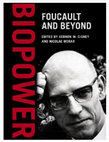
Michel Foucault’s notion of “biopower” has been a highly fertile concept in recent theory, influe... more Michel Foucault’s notion of “biopower” has been a highly fertile concept in recent theory, influencing thinkers worldwide across a variety of disciplines and concerns. In The History of Sexuality: An Introduction, Foucault famously employed the term to describe “a power bent on generating forces, making them grow, and ordering them, rather than one dedicated to impeding them, making them submit, or destroying them.” With this volume, Vernon W. Cisney and Nicolae Morar bring together leading contemporary scholars to explore the many theoretical possibilities that the concept of biopower has enabled while at the same time pinpointing their most important shared resonances.
Situating biopower as a radical alternative to traditional conceptions of power—what Foucault called “sovereign power”—the contributors examine a host of matters centered on life, the body, and the subject as a living citizen. Altogether, they pay testament to the lasting relevance of biopower in some of our most important contemporary debates on issues ranging from health care rights to immigration laws, HIV prevention discourse, genomics medicine, and many other topics.
Contributors: Judith Revel, Antonio Negri, Catherine Mills, Ian Hacking, Mary-Beth Mader, Jeff Nealon, Eduardo Mendieta, Carlos Novas, Jana Sawicki, David Halperin, Todd May, Ladelle McWhorter, Martina Tazziolli, Frédéric Gros, Paul Patton, Nikolas Rose, Paul Rabinow, Roberto Esposito, Ann L. Stoler
1. Introduction - Christopher Penfield
2. Michel Foucault and Jacques Derrida: A Chronology - Ala... more 1. Introduction - Christopher Penfield
2. Michel Foucault and Jacques Derrida: A Chronology - Alan Schrift
I. The History of Madness Debate
3. Cogito and the History of Madness - Jacques Derrida
4. My Body, This Paper, This Fire - Michel Foucault
5. ‘But Such People Are Insane’: On a Disputed Passage from the First Meditation - Jean-Marie Beyssade
6. A Return to Descartes’s First Meditation - Michel Foucault
7. Deconstruction, Care of the Self, Spirituality: Putting Foucault and Derrida to the Test - Edward McGushin
II. The End of Reason
8. The History of Historicity: The Critique of Reason in Foucault (and Derrida) - Amy Allen
9. "The End of Man: Foucault, Derrida, and the Auto-Bio-Graphical" - Ellen Armour
III. The Voice
10. ‘Murmurs’ and ‘Calls’: The Significance of Voice in the Political Reason of Foucault and Derrida - Fred Evans
11. “Let Others be Ends in themselves”: The Convergence between Foucault’s Parrēsia and Derrida’s Teleiopoesis - Leonard Lawlor
IV. The Placeless Place
12. The Aporia and the Problem - Paul Rekret
13. The Folded Unthought and the Irreducibly Unthinkable: Singularity, Multiplicity, and Materiality, in and between Foucault and Derrida - Arkady Plotnitsky
V. Crisis, Life and Death
14. Living and Dying with Foucault and Derrida: The Question of Biopower - Jeffrey T. Nealon
15. Philosophy on Trial: The Crisis of Deciding between Foucault and Derrida - Peter Gratton
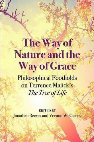
Amid all the controversy, criticism, and celebration of Terrence Malick's award-winning film The ... more Amid all the controversy, criticism, and celebration of Terrence Malick's award-winning film The Tree of Life, what do we really understand of it? The Way of Nature and the Way of Grace thoughtfully engages the philosophical riches of life, culture, time, and the sacred through Malick's film. This innovative collection traverses the relationships among ontological, moral, scientific, and spiritual perspectives on the world, demonstrating how phenomenological work can be done in and through the cinematic medium, and attempting to bridge the gap between narrow "theoretical" works on film and their broader cultural and philosophical significance. Exploring Malick's film as a philosophical engagement, this readable and insightful collection presents an excellent resource for film specialists, philosophers of film, and film lovers alike.
Contributors: Jonathan Beever, Vernon W. Cisney, Ian-Malcolm Rijsdijk, William Rothman, Marc Furstenau, Robert Sinnerbrink, Eric Boynton, John Bleasdale, Paul Camacho, Manuel 'Mandel' Cabrera Jr., Erin Kealey, Leslie MacAvoy, Terrence Malick.
"I should have written you after my first reading of The Living Currency; it was already breath-t... more "I should have written you after my first reading of The Living Currency; it was already breath-taking and I should have responded. After reading it a few more times, I know it is the best book of our times.' Letter to Pierre Klossowski from Michel Foucault, winter 1970.
Living Currency is the first English translation of Klossowski's La monnaie vivante. It offers an analysis of economic production as a mechanism of psychic production of desires and is a key work from this often overlooked but wonderfully creative French thinker.
Papers by Vernon W Cisney
Deleuze and Guattari Studies, 2026
In this article I expand upon Deleuze's injunction to 'become capable of loving without memory', ... more In this article I expand upon Deleuze's injunction to 'become capable of loving without memory', reading the thought of Søren Kierkegaard and Gilles Deleuze as laying the foundations for a view that I call 'Christian Atheism'. This is founded upon four basic principles: (1) God is love; (2) God-Love is neither a person nor a substance; (3) God-Love is the immanent, not transcendent, cause of all things; (4) God-Love is not a moral judge, but implies an ethical comportment, calling us forth in the love of self and in the love of the other or the love of the neighbour. I look first to Kierkegaard's understanding of God as love, drawing comparisons with Deleuze's notion of Being as affirmation. I then expand upon Kierkegaard's God-Love through the sacrificial structural relation between renunciation and return as discussed in Fear and Trembling, before using this to expand upon Deleuze's understanding of love without memory.
To Have Done With the Death of Philosophy, 2023
In this essay, we read Derrida’s Theory and Practice seminar
against the backdrop of the theme of... more In this essay, we read Derrida’s Theory and Practice seminar
against the backdrop of the theme of the “death of philosophy,”
prominent in 1960s French philosophy. This theme takes two
forms—one Nietzschean-Heideggerian and the other Hegelian-
Marxian. We summarize both before turning to Derrida’s treatment
of Althusser’s views on the Hegelian-Marxian form of this death. Althusser
posits a distinction between theory in the general sense and
Theory as a designation for Marxist dialectical materialism. Derrida
gives two speciic criticisms of Althusser that we discuss: (1) Althusser
commits himself to a tautology, by arguing that Theory only
makes explicit what is implicit already in Marxist practice; (2)
Althusser ultimately establishes the priority of practice over theory.
We refute both of these charges before concluding that, prior to the
distinction between theory and practice, is the world itself; and presenting
itself to us as unthinkable, the world places the demands
upon us that it be engaged with, in theory and in practice.
Philosophy, Film, and the Dark Side of Interdependence, 2020
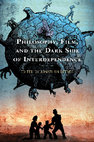
First Reformed is unique among the films of ministerial despair to which it gives obvious homage,... more First Reformed is unique among the films of ministerial despair to which it gives obvious homage, such as Bergman’s Winter Light, in that First Reformed does not rest within that hellishly isolated interiority. First Reformed compels a movement of transcendence, but a fully immanent one: the transcendence of selfhood that shatters the psychological boundaries by which we attempt to keep out the other. Toller’s moment of rebirth arrives in his rejection of the Lutheran soteriological view of individual salvation or damnation—it abides in the realization that we are redeemed, if at all, just as we are damned, together. The film thus heralds a radical interdependence, one that subverts the famous Sartrean dictum, suggesting that "Hell is other people" only insofar as we refuse or ignore our interdependence. The hell-on-earth of impending climate catastrophe humanity is facing has made indisputably clear the interdependence of our politics and our economics with our cultural religiosity and the monstrous hybridization of all of these into the ethical valuation system of neoliberalism that structures our every activity, as Adam Kotsko writes, “a complete way of life and a holistic worldview.” It has made clear that the biological habitability of the planet does not abide by the boundaries of politics, geography, race, or species. It doesn’t care about the national “rankings” in terms of carbon output into the atmosphere, and one’s individual life choices will not save them from the imminent catastrophe. We are saved, or we are damned—together.
A Critical Companion to Terrence Malick, 2020
This chapter analyzes the connection between two modes of Terrence Malick's affirmative worldview... more This chapter analyzes the connection between two modes of Terrence Malick's affirmative worldview. It seems that what unites the sort of affirmation found in The Tree of Life and the more robust primary affirmation found in Knight of Cups is a meditation on death, and in particular, on the notion of death as gift. That is to say, these two films offer profound reflections on various modes of the sacrificial. Furthermore, when we analyze the structure of the sacrificial, we will discover that without this seemingly impossible primary affirmation, the secondary affirmation is not possible. My exploration will hinge on the double genitive in the phrase, “the gifts of death.” I will argue in this paper that the philosophical path outlined between The Tree of Life and Knight of Cups moves from the sense of death offered as a gift, to the sense of gifts made possible or given by a certain kind of death—the kenotic self-emptying described by the Christian apostle, Saint Paul, as a dying of the self. The structure of this kenosis demands that we willingly and joyfully sacrifice every temporal, impermanent aspect of our lives, everything that matters to us, which thereby enables the ever-renewed receiving of the temporal. This sacrificial act enables the potential saturation of each moment with grace. We can only receive as a gift, with gratitude, what we do not already possess as an entitlement. And thus, our comportment toward the temporal must undergo an ongoing act of sacrifice. My touchstone thinker for this analysis will be the Danish philosopher, Søren Kierkegaard.
Deleuze and Time, 2023
In Thus Spoke Zarathustra, Nietzsche famously writes, “Of three metamorphoses of the spirit I tel... more In Thus Spoke Zarathustra, Nietzsche famously writes, “Of three metamorphoses of the spirit I tell you: how the spirit becomes a camel; and the camel, a lion; and the lion, finally, a child.” Here Nietzsche describes a progression that moves through the burdensome bearing of a culture’s ‘truths,’ to the sacred no-saying whereby those truths are cast off, and finally to a renewed power of innocence and forgetfulness that enables genuine creativity. In Cinema 2, Deleuze recasts this progression through the chain of the ‘truthful man,’ ‘the forger,’ and finally, ‘the artist.’ This chain is organized around what Deleuze refers to as ‘the power of the false.’ Noting that ‘time has always put the notion of truth into crisis,’ Deleuze employs the power of the false – as that power which dislocates the true – in order to think a world of becoming beyond the dichotomy of true and false. The power of the false is not synonymous with the false itself, but rather, with time, inasmuch as time perpetually disrupts the coalescence of any static centers – of gravity, of motion, of value, etc. In the world of becoming, ‘there is no other truth than the creation of the New.’ This paper will unpack the concept of the ‘power of the false’ in Cinema 2, demonstrating the way in which this power makes itself apparent in the forger, but gives way to a transfigured power of the artist, who actively creates truth.
Theology and Batman, 2022
I argue that Arthur Fleck’s transformation from struggling comic into the figure of Joker constit... more I argue that Arthur Fleck’s transformation from struggling comic into the figure of Joker constitutes, not a degradation of his health, but rather, in a sense specific to Fleck, the emergence of a radically new health, a rebirth or creation of a new self – liberated from the shackles of the ‘civilized’ world of elitist politicians and their empty promises, austerity-based social and economic policies, and manipulative billionaires in their insular worlds removed from the despair of everyday life – an icon of madness for a world gone mad. Such a rebirth requires the creation and embrace of new values, and thus, for this unlikely theology my primary inspiration will be Friedrich Nietzsche.
Thsi is the essential toolkit for anyone reading this seminal Derrida text for the first time. Pu... more Thsi is the essential toolkit for anyone reading this seminal Derrida text for the first time. Published in 1967, Voice and Phenomenon marked a crucial turning point in Derrida's thinking: the culmination of a 15-year-long engagement with the phenomenological tradition. It also introduced the concepts and themes that would become deconstruction. Voice and Phenomenon is a short book, but it can be an overwhelming text, particularly for inexperienced readers of Derrida's work. This is the first guide to clearly explain the structure of his argument, step by step. It introduces you to Derrida's historical context, with special attention to the importance of Husserl's thought. It provides careful, critical commentary of his text from start to finish, explaining the key arguments and problems as you go. It shows how the concepts used in Voice and Phenomenon paved the way for Derrida's future works. It includes a glossary, further reading and descriptions of some of De...
I am delighted to be part of the conversation surrounding this important work. Thomas Nail’s The ... more I am delighted to be part of the conversation surrounding this important work. Thomas Nail’s The Figure of the Migrant is one of those rare works that is at once timely and timeless. It is timely in the sense that the figure of the migrant has become a ubiquitous and undeniable reality of our time. As I write this at the end of spring 2016, the number of Syrian citizens displaced by civil war since 2011 has climbed to roughly 13.5 million; the United States is in the middle of its most racially charged presidential election of my lifetime (with one of the top party candidates running on a popular platform of draconian deportation of undocumented laborers and the severe restriction of immigration); the populations of Central Pacific island nations are being displaced in record numbers due to the effects of global climate change; and within the past week, several small boats carrying refugees from Libya have capsized off the coast of Italy, resulting in over one thousand deaths.These ...
Kritikos, 2018
David Foster Wallace famously characterized his first novel, The Broom of the System, as ‘a conve... more David Foster Wallace famously characterized his first novel, The Broom of the System, as ‘a conversation between [Ludwig] Wittgenstein and [ Jacques] Derrida.’ This comes as little surprise, given the ubiquity of the question of language in the works of these two thinkers, and given the novel’s constant reflections on the relation between language and world. Broom’s protagonist, Lenore Beadsmen – in search of her eponymous great-grandmother – is preoccupied with the dread that ‘all that really exists of [her] life is what can be said about it,’ that is to say, that reality is entirely coextensive with language. If, as Wittgenstein says, ‘The limits of my language mean the limits of my world,’ and, ‘I am my world,’ then it stands to reason that ‘the limits of my language mean the limits of myself.’ This is the fearful hypothesis that drives The Broom of the System. Much of the scholarship surrounding the novel has interpreted Wallace’s remark as an assertion that the novel constitute...

Between Foucault and Derrida
1. Introduction - Christopher Penfield 2. Michel Foucault and Jacques Derrida: A Chronology - Ala... more 1. Introduction - Christopher Penfield 2. Michel Foucault and Jacques Derrida: A Chronology - Alan Schrift I. The History of Madness Debate 3. Cogito and the History of Madness - Jacques Derrida 4. My Body, This Paper, This Fire - Michel Foucault 5. ‘But Such People Are Insane’: On a Disputed Passage from the First Meditation - Jean-Marie Beyssade 6. A Return to Descartes’s First Meditation - Michel Foucault 7. Deconstruction, Care of the Self, Spirituality: Putting Foucault and Derrida to the Test - Edward McGushin II. The End of Reason 8. The History of Historicity: The Critique of Reason in Foucault (and Derrida) - Amy Allen 9. "The End of Man: Foucault, Derrida, and the Auto-Bio-Graphical" - Ellen Armour III. The Voice 10. ‘Murmurs’ and ‘Calls’: The Significance of Voice in the Political Reason of Foucault and Derrida - Fred Evans 11. “Let Others be Ends in themselves”: The Convergence between Foucault’s Parrēsia and Derrida’s Teleiopoesis - Leonard Lawlor IV. The Placeless Place 12. The Aporia and the Problem - Paul Rekret 13. The Folded Unthought and the Irreducibly Unthinkable: Singularity, Multiplicity, and Materiality, in and between Foucault and Derrida - Arkady Plotnitsky V. Crisis, Life and Death 14. Living and Dying with Foucault and Derrida: The Question of Biopower - Jeffrey T. Nealon 15. Philosophy on Trial: The Crisis of Deciding between Foucault and Derrida - Peter Gratton
Chapter Summary: From the blackness emerges a subtly scripted epigraph from the biblical book of ... more Chapter Summary: From the blackness emerges a subtly scripted epigraph from the biblical book of Job, silently posing a question to the viewer on behalf of the almighty: "Where were you when I laid the earth's foundation...while the morning stars sang together and all the sons of God shouted for joy?" Following thirtyfive chapters of Job's story, filled with relentless criticism on the part of Job's "friends" in response to Job's ongoing poetically formulated and impassioned lamentations, and the demands he places before God demands for justice and an explanation for his suffering at last the voice of the almighty speaks from within the raging storm, responding not with an answer but with a questions: where were you? the very question Terrence Malick poses to us at the beginning of The Tree of Life. Thus, from the opening moments of the film Malick is signifying to the viewer that The Tree of Life is to be a meditation on the meaning of suffering.
Something to do With a Girl Named Marla: Eros and Gender in David Fincher’s Fight Club
The Way of Nature and the Way of Grace: Philosophical Footholds on Terrence Malick's 'The Tree of Life


Uploads
Books by Vernon W Cisney
Look for this book with Edinburgh University Press in 2018!
Situating biopower as a radical alternative to traditional conceptions of power—what Foucault called “sovereign power”—the contributors examine a host of matters centered on life, the body, and the subject as a living citizen. Altogether, they pay testament to the lasting relevance of biopower in some of our most important contemporary debates on issues ranging from health care rights to immigration laws, HIV prevention discourse, genomics medicine, and many other topics.
Contributors: Judith Revel, Antonio Negri, Catherine Mills, Ian Hacking, Mary-Beth Mader, Jeff Nealon, Eduardo Mendieta, Carlos Novas, Jana Sawicki, David Halperin, Todd May, Ladelle McWhorter, Martina Tazziolli, Frédéric Gros, Paul Patton, Nikolas Rose, Paul Rabinow, Roberto Esposito, Ann L. Stoler
2. Michel Foucault and Jacques Derrida: A Chronology - Alan Schrift
I. The History of Madness Debate
3. Cogito and the History of Madness - Jacques Derrida
4. My Body, This Paper, This Fire - Michel Foucault
5. ‘But Such People Are Insane’: On a Disputed Passage from the First Meditation - Jean-Marie Beyssade
6. A Return to Descartes’s First Meditation - Michel Foucault
7. Deconstruction, Care of the Self, Spirituality: Putting Foucault and Derrida to the Test - Edward McGushin
II. The End of Reason
8. The History of Historicity: The Critique of Reason in Foucault (and Derrida) - Amy Allen
9. "The End of Man: Foucault, Derrida, and the Auto-Bio-Graphical" - Ellen Armour
III. The Voice
10. ‘Murmurs’ and ‘Calls’: The Significance of Voice in the Political Reason of Foucault and Derrida - Fred Evans
11. “Let Others be Ends in themselves”: The Convergence between Foucault’s Parrēsia and Derrida’s Teleiopoesis - Leonard Lawlor
IV. The Placeless Place
12. The Aporia and the Problem - Paul Rekret
13. The Folded Unthought and the Irreducibly Unthinkable: Singularity, Multiplicity, and Materiality, in and between Foucault and Derrida - Arkady Plotnitsky
V. Crisis, Life and Death
14. Living and Dying with Foucault and Derrida: The Question of Biopower - Jeffrey T. Nealon
15. Philosophy on Trial: The Crisis of Deciding between Foucault and Derrida - Peter Gratton
Contributors: Jonathan Beever, Vernon W. Cisney, Ian-Malcolm Rijsdijk, William Rothman, Marc Furstenau, Robert Sinnerbrink, Eric Boynton, John Bleasdale, Paul Camacho, Manuel 'Mandel' Cabrera Jr., Erin Kealey, Leslie MacAvoy, Terrence Malick.
Living Currency is the first English translation of Klossowski's La monnaie vivante. It offers an analysis of economic production as a mechanism of psychic production of desires and is a key work from this often overlooked but wonderfully creative French thinker.
Papers by Vernon W Cisney
against the backdrop of the theme of the “death of philosophy,”
prominent in 1960s French philosophy. This theme takes two
forms—one Nietzschean-Heideggerian and the other Hegelian-
Marxian. We summarize both before turning to Derrida’s treatment
of Althusser’s views on the Hegelian-Marxian form of this death. Althusser
posits a distinction between theory in the general sense and
Theory as a designation for Marxist dialectical materialism. Derrida
gives two speciic criticisms of Althusser that we discuss: (1) Althusser
commits himself to a tautology, by arguing that Theory only
makes explicit what is implicit already in Marxist practice; (2)
Althusser ultimately establishes the priority of practice over theory.
We refute both of these charges before concluding that, prior to the
distinction between theory and practice, is the world itself; and presenting
itself to us as unthinkable, the world places the demands
upon us that it be engaged with, in theory and in practice.