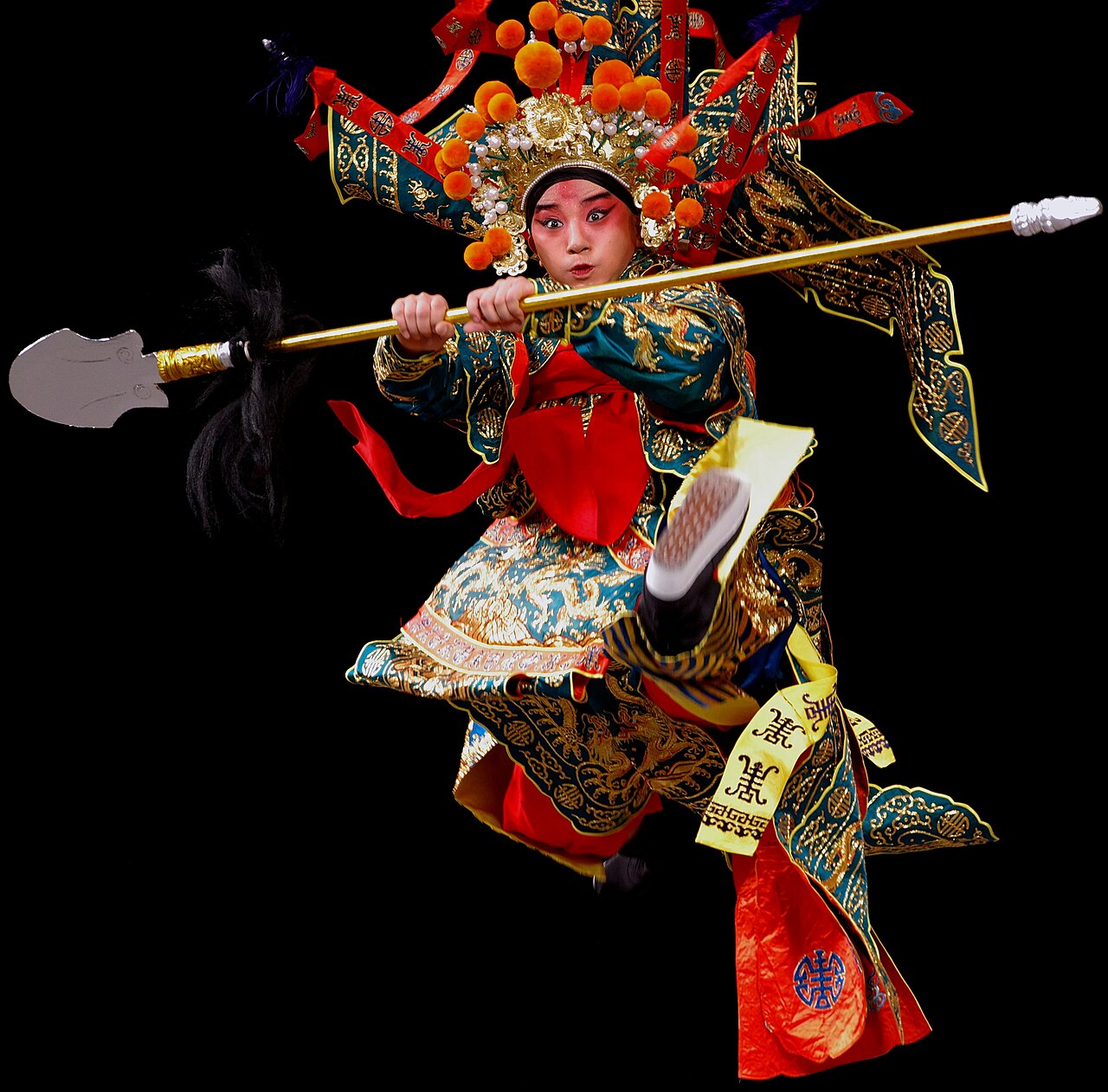
Peking Opera (Jingju)
Synopsis
Chinas national treasure performing art: a spectacular fusion of singing, recitation, acting, and martial arts with elaborate face painting and costumes, dating back over 200 years.
Overview
Peking Opera (京剧, Jingju, literally Capital Drama) is the most prominent form of Chinese opera, recognized as a UNESCO Intangible Cultural Heritage of Humanity since 2010. It combines singing, recitation, acting, and martial arts into a unified performing art form that has captivated audiences for over two centuries.
Originating in Beijing in the late 18th century, Peking Opera became fully developed and recognized by the mid-19th century. It flourished during the Qing Dynasty and was extremely popular in the court of Empress Dowager Cixi.
The Four Skills
Peking Opera performers must master four fundamental skills:
- Chang (唱) — Singing: Elaborate vocal techniques with specific rhythmic patterns
- Nian (念) — Recitation: Stylized spoken dialogue in Beijing dialect
- Zuo (做) — Acting: Mime, gestures, and body movements
- Da (打) — Martial arts: Acrobatic fighting and weapon techniques
Role Types
| Role Type | Chinese | Description |
|---|---|---|
| Sheng | 生 | Male roles (young, old, warrior) |
| Dan | 旦 | Female roles (young, old, warrior) |
| Jing | 净 | Painted-face male roles (bold, vigorous) |
| Chou | 丑 | Clown roles (comic relief) |
Face Painting (Lianpu)
Peking Opera face painting is an art form in itself. Colors carry specific meanings:
- Red — Loyalty, courage (e.g., Guan Yu)
- Black — Impartiality, integrity (e.g., Bao Zheng)
- White — Treachery, cunning (e.g., Cao Cao)
- Blue — Fierce, stubborn temperament
- Gold/Silver — Supernatural beings, deities
Famous Performers
- Mei Lanfang (梅兰芳) — The most famous Dan performer in history, who introduced Peking Opera to the world through international tours in the 1920s-30s
- Cheng Yanqiu (程砚秋) — Renowned for the Cheng school of Dan performance
- Ma Lianliang (马连良) — Master of the Sheng role
References
- Wikipedia: Peking Opera
- UNESCO: Peking Opera
- Baidu Baike: 京剧
Stills & Gallery
Comments (0)