Books by Vincent van der Veen
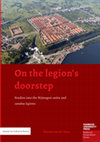
From c. AD 71 to 104, the Roman Tenth Legion was stationed on the Hunerberg in Nijmegen. The legi... more From c. AD 71 to 104, the Roman Tenth Legion was stationed on the Hunerberg in Nijmegen. The legion was housed in a fortress, initially built in timber and later rebuilt in stone. After the legion left for Budapest, the fortress was occupied by detachments of other units. Directly outside the fortress settled the veterans, partners and children of the troops living in the fortress, traders, craftspeople and other civilians who accompanied the army.
The aim of this thesis is to investigate various aspects of the Nijmegen legionary fortress, its extramural settlement and the relationship between the two communities that lived there. This is done through an analysis of selected categories of material culture and their distribution across the two complexes.
The selected categories are: terra sigillata potters’ stamps, coins, tile stamps, military equipment, horse gear and (gendered) brooches. Some of the topics addressed are the chronology of both sites, construction and repair activities, the composition of the fortress’ garrison, evidence for production and recycling of military equipment and the presence of civilians - and women in particular - living or working in the fortress.
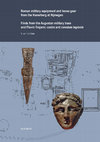
Auxiliaria 18, 2020
Decades of excavations on the Hunerberg at Nijmegen have yielded an uncountable number
of feature... more Decades of excavations on the Hunerberg at Nijmegen have yielded an uncountable number
of features and finds, including over 1,000 items of military equipment and horse gear. These
items can be attributed to an Augustan military base and to a Flavio-Trajanic legionary fortress
(castra) and its extramural civil settlement (canabae legionis).
This book provides a catalogue as well as a detailed analysis of this fascinating assemblage.
What makes this study stand out is that it discusses finds from a legionary fortress along with
its civil settlement. Only rarely are both settlements excavated to a degree that a comparison
between the two is possible, which makes this assemblage an ideal candidate for the study of
these two communities and of the way in which they interacted.
Some aspects addressed in this volume are the function and chronology of the objects,
production and recycling of military equipment and the question whether military equipment
and horse gear can provide evidence for the presence of auxiliary infantry or cavalry.
Furthermore, particular attention is paid to the distribution and the context of the various
classes of finds. Several approaches are explored to investigate how objects were deposited
and to what extent their distribution has been influenced by post-depositional processes such as
erosion or site disturbance, and by differing excavation methods.
Book Chapters by Vincent van der Veen
Zo goed als nieuw. Archeologische aanwijzingen voor het hergebruik van bouwmaterialen en constructie-elementen (NAR 083), 2024
Hergebruik van bouwmaterialen is een bekend fenomeen in stadskernonderzoek. Steden zijn bij uitst... more Hergebruik van bouwmaterialen is een bekend fenomeen in stadskernonderzoek. Steden zijn bij uitstek dynamische plaatsen, waar continu sprake is van bouw en afraak. Door de bewoningscontinuïteit en plaatsvastheid biedt dit de juiste omstandigheden om materiaal opnieuw te gebruiken. Juist doordat hergebruik in stedelijke context alomtegenwoordig is, lijkt een onderzoek naar hergebruik in eerste instantie overbodig. De vele voorbeelden van hergebruikte kloostermoppen, pannenbeerputten en hergebruikt hout lijken voor zich te spreken. Toch is een studie naar hergebruik van bouwmaterialen ook relevant voor stedelijke contexten. Zoals gezegd, waren steden dynamische plaatsen die perioden van groei en krimp kenden, in een eigen (handels)netwerk opereerden en in verschillende landschappen gelegen waren. Door deze factoren mee te wegen, verbreedt een studie naar hergebruik het beeld van het dagelijks leven in een middeleeuwse of nieuwetijdse stad, geef het inzicht in de omgang met materialen in perioden van rijkdom en schaarste en biedt het gegevens over praktijken die niet in geschreven bronnen terecht zijn gekomen.
Tot op het bot onderzocht. Essays ter ere van archeozoöloog Roel Lauwerier (NAR 070), 2020
Presentation of the features and finds related to the Roman amphitheatre in the Schildersbuurt at... more Presentation of the features and finds related to the Roman amphitheatre in the Schildersbuurt at Nijmegen (NL).
Papers by Vincent van der Veen
Supplying the Roman Empire. Proceedings of the 25th International Congress of Roman Frontier Studies. Volume 4, Nijmegen (Archeologische Berichten Nijmegen 12), 2024
This paper presents an assemblage of well over 1,000 items of military equipment and
horse gear... more This paper presents an assemblage of well over 1,000 items of military equipment and
horse gear from the Augustan military base, the Flavio-Trajanic legionary fortress (castra) of Legio X Gemina and its extramural settlement (canabae legionis) at Nijmegen
(NL). By studying the chronology, spatial distribution and find context of these objects, it
is possible to shed some light on the occupation of the site, the use of space and the way in which a Roman fortress and its semi-civilian settlement interacted with each other (A full catalogue and analysis of the finds is published in Van der Veen 2020b).
Germania 98, 2020
This paper discusses the chronology of the legionary fortress (castra) and surrounding civil sett... more This paper discusses the chronology of the legionary fortress (castra) and surrounding civil settlement (canabae legionis) of Nijmegen, the Netherlands, by examining distribution patterns of terra sigillata potters’ stamps and coins. It partially draws on previously published data, but supplements this with a large amount of hitherto unavailable data from various sources to provide a new chronological framework for these military and semi-military assemblages. While previous research has usually focussed on either the castra or the canabae, this is the first attempt at a comprehensive comparative study of both sites, providing new insights into their development and interaction. The main research questions addressed are: How are the finds distributed across the research area and what does this tell us about the impact of depositional patterns, post-depositional processes, and difering excavation techniques? What are the start and end dates of the castra and canabae and are these the same? And fnally, can any chronological patterns be discerned and how should these be explained?
Britannia 52, 2021
Roman military bases were once regarded as strictly male domains with the only women living there... more Roman military bases were once regarded as strictly male domains with the only women living there being the senior officers' wives. This view was challenged by studies that used material culture to identify women in Roman forts and interpret the roles they played. The best of this work considers both the multiple identities expressed through objects and the complexities of depositional and recovery processes. The article presented here fits into this recent development, as it investigates the presence of women in the Augustan military base and the Flavio-Trajanic fortress on the Hunerberg in Nijmegen, the Netherlands, by examining the spatial distribution of brooches (fibulae) associated with women. The distribution of female brooches is compared to that of military (male) brooches in order to highlight and interpret any significant patterns. While numbers are small, the quality of the contextual information allows for the examination of depositional and recovery practices. The paper also raises wider questions about the possibility of 'gendering' brooches.
Internet Archaeology 50, 2018
In this article I present a theoretical model for assigning functions to categories of Roman cera... more In this article I present a theoretical model for assigning functions to categories of Roman ceramics. This model was designed to make broad statements about assemblages that are too large to analyse in detail. It is therefore based on the 'ideal use' of a vessel - i.e. the function the potter had in mind when he chose the clay, temper, forming techniques and so on - rather than 'non-ideal' or actual use. Characteristics considered are, among others, shape, size, weight, surface treatment and wall thickness. Seven distinct functions have been identified, taking the inherent multi-functionality of certain vessels into account. In many cases an individual vessel type will be suitable for more than one function. In a case study the commonly made functional distinction between smooth-tempered one-handled flagons (kruiken) as tableware and two-handled flagons (kruikamforen) as storage vessels is challenged. Furthermore, differences in their deposition within both grave and settlement assemblages are explored.
Kleos 1.1, 2015
During the 1990s, excavations were carried out by the former Rijksdienst
voor het Oudheidkundig B... more During the 1990s, excavations were carried out by the former Rijksdienst
voor het Oudheidkundig Bodemonderzoek (ROB) at the location of the Late
Roman bridge at Cuijk. Three intact bridge piers were discovered consisting
of large wooden piles with iron shoes that were driven into the sand and the
underlying gravel. On one of these piles an inscription was found. It read
ETERNA, which the excavators considered to be a reference to the wish for
the bridge's eternal existence. In the first half of this article we argue that it
should in fact be considered a personal name, providing an analysis of the
inscription itself and comparing it to a number of parallels from various
military sites in Germania Inferior. In the second half we take a closer look
at the archaeological and epigraphical record in an attempt to answer the
questions who this person could have been and what reason he could have
had to carve out his name.
De Maasgouw 138.1, 2019
In september 2016 is aan de Vrije Universiteit het project PAN van start gegaan. Het hoofddoel va... more In september 2016 is aan de Vrije Universiteit het project PAN van start gegaan. Het hoofddoel van het project is om archeologische (metaal)vondsten in privébezit in Nederland te registreren en online te publiceren. Nu PAN ongeveer tweeënhalf jaar loopt, is het een goed moment om te laten zien waar wij ons mee bezig hebben gehouden in die tijd en wat er zoal aan mooie en interessante vondsten is geregistreerd. Ook in Limburg zijn namelijk al verschillende juweeltjes gemeld.
Conference Proceedings Fields of Conflict 10, Mashantucket 26-30 Sept. 2018, vol. 1(of 5), 2019
This contribution argues that studying detector finds from private collections can help to shed ... more This contribution argues that studying detector finds from private collections can help to shed light on a period that has received little attention from Dutch archaeologists, the Napoleonic Era. It further argues that by studying these private finds we can start to formulate research questions that are national, rather than local or regional, in scope.
First a brief summary is given of the main historical events during the French occupation of the Netherlands. This is followed by an overview of the key aspects of the Dutch heritage system, the role played therein by amateur archaeologists and metal detectorists, and the databases that exist to record their finds for academic research and heritage purposes. After this three case studies are presented that demonstrate how private finds have proved vital in the interpretation of two camps and the garrison of a fortified town. Finally, some preliminary results are presented of an ongoing project to map the nationwide distribution of Napoleonic military buttons in an attempt to trace troop movements.
Archeologie in Nederland 1.5, 2017
Armamentaria (Jaarboek van het Nationaal Militair Museum) 49, 2014
Archeobrief 17.4, 2013
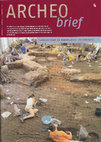
Het vondstmateriaal werd oveÍ een periode van tien jaar verzameld door de heer A.M. van der Weide... more Het vondstmateriaal werd oveÍ een periode van tien jaar verzameld door de heer A.M. van der Weide, die met een metaaldetector systematisch een open plek in het bos afzochttussen Aalst en'Waalre, iets ten zuiden van de Rz onder Eindhoven. Dit deed hij aan de hand van een korte passage van een lokale historicus' waaruit blijkt dat er in de Franse Tijd een legerkamp op de heide nabij Aalst heeft gelegen. De meer dan 36oo vondsten die hij deed, werden in zoog naar het Archeologisch Centrum Eindhoven en Helmond (actrr) gebracht en al globaal gesorteerd en geÏnventariseerd door wijwilligers. Na het overlijden van de heer Van der Weide in zorr werden de vondsten door diens weduwe aan het AcEH geschonken. Daar is het materiaal door mij in zotz verder uitgewerkt voor mijn rvr,r,-scriptie.r Naast vele honderden ronde loden kogels, die vriiwel overal in Nederland worden aangetroffen, werden nog veel meer militaria gevonden zoals vuurketsen, frag' menten van musketten en sabels en gespen. Vele hiervan konden in de Franse Tijd worden gedateerd, rnaar vooral een honderdvijftigtal uniformknopen bleek doorslaggevend voor de datering van de eerste grootschalige activiteiten in het gebied. Omdat de verordeningen over de vervaardiging hiervan nog bewaard ziin, kunnen deze vaak op enkele jaren nauwkeurig worden gedateerd. Een eerste groep, voorzien van het opschrift'République FranEaise' en aÍbeeldingen van een roedenbundel, een Phrygische muts en eikenbladeren, kon worden gedateerd tussen oktober 1792 en februari t793,Ioen een nieuw ontwerp werd geÏntroduceerd. Vanwege de omvang van het Franse leger bleef oud materiaal echter nog geruime tijd in gebruik en was standaardisatie ver 1 Fragmenten van een vuursteenslotpistool (circa 1610-1840).
Westerheem 65.2, 2016
ln april 2014 is door Arcadis Nederland en Aeres Milieu een archeologisch onderzoek uitgevoerd aa... more ln april 2014 is door Arcadis Nederland en Aeres Milieu een archeologisch onderzoek uitgevoerd aan de Pastoor van Tielstraat te Leuth. Op deze locatie werden de resten aangetroffen van een nederzetting uit de Romeinse tijd.
Site Reports by Vincent van der Veen
Auxiliaria 16, 2017
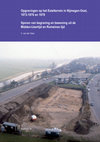
In 1973-1976 en 1978 heeft de toenmalige Rijksdienst voor het Oudheidkundig Bodemonderzoek tussen... more In 1973-1976 en 1978 heeft de toenmalige Rijksdienst voor het Oudheidkundig Bodemonderzoek tussen de Batavierenweg en de Barbarossastraat in Nijmegen-Oost verschillende opgravingen uitgevoerd voorafgaand aan de bouw van het hoofdkantoor van staalconcern Estel. In verband met de vernieuwing van een aantal straten zijn ook de aangrenzende Barbarossastraat en de Batavierenweg deels onderzocht. De opgravingen stonden onder leiding van J.H.F. Bloemers. De opgravingen op en rond het Estelterrein hebben een grote hoeveelheid sporen en vondsten uit de IJzertijd en Romeinse tijd aan het licht gebracht. Tot dusver was hiervan alleen een klein grafveld uit de Midden-IJzertijd in detail gepubliceerd. Eind 2013 is alsnog een begin gemaakt
met de uitwerking van de opgravingen. Naast het bovengenoemde grafveld zijn tevens enkele sporen aangetroffen die duiden op bewoning in de Midden-IJzertijd. Tot de oudste Romeinse sporen behoort een greppel die mogelijk geïnterpreteerd kan worden als de oostelijke begrenzing van de vroegste fase van de burgerlijke nederzetting Oppidum Batavorum. Zes Romeinse crematiegraven dateren uit de eerste helft van de 1ste eeuw na Chr. en hangen waarschijnlijk samen met het grote grafveld ten zuiden van het opgravingsterrein (o.a. Museum Kamstraat). Eveneens voor-Flavisch zijn naar alle waarschijnlijkheid de eerste twee fases van een Romeinse grindweg die van west naar oost midden door het opgravingsterrein loopt. Verreweg de meeste sporen behoren echter tot de Flavisch-Trajaanse canabae legionis, het kampdorp van de vesting van het Tiende Legioen op de Hunerberg. Aan weerszijden van de derde fase van de grindweg zijn verschillende stenen funderingen aangetroffen die ruwweg tussen 70 en 120 na Chr. gedateerd kunnen worden. Het is duidelijk dat hieraan in ieder geval één en mogelijk twee houtbouwfases voorafgingen. In deze publicatie wordt een beschrijving gegeven van de voornaamste sporen en structuren aangetroffen tijdens de opgravingen op en rond het Estelterrein, gevolgd door een presentatie van de stempels op aardewerk en baksteen, de versierde terra sigillata en een selectie van de metaalvondsten. Ten slotte volgt een synthese van sporen en vondsten, waarbij de chronologie en verspreiding van het vondstmateriaal centraal staan.
Zuidnederlandse Archeologische Rapporten, 2020
Site report of an archaeological investigation of two hoard finds of Celtic coins from the period... more Site report of an archaeological investigation of two hoard finds of Celtic coins from the period of Julius Caesar. Following the discovery of two small silver hoards by metal detector users at close distance to one another near the small village of Graetheide, we organised a small campaign of trial trenches. This reports the finds, features and interpretation of the results.
Raap-Rapport 4513, 2020
In opdracht van de gemeente Asten heeft RAAP van 14 mei tot en met 18 mei 2018 een archeologische... more In opdracht van de gemeente Asten heeft RAAP van 14 mei tot en met 18 mei 2018 een archeologische opgraving uitgevoerd in plangebied Asten Loverbosch - Fase 2. In de loop van 2016 en 2017 werden hier door een detectoramateur 23 fragmenten van zilveren Romeinse munten gedetecteerd.
Het voornaamste doel van het onderzoek was het veiligstellen van de wetenschappelijke informatie (behoud ex situ). De uitwerking vond plaats in samenwerking met PAN.
Arcadis Archeologie Rapport 88, 2018
Van 25 februari tot en met 8 maart 2016 is door Arcadis Nederland BV in samenwerking met Aeres Mi... more Van 25 februari tot en met 8 maart 2016 is door Arcadis Nederland BV in samenwerking met Aeres Milieu een definitief onderzoek uitgevoerd op de locatie De Heuvel F2 te Breda.
Het onderzoeksterrein kan worden ingedeeld in een noordelijke, hoger gelegen zone, en een zuidelijke, lager gelegen en nattere zone. Tijdens het onderzoek zijn drie vindplaatsen aangetroffen. Alle drie de vindplaatsen betreffen nederzettingsterreinen of de periferie daarvan. De vindplaatsen dateren uit de Late IJzertijd, de Volle Middeleeuwen (900-1200) en de Nieuwe tijd.
Arcadis Archeologisch Rapport 64, 2016
ln april 2014 is door Arcadis Nederland en Aeres Milieu een archeologisch onderzoek uitgevoerd aa... more ln april 2014 is door Arcadis Nederland en Aeres Milieu een archeologisch onderzoek uitgevoerd aan de Pastoor van Tielstraat te Leuth. Op deze locatie werden de resten aangetroffen van een nederzetting uit de Romeinse tijd.



Uploads
Books by Vincent van der Veen
The aim of this thesis is to investigate various aspects of the Nijmegen legionary fortress, its extramural settlement and the relationship between the two communities that lived there. This is done through an analysis of selected categories of material culture and their distribution across the two complexes.
The selected categories are: terra sigillata potters’ stamps, coins, tile stamps, military equipment, horse gear and (gendered) brooches. Some of the topics addressed are the chronology of both sites, construction and repair activities, the composition of the fortress’ garrison, evidence for production and recycling of military equipment and the presence of civilians - and women in particular - living or working in the fortress.
of features and finds, including over 1,000 items of military equipment and horse gear. These
items can be attributed to an Augustan military base and to a Flavio-Trajanic legionary fortress
(castra) and its extramural civil settlement (canabae legionis).
This book provides a catalogue as well as a detailed analysis of this fascinating assemblage.
What makes this study stand out is that it discusses finds from a legionary fortress along with
its civil settlement. Only rarely are both settlements excavated to a degree that a comparison
between the two is possible, which makes this assemblage an ideal candidate for the study of
these two communities and of the way in which they interacted.
Some aspects addressed in this volume are the function and chronology of the objects,
production and recycling of military equipment and the question whether military equipment
and horse gear can provide evidence for the presence of auxiliary infantry or cavalry.
Furthermore, particular attention is paid to the distribution and the context of the various
classes of finds. Several approaches are explored to investigate how objects were deposited
and to what extent their distribution has been influenced by post-depositional processes such as
erosion or site disturbance, and by differing excavation methods.
Book Chapters by Vincent van der Veen
Papers by Vincent van der Veen
horse gear from the Augustan military base, the Flavio-Trajanic legionary fortress (castra) of Legio X Gemina and its extramural settlement (canabae legionis) at Nijmegen
(NL). By studying the chronology, spatial distribution and find context of these objects, it
is possible to shed some light on the occupation of the site, the use of space and the way in which a Roman fortress and its semi-civilian settlement interacted with each other (A full catalogue and analysis of the finds is published in Van der Veen 2020b).
voor het Oudheidkundig Bodemonderzoek (ROB) at the location of the Late
Roman bridge at Cuijk. Three intact bridge piers were discovered consisting
of large wooden piles with iron shoes that were driven into the sand and the
underlying gravel. On one of these piles an inscription was found. It read
ETERNA, which the excavators considered to be a reference to the wish for
the bridge's eternal existence. In the first half of this article we argue that it
should in fact be considered a personal name, providing an analysis of the
inscription itself and comparing it to a number of parallels from various
military sites in Germania Inferior. In the second half we take a closer look
at the archaeological and epigraphical record in an attempt to answer the
questions who this person could have been and what reason he could have
had to carve out his name.
First a brief summary is given of the main historical events during the French occupation of the Netherlands. This is followed by an overview of the key aspects of the Dutch heritage system, the role played therein by amateur archaeologists and metal detectorists, and the databases that exist to record their finds for academic research and heritage purposes. After this three case studies are presented that demonstrate how private finds have proved vital in the interpretation of two camps and the garrison of a fortified town. Finally, some preliminary results are presented of an ongoing project to map the nationwide distribution of Napoleonic military buttons in an attempt to trace troop movements.
Site Reports by Vincent van der Veen
met de uitwerking van de opgravingen. Naast het bovengenoemde grafveld zijn tevens enkele sporen aangetroffen die duiden op bewoning in de Midden-IJzertijd. Tot de oudste Romeinse sporen behoort een greppel die mogelijk geïnterpreteerd kan worden als de oostelijke begrenzing van de vroegste fase van de burgerlijke nederzetting Oppidum Batavorum. Zes Romeinse crematiegraven dateren uit de eerste helft van de 1ste eeuw na Chr. en hangen waarschijnlijk samen met het grote grafveld ten zuiden van het opgravingsterrein (o.a. Museum Kamstraat). Eveneens voor-Flavisch zijn naar alle waarschijnlijkheid de eerste twee fases van een Romeinse grindweg die van west naar oost midden door het opgravingsterrein loopt. Verreweg de meeste sporen behoren echter tot de Flavisch-Trajaanse canabae legionis, het kampdorp van de vesting van het Tiende Legioen op de Hunerberg. Aan weerszijden van de derde fase van de grindweg zijn verschillende stenen funderingen aangetroffen die ruwweg tussen 70 en 120 na Chr. gedateerd kunnen worden. Het is duidelijk dat hieraan in ieder geval één en mogelijk twee houtbouwfases voorafgingen. In deze publicatie wordt een beschrijving gegeven van de voornaamste sporen en structuren aangetroffen tijdens de opgravingen op en rond het Estelterrein, gevolgd door een presentatie van de stempels op aardewerk en baksteen, de versierde terra sigillata en een selectie van de metaalvondsten. Ten slotte volgt een synthese van sporen en vondsten, waarbij de chronologie en verspreiding van het vondstmateriaal centraal staan.
Het voornaamste doel van het onderzoek was het veiligstellen van de wetenschappelijke informatie (behoud ex situ). De uitwerking vond plaats in samenwerking met PAN.
Het onderzoeksterrein kan worden ingedeeld in een noordelijke, hoger gelegen zone, en een zuidelijke, lager gelegen en nattere zone. Tijdens het onderzoek zijn drie vindplaatsen aangetroffen. Alle drie de vindplaatsen betreffen nederzettingsterreinen of de periferie daarvan. De vindplaatsen dateren uit de Late IJzertijd, de Volle Middeleeuwen (900-1200) en de Nieuwe tijd.