Research projects by Vladimir Ivanovici
Dumbarton Oaks Research Library and Collection (Harvard University) Research Project Grant
This ... more Dumbarton Oaks Research Library and Collection (Harvard University) Research Project Grant
This project proposes the full documentation of the newly restored Church of the Holy Cross at Patrauti Monastery - built in 1487 in the principality of Moldavia, modern Romania. The church contains key information about Byzantine and post-Byzantine church design, building, and decorating methods, the dynamics of knowledge transfer catalyzed by the fall of Constantinople, and how local princes used religious spaces and rituals to transform locally and claim the legacy of Byzantium.
Monographs by Vladimir Ivanovici
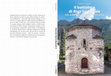
Arte, architettura e rituale dal V al XVII secolo Arte, architettura e rituale dal V al XVII seco... more Arte, architettura e rituale dal V al XVII secolo Arte, architettura e rituale dal V al XVII secolo Fontanaedizioni Vladimir Ivanovici (dottorato in Storia nel 2011, dottorato in Storia dell'Arte nel 2014) insegna all'Accademia di architettura di Mendrisio-Università della Svizzera italiana. Le sue ricerche si occupano dell'arte e dell'architettura del Mediterraneo tra il 300 e il 1500 circa. In particolare, Ivanovici studia le strategie utilizzate dalle tradizioni antiche e medievali per concretizzare il divino tramite l'integrazione di spazio costruito, programma iconografico, azioni rituali e coinvolgimento sensoriale. Poiché queste tradizioni sviluppavano modelli antropologici che riconoscevano alle persone la capacità di incarnare il divino, l'autore-nelle sue ricerche-analizza l'arte e l'architettura degli spazi cultuali attraverso la presenza, l'estetica e il movimento di queste stesse persone.
![Research paper thumbnail of Between Statues and Icons Iconic Persons from Antiquity to the Early Middle Ages [Contexts of Ancient and Medieval Anthropology 5] (Brill: Paderborn, 2023)](https://attachments.academia-assets.com/105299029/thumbnails/1.jpg)
This book argues that Romans credited certain living persons with the capacity to function as cul... more This book argues that Romans credited certain living persons with the capacity to function as cult statues, that is, as images and vessels of the divine. After addressing the cultural context that produced the idea that humans can become images of the divine, the text shows how emperors, bishops, and others imitated the aesthetic, immobility, and material setting of statuary to establish themselves as iconic and how their role as mediators with the divine was eventually transferred to new categories of material objects, such as relics and icons. The figure of the iconic person thus is shown to have bridged the cult statues of Antiquity with the new mechanisms of interaction with the divine that Christians used for the following millennium. By integrating living persons in the art historical analysis of the spaces and advocating for the need to consider the animation of artefacts together with the reification of bodies, this study marks an important development in the study of the past.
Using light as fil rouge reuniting theology and ritual with the architecture, decoration, and ico... more Using light as fil rouge reuniting theology and ritual with the architecture, decoration, and iconography of cultic spaces, the present study argues that the mise-en-scène of fifth-century baptism and sixth-century episcopal liturgy was meant to reproduce the luminous atmosphere of heaven. Analysing the material culture of the two sacraments against common ritual expectations and Christian theology, we evince the manner
in which the luminous effect was reached through a combination of constructive techniques and perceptual manipulation. One nocturnal and one diurnal, the two ceremonials represented different scenarios, testifying to the capacity of church builders and willingness of Late Antique bishops to stage the ritual experience in order to offer God to the senses.
Edited volumes by Vladimir Ivanovici
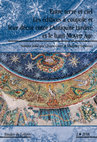
Couronnement des édifices les plus prestigieux, charnière entre l'espace architectural et le mond... more Couronnement des édifices les plus prestigieux, charnière entre l'espace architectural et le monde céleste, la coupole s'avère être un « système » crucial dans l'art de l'antiquité tardive et du haut Moyen Âge. Signe de commandes très distinguées, elle caractérise des bâtiments de grande importance – mausolées, martyria et memoria, baptistères, églises impériales, chapelles palatines – et incarne des défis architecturaux et décoratifs majeurs. En raison du faible nombre d’exemples conservés et de la complexité de leurs problématiques, les bâtiments à coupole ont rarement été l’objet d’études d'ensemble. Durant ces quinze dernières années, toutefois, d’importantes recherches ont révolutionné l’état des connaissances d’une partie de ces bâtiments et ont fondé les présupposés d’une nouvelle étude d’ensemble. Dans ce volume anthologique, les bâtiments à coupole majeurs de l’Antiquité tardive et du haut Moyen Âge sont étudiés selon des perspectives variées. Son but est celui d’éclaircir la structure et la décoration de ces bâtiments par rapport à leur fonction et d’offrir ainsi une ouverture sur un tournant historique majeur.
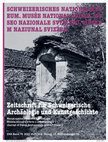
Zeitschrift für schweizerische Archäologie und Kunstgeschichte, 2022
Using a flexible notion of religious identity, this special issue reviews the information we have... more Using a flexible notion of religious identity, this special issue reviews the information we have on the Christian faith and practices in the area just south of the Alps in the period from the fourth to the sixth centuries. The scholars who contributed to this volume revisited the available evidence to evaluate its relevance in light of a nuanced understanding of religious identity, thus shifting the perspective from a unidirectional
‘Christianisation’ of the Alpine regions to the multidimensional notion of ‘Christianness’. This adjustment of our lenses also covers systematic attempts at proselytising,
which loom particularly large in narratives of Christianisation, but it equally highlights the range of religious identities that prevailed in the area. Secondly, this volume draws attention to the cultural coherence of the area from Turin to Trent and from Milan to the Alpine passes. In the past, scholars tended to study the spread of Christianity by modern province – i.e., in Lombardy, Piedmont, Ticino – which significantly hampered the
ability to recognise recurring patterns that span the Alpine region. A more comprehensive view can provide clues to understanding these complex social and cultural processes.
The volume at hand takes a first step in this direction, providing the foundation for further exploration, particularly with regard to the region north of the Alpine passes, whose study along the same lines is crucial to an integrative approach.
Inside Christian churches, natural light has long been harnessed to underscore theological, symbo... more Inside Christian churches, natural light has long been harnessed to underscore theological, symbolic, and ideological statements. In this volume, twenty-four international scholars with various specialties explore how the study of sunlight can reveal essential aspects of the design, decoration, and function of medieval sacred spaces.
Themes covered include the interaction between patrons, advisors, architects, and artists, as well as local negotiations among competing traditions that yielded new visual and spatial constructs for which natural light served as a defining and unifying factor. The study of natural light in medieval churches reveals cultural relations, knowledge transfer patterns, processes of translation and adaptation, as well as experiential aspects of sacred spaces in the Middle Ages.
RIHA Journal , 2019
By exploring the various traditions of iconic living present in the Roman world in the period pre... more By exploring the various traditions of iconic living present in the Roman world in the period preceding the affirmation of the icon, the contributions in this thematic issue recreate part of the context in which the concept of icon was formed, and invite readers to add a new perspective on the phenomenon: that of surrogate for the living iconic body.
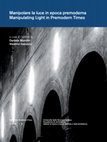
Manipulating Light in Premodern Times is the first of two volumes featuring essays
from establis... more Manipulating Light in Premodern Times is the first of two volumes featuring essays
from established and emerging scholars of diverse research fields and addressing
various aspects pertaining to the “economy of light”. Organised under the aegis
of the project From Ravenna to Vals, the international conference Manipulating
Light in Premodern Times held in Mendrisio on the 3rd and 4th of November 2011
was made possible by the generous support of the Swiss National Science Foundation.
Due to the character of the extant sources but also to the large chronological
span, the present volume focuses on religious buildings and artefacts. The second
volume, however, will address the architecture of the 20th century in its many building
types and expressions.15 Both volumes are meant to contribute to a developing
topic in current academic scholarship, namely the historicisation of the employment
of light as a dynamic factor of built space before and after the introduction of
electrical illumination. In an era in which the advancing musealisation of historical
buildings reinforces their artificial illumination in order to maximise their visibility
for contemporary touristic needs (safety and photographability), the collected essays
intend to increase the awareness of the importance and relevance of historical
lighting conditions and sophisticated techniques in modulating darkness.16
Divided into four sections, the present volume covers both material and theoretical
aspects. Art historians, architects, historians, philologists, and restorers all attest
to the centrality of the theme despite their various approaches and cultural contexts.
Enriched with the contributions of scholars not present at the preceding conference, the volume nonetheless maintains the meeting’s structure.
Études de lettres, 2018
Merging built space with the cosmic realm, the dome emerges as a highly meaningful element in Lat... more Merging built space with the cosmic realm, the dome emerges as a highly meaningful element in Late Antique and Early Medieval art. Sign of distinguished commission, the dome adorns important buildings (mausolea, martyria and memoria, baptisteries, imperial churches, and palatine chapels), providing a space where major architectural and decorative challenges were solved. The complexity of the problems they pose – structural, decorative, and ritual –, along with their use for spaces with various functions hindered the study of domed buildings as a group. In the past fifteen years, nevertheless, important studies enriched our knowledge of some of these buildings, and invite an attempt to propose a synoptic approach. The present anthology analyses the main Late Antique and Early Medieval domed buildings from a variety of perspectives, proposing new considerations regarding their structure, decoration, and functions.
Articles by Vladimir Ivanovici
This chapter discusses the relationship between the architecture and decoration of churches built... more This chapter discusses the relationship between the architecture and decoration of churches built during the reign of Emperor Justinian, liturgical performances of the same period, and Pseudo-Dionysius’ reflections on the theophanic potential of matter. In so doing, it stresses the existence of an under-explored perceptual dimension of the mises-en-scène of liturgical performances in church space, which according to Pseudo-Dionysius functioned as genuine revelations, at least for the less educated members of their audiences. Through attentively devised features in church architecture, decoration, and ritual performance the faithful was enticed to imagine entering into heaven and connecting with angelic orders.
RIHA Journal, 2019
This article discusses the ways in which the physical presence of consecrated virgins was perceiv... more This article discusses the ways in which the physical presence of consecrated virgins was perceived, described, and subsequently altered in Late Antiquity. In the course of the fourth and fifth centuries CE, through codes that regulated their behaviour and outward appearance, and through the assignment of specific ritual functions and spaces, bishops constructed a new and long-lasting image of consecrated virgins. The resulting model, the authors argue, was shaped by notions regarding female anatomy as well as by their association with the Virgin Mary; it was similar to a precious reliquary: a container whose aesthetic indicated the consecrated nature of its interior.
RIHA Journal, 2019
The imagery of the "radiant body" and "luminous garment" occurs frequently in early Christian ref... more The imagery of the "radiant body" and "luminous garment" occurs frequently in early Christian references to the Edenic state of Adam and its partial reinstatement by Moses, Jesus, and numerous saintly (usually ascetic) figures. This article offers a synthetic presentation of these traditions, sketching out its main articulations, its biblical-exegetical foundations, its points of continuity with the apocalyptic traditions of the Second Temple Era and parallels with the Rabbinic tradition.
As Late Roman society reorganized itself
around the person of the ruler, the consulate gained a ... more As Late Roman society reorganized itself
around the person of the ruler, the consulate gained a special
importance in the new social order. From the fourth century
to the sixth, the consulate was held by emperors, high-ranking
members of the imperial family, caesars, as well as a number
of high-ranking officials who had either distinguished
themselves in the service of emperors or who came from
prominent aristocratic families. These individuals’ consular
responsibilities were limited mostly to the presentation of
games and distribution of largesse. At the same time, this
article argues, a further important aspect of the office for
non-imperial consuls was to reproduce, or evoke, the physical
presence of the ruling emperor, particularly his theophanic
dimension. The text explores the strategy used to promote the
living consul as iconic, in the sense of reproducing the imperial
presence qua image of the divine.
(with Daniela Mondini), “Luce e luci a Santa Maria Antiqua e nelle chiese altomedievali di Roma”, 378-385.
Maria Andaloro et al. (eds.) Santa Maria Antiqua tra Roma e Bisanzio (Milano, Electa, , 2016



Uploads
Research projects by Vladimir Ivanovici
This project proposes the full documentation of the newly restored Church of the Holy Cross at Patrauti Monastery - built in 1487 in the principality of Moldavia, modern Romania. The church contains key information about Byzantine and post-Byzantine church design, building, and decorating methods, the dynamics of knowledge transfer catalyzed by the fall of Constantinople, and how local princes used religious spaces and rituals to transform locally and claim the legacy of Byzantium.
Monographs by Vladimir Ivanovici
in which the luminous effect was reached through a combination of constructive techniques and perceptual manipulation. One nocturnal and one diurnal, the two ceremonials represented different scenarios, testifying to the capacity of church builders and willingness of Late Antique bishops to stage the ritual experience in order to offer God to the senses.
Edited volumes by Vladimir Ivanovici
‘Christianisation’ of the Alpine regions to the multidimensional notion of ‘Christianness’. This adjustment of our lenses also covers systematic attempts at proselytising,
which loom particularly large in narratives of Christianisation, but it equally highlights the range of religious identities that prevailed in the area. Secondly, this volume draws attention to the cultural coherence of the area from Turin to Trent and from Milan to the Alpine passes. In the past, scholars tended to study the spread of Christianity by modern province – i.e., in Lombardy, Piedmont, Ticino – which significantly hampered the
ability to recognise recurring patterns that span the Alpine region. A more comprehensive view can provide clues to understanding these complex social and cultural processes.
The volume at hand takes a first step in this direction, providing the foundation for further exploration, particularly with regard to the region north of the Alpine passes, whose study along the same lines is crucial to an integrative approach.
Themes covered include the interaction between patrons, advisors, architects, and artists, as well as local negotiations among competing traditions that yielded new visual and spatial constructs for which natural light served as a defining and unifying factor. The study of natural light in medieval churches reveals cultural relations, knowledge transfer patterns, processes of translation and adaptation, as well as experiential aspects of sacred spaces in the Middle Ages.
from established and emerging scholars of diverse research fields and addressing
various aspects pertaining to the “economy of light”. Organised under the aegis
of the project From Ravenna to Vals, the international conference Manipulating
Light in Premodern Times held in Mendrisio on the 3rd and 4th of November 2011
was made possible by the generous support of the Swiss National Science Foundation.
Due to the character of the extant sources but also to the large chronological
span, the present volume focuses on religious buildings and artefacts. The second
volume, however, will address the architecture of the 20th century in its many building
types and expressions.15 Both volumes are meant to contribute to a developing
topic in current academic scholarship, namely the historicisation of the employment
of light as a dynamic factor of built space before and after the introduction of
electrical illumination. In an era in which the advancing musealisation of historical
buildings reinforces their artificial illumination in order to maximise their visibility
for contemporary touristic needs (safety and photographability), the collected essays
intend to increase the awareness of the importance and relevance of historical
lighting conditions and sophisticated techniques in modulating darkness.16
Divided into four sections, the present volume covers both material and theoretical
aspects. Art historians, architects, historians, philologists, and restorers all attest
to the centrality of the theme despite their various approaches and cultural contexts.
Enriched with the contributions of scholars not present at the preceding conference, the volume nonetheless maintains the meeting’s structure.
Articles by Vladimir Ivanovici
around the person of the ruler, the consulate gained a special
importance in the new social order. From the fourth century
to the sixth, the consulate was held by emperors, high-ranking
members of the imperial family, caesars, as well as a number
of high-ranking officials who had either distinguished
themselves in the service of emperors or who came from
prominent aristocratic families. These individuals’ consular
responsibilities were limited mostly to the presentation of
games and distribution of largesse. At the same time, this
article argues, a further important aspect of the office for
non-imperial consuls was to reproduce, or evoke, the physical
presence of the ruling emperor, particularly his theophanic
dimension. The text explores the strategy used to promote the
living consul as iconic, in the sense of reproducing the imperial
presence qua image of the divine.