Papers by Volodymyr Kulikov
Heritage and Society, 2024
Corporate enterprises have long embraced their historical legacy, preserving not only documents i... more Corporate enterprises have long embraced their historical legacy, preserving not only documents in their archives, but also buildings, and old equipment from their past operations. Scholars in management and marketing studies have dedicated attention to exploring the heritage of business organizations since the 2000s, primarily interested in how firms leverage their historical legacies to enhance performance, build identity, and ensure longterm success. This has, however, developed independently from the interdisciplinary field of cultural heritage studies, which largely overlooks how corporate enterprises deal with what they see as their own heritage. The paper bridges this divide by reviewing existing heritage approaches in management and marketing studies literature and exploring the potential of addressing this corporate heritage discourse in the field of critical heritage studies. It argues that since socioeconomic interests invariably influence heritage processes, engaging with this corporate heritage discourse may enhance our understanding of the complex interplay between organizations, heritage, and societal dynamics in the broader context of heritage studies.
Society and Economy, 2023
This article explores the communication strategies of multinational corporations in response to t... more This article explores the communication strategies of multinational corporations in response to the Russo-Ukrainian War and the public pressure to divest from the Russian domestic market. By content analyzing official statements from the top 50 revenue-generating multinational corporations in Russia, the article identifies patterns in corporate narratives about the war, their actions and concerns, and potential solutions. The findings reveal that most companies declare scaling down their presence in Russia while maintaining certain basic obligations, prioritizing employee safety, and expressing concerns about the global economy. While few explicitly condemn Russia's aggression, many adopt neutral language to avoid naming Russia as the aggressor. Corporations emphasize the importance of diplomacy, adherence to international law, and the pursuit of peace, but often avoid proposing concrete solutions. Despite variations across industries, countries of origin, and decisions to stay or leave Russia, the differences in statements were not significant. The uniformity of corporate statements and evidence that companies frequently do not follow their declared promises suggest potential "bluewashing"making vague or false claims of social responsibility or anti-war stances to improve their public image. These findings emphasize the need for multinational corporations to develop sincere and original wartime communication strategies.

Ruin heritage and its reuse: the case of ruin bars in Budapest
Journal of Cultural Heritage Management and Sustainable Development, 2023
Purpose
The paper discusses ethical issues related to the adaptive reuse of ruin heritage on the ... more Purpose
The paper discusses ethical issues related to the adaptive reuse of ruin heritage on the example of the so-called ruin bars in Budapest's District VII. It explores how heritage discourse can contribute to the sustainable development of urban neighborhoods. The authors address the question by focusing on how a processual approach can be instrumental in identifying responsible and socially sustainable ways to reuse dilapidated heritage in a residential area.
Design/methodology/approach
The problem is analyzed through a case study based on field observation, participant observation, stakeholder interviews, policy analysis and media and social media content analysis.
Findings
The authors argue that ethical reuse of ruin heritage must take into consideration the values and interests of multiple stakeholders and the broadest range of consequences at the level of neighborhood and city. An integrated heritage and planning policy should consider and involve as active participants all the heritage communities concerned. Importantly, these groups, comprising both new and longtime residents, must include the vulnerable and marginalized.
Practical implications
The findings can be used by heritage managers for identifying and addressing ethical issues in their adaptive heritage reuse practices and by policymakers for integrating heritage management in urban development and making cities more inclusive (SDG #11).
Originality/value
The paper explores how ethical it is for business enterprises to build on the ruin esthetics in a residential district and what the ethical implications of this reuse process are for various stakeholders.
Вісник Харківського національного університету імені В. Н. Каразіна. Серія "Історія", 2022
Пропонована стаття має на меті визначити тренди в економічній та бізнесовій історії за останні п’... more Пропонована стаття має на меті визначити тренди в економічній та бізнесовій історії за останні п’ять років і з’ясувати фактори впливовості наукових розвідок. Для цього автори проаналізували десять статей із найвищим індексом цитування, опублікованих у провідних міжнародних рецензованих журналах з економічної та бізнесової історії. Для кожної статті визначені науковий внесок і новизна, а також потенційна застосовність в інших дослідженнях. Наш аналіз визначає ефективні теоретико-методологічні інструменти сучасних історико-економічних досліджень, що може бути корисним колегам, які хочуть підвищити впливовість своїх публікацій. Синтезуючи отримані результати, ми виділили такі найважливіші фактори впливу статей. Пропонування нової теорії або концепції очевидно підвищує цінність досліджень. Новий репрезентативний емпіричний матеріал критично важливий для того, щоби зацікавити спільноту економічних істориків. Інший підхід — запропонувати новий ефективний метод оброблення емпірики, уже введеної в науковий обіг. Експліцитне пояснення того, як нові дані або нові методи оброблення даних уточнюють загальновизнані уявлення про історичні явища та процеси, очевидно підвищує популярність статей. Дієвий засіб зацікавити читачів — звертання до відхилень від «норм» та «очікувань» — історичних аномалій і парадоксів. Критичний огляд літератури з теми чи проблеми буде добре сприйнятий спільнотою економічних істориків, але такий формат особливо популярний у бізнесовій історії. Наприкінці статті подані спостереження щодо дисциплінарної та національної строкатості авторських груп, що сприяє підвищенню рівня міждисциплінарності досліджень і їхньої цінності для суміжних дисциплін. Перспективи дальших студій в українських історичних журналах, і порівнянні результатів зі спостереженнями, що ґрунтуються на аналізі міжнародних періодичних видань. Спостереження авторів огляду щодо причин впливовості аналізованих статей будуть корисні історикам та економістам, але найперше стаття розрахована на науковців, які спеціалізуються на економічній, бізнесовій і соціальній історії.
Вісник Харківського національного університету імені В. Н. Каразіна. Серія «Історія», 2022
Пропонована стаття має на меті визначити тренди в економічній та бізнесовій історії за останні п’... more Пропонована стаття має на меті визначити тренди в економічній та бізнесовій історії за останні п’ять років і з’ясувати фактори впливовості наукових розвідок. Для цього автори проаналізували десять статей із найвищим індексом цитування, опублікованих у провідних міжнародних рецензованих журналах з економічної та бізнесової історії. Для кожної статті визначені науковий внесок і новизна, а також потенційна застосовність в інших дослідженнях. Наш аналіз визначає ефективні теоретико-методологічні інструменти сучасних історико-економічних досліджень, що може бути корисним колегам, які хочуть підвищити впливовість своїх публікацій. Синтезуючи отримані результати, ми виділили такі найважливіші фактори впливу статей. Пропонування нової теорії або концепції очевидно підвищує цінність досліджень. Новий репрезентативний емпіричний матеріал критично важливий для того, щоби зацікавити спільноту економічних істориків. Інший підхід – запропонувати новий ефективний метод оброблення емпірики, уже введеної в науковий обіг. Експліцитне пояснення того, як нові дані або нові методи оброблення даних уточнюють загальновизнані уявлення про історичні явища та процеси, очевидно підвищує популярність статей. Дієвий засіб зацікавити читачів – звертання до відхилень від «норм» та «очікувань» – історичних аномалій і парадоксів. Критичний огляд літератури з теми чи проблеми буде добре сприйнятий спільнотою економічних істориків, але такий формат особливо популярний у бізнесовій історії. Наприкінці статті подані спостереження щодо дисциплінарної та національної строкатості авторських груп, що сприяє підвищенню рівня міждисциплінарності досліджень і їхньої цінності для суміжних дисциплін. Перспективи дальших студій у цьому напряму автори вбачають в аналізові впливових статей, опублікованих в українських історичних журналах, і порівнянні результатів зі спостереженнями, що ґрунтуються на аналізі міжнародних періодичних видань. Спостереження авторів огляду щодо причин впливовості аналізованих статей будуть корисні історикам та економістам, але найперше стаття розрахована на науковців, які спеціалізуються на економічній, бізнесовій і соціальній історії.
Industrial Heritage and Its Multiple Uses in Donbas, Ukraine
Region: Regional Studies of Russia, Eastern Europe, and Central Asia, 2021
The article analyzes the heritagization of industrial culture in Ukraine’s Donetsk and Luhansk ob... more The article analyzes the heritagization of industrial culture in Ukraine’s Donetsk and Luhansk oblasts from the early 20th century until the 2010s. It is based on participant observation, analysis of media discourse, and 24 semistructured interviews with local historians, museum employees, and other agents of industrial heritagization, collected between 2016 and 2021. The article argues that changing political, social, and cultural contexts, as well as the shifting balance of power between the main organizations for heritage preservation has resulted in the selective representation of the region’s past. It demonstrates that preservationist and utilitarian (political or economic) approaches have been dominant, and that future-oriented initiatives are still few and far between. The authors argue for the need for more forward-oriented thinking in dealings with the present and future of Donbas’s industrial heritage.
Policies and practices against labour movement in the late Russian Empire
Corporate Policing, Yellow Unionism, and Strikebreaking, 1890–1930 In Defence of Freedom, 2021
This chapter describes the evolution of labor policy and practices against strikers applied by th... more This chapter describes the evolution of labor policy and practices against strikers applied by the industrialists and the government in the late Russian Empire. The first part on policy presents an overview of the legislation about strikes and explores how the attitude of governments and industrialists towards the labor movement transformed in time. The second part describes the emergence and development of repressive forces. The third part about practices is based on the results of a quantitative analysis of punitive actions against strikes. The chapter explains the strategy developed by industrialists and state authorities to prevent labor movement and traces the evolvement of this strategy in the period from the 1870s until 1917. To understand policies against labor, the authors analyzed national and regional chronicles of the labor movement, legislative materials, and reflections regarding labor conflicts published by the contemporaries – industrialists, politicians, and scholars. These sources were supplemented by some archival documents providing relevant case materials to illustrate the practices and to present the situation from the perspective of the strikers.
Necessity or Luxury? Welfare Work in the Company Towns of the Russian Empire
Jahrbuch für Wirtschaftsgeschichte / Economic History Yearbook, 2019
Based on research into company towns in late imperial Russia, the author investigates the reasons... more Based on research into company towns in late imperial Russia, the author investigates the reasons why businesses financed welfare work. It is argued that companies targeted different social layers in their towns with various programmes offered as fringe benefits to retain their competitive edge for skilled employees on the labour market. Corporate money was also spent on luxuries such as theatres, social clubs, and similar provisions. All these were designed to attract managers and other salaried professionals whose economic and social weight increased dramatically after the managerial revolution in the late nineteenth century. However, the so-called “principal-agent problem” meant that some salaried managers spent corporate money for their own benefit, effectively turning welfare work into their own privilege. To prevent the misuse of welfare work, business owners had to control and incentivize their salaried managers (agents) to act in accordance with the company stockholders’ (the principals) best interests.
Проблеми історії України ХІХ – початку ХХ ст., 2018
Стаття представляє результати комплексного аналізу розвитку вугільної промисловості та металургії... more Стаття представляє результати комплексного аналізу розвитку вугільної промисловості та металургії Донецько-Придніпровського економічного району Російської імперії у період 1870–1915 рр. Вивчено динаміку виробничих показників і розміщення важкої промисловості в районі, а також визначено його частку в імперському та глобальному промисловому виробництвах. Зроблено висновок, що протягом 1870–1915-х рр. виробництво вугілля, залізної руди та металу в районі зростало експоненційно, але нерівномірно. У цей період металургійна та вугільна промисловість пережили декілька піднесень і спадів, пов’язаних із трансформацією державної економічної політики, робітничим
рухом та глобальними економічними циклами. Металургія та вугільна промисловість Донецько-Придніпровського району були висококонцентрованими навіть на тлі загального високого рівня концентрації російської промисловості.
Концентрація важкої промисловості району відбувалась за вертикальним принципом: майже всі великі металургійні підприємства розвивались як підприємства із повним циклом виробництва від видобутку сировини, до оброблення металу. Частка району в загальноімперському виробництві вугілля та металу істотно збільшилася протягом останньої чверті XIX ст., унаслідок чого район перетворився на головну паливно-металургійну базу Російської імперії.
Вчені записки ТНУ імені В.І. Вернадського. Серія: Історичні науки, 2019
Більшість підприємств важкої промисловості Донбасу з 1870 р. виникали за межами великих міських п... more Більшість підприємств важкої промисловості Донбасу з 1870 р. виникали за межами великих міських поселень і тому мали покладатись на міграційну трудову силу. В статті досліджено, як промисловці розв’язували завдання забезпечення підприємств міграційною робочою силою. Зроблено висновок, що завдання залучити трудових мігрантів на підприємства Донбасу загалом можна вважати успішно виконаним. Але промисловці так і не змогли подолати сезонний характер праці та високу мобільність робітників усередині регіону.
Big business in the Russian empire: A European perspective
This paper presents an inventory of the largest private companies in the Russian Empire in 1914, ... more This paper presents an inventory of the largest private companies in the Russian Empire in 1914, and their comparison to the largest contemporary British, German, and French companies identified by Youssef Cassis as ‘big business’. It focusses on three questions. First, how big was big business in Russia from a European perspective? Second, how did the structure of big business in Russia compare to that of other large European economies? And finally, how did foreign entrepreneurship appear in Russian big business? Drawing on new empirical evidence, it contributes to the discussion on the ‘backward’ and ‘peripheral’ character of the Russian economy before the First World War.
Метою статті є вивчення основних характерних рис корпоративного міста — Company Town на основі пр... more Метою статті є вивчення основних характерних рис корпоративного міста — Company Town на основі прикладів із США та України кінця XIX — початку ХХ ст. Починаючи з середини XIX ст., корпоративні міста стали символом індустріальної епохи та послужили основою економічного зростання у багатьох країнах світу. Політична та економічна монополія компанії у місті створили унікальний простір для соціальних експериментів з робітничими спільнотами, до яких вдавалися підприємці та наймані ними спеціалісти. Корпоративне місто розглядається у статті як теоретична конструкція, підхід до вивчення взаємодії бізнесу та спільнот крізь призму аналізу контролю, взаємодії та спротиву і може бути ефективним дослідницьким інструментом. Розглядаються такі характерні риси корпоративних міст, як географічні ізоляція, домінування однієї індустрії, корпоративні соціальні програми, плановість та сегрегація.
В статье дан обзор проектов сохранения и изучения культурного наследия, основанных на принципе кр... more В статье дан обзор проектов сохранения и изучения культурного наследия, основанных на принципе краудсорсинга. Раскрывается само понятие краудсорсинга, конкретизируются задачи, которые архивы, библиотеки, музеи и художественные галереи могут решать с его помощью. Приводятся результаты изучения мотивов участия виртуальных волонтёров в проектах по сохранению и изучению культурного наследия. Обосновываются потенциальные сложности организации труда волонтёров и предлагаются базовые принципы создания успешных краудсорсинговых проектов.
Industrialization and Transformation of the Landscape in the Donbas Region (late 19th – early 20th century)
This paper presents a research into the role played by industrialisation in changes to the physic... more This paper presents a research into the role played by industrialisation in changes to the physical and social landscape in the Donbas region in the late nineteenth and early twentieth centuries. It discusses how the landscape changed as a result of interactions between humans and nature, who made these changes, and how contemporaries experienced and perceived such transformations. The research is based on an analysis of official statistics, memoirs, folklore as well as on unpublished visual sources housed in local Ukrainian museums and archives.

New Europe College Black Sea Link Program Yearbook 2012-2013, ed. Irina Vainovski-Mihai, Bucharest: New Europe College, 2014, 83-107., 2014
By the end of the 19th century, South Russia became one of the main channels and areas for the tr... more By the end of the 19th century, South Russia became one of the main channels and areas for the transfer and adaptation of Western European models of industrial production, having outrun the Ural Region in volumes, rates and innovations. Foreign entrepreneurs imported capital, technology, managerial models, and also “the spirit of capitalism”. They played an important and generally positive role in the relatively successful industrialization of Russia. The paper presents the results of a research into the transfer process of western models of industrial management and labor ethics, based on the analysis of statistical data, memoirs, periodical publications and documents of the enterprises stored in the central archive in Saint Petersburg and regional archives in Ukraine.
Стаття представляє собою огляд сучасного становища Digital history – напрямку історичних дослідже... more Стаття представляє собою огляд сучасного становища Digital history – напрямку історичних досліджень, які спрямовані на широкі завдання збирання, зберігання, презентації та візуалізації історичної та історіографічної інформації за допомогою інформаційних технологій, а також створення віртуальних наукових спільнот, «вебдванульних» проектів та ін. Показано становлення та сучасний стан напрямку, охарактеризовано основні міжнародні журнали, наведено приклади проектів. Визначено основні проблеми та намічено перспективи розвитку Digital history.
Reviews by Volodymyr Kulikov
Місто, яке себе зжерло: рецензія на книжку Браяна Ліча
Спільне / Commons Journal, 2020
Вісник Харківського національного університету імені В. Н. Каразіна. 2014. № 1134: Сер. Історія. Вип. 49. С. 5-16., 2014
Куликов Владимир Б и зн ес-и сто р и я к ак н ау ч н о е н а п р а в л е н и е 5 УДК 930.1
7-8 ноября 2013 г. во Львове (Украина) в Центре городской истории Центрально-Восточной Европы про... more 7-8 ноября 2013 г. во Львове (Украина) в Центре городской истории Центрально-Восточной Европы прошёл международный практический семинар «Цифровое и визуальное: новые подходы к исследованию истории городов Центрально-Восточной Европы».
Books by Volodymyr Kulikov
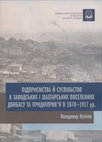
На основі архівних та опублікованих джерел монографія пояснює складний характер відносин містотві... more На основі архівних та опублікованих джерел монографія пояснює складний характер відносин містотвірних підприємств із мешканцями заводських і шахтарських поселень Донбасу та Придніпровʼя. У ній висвітлено передумови виникнення заводських і шахтарських поселень, подано нарис історії містотвірних підприємств і заснованих ними поселень, розкрито механізми, що їх застосовували роботодавці, щоб завоювати лояльність працівників, і проаналізовано, наскільки їм це вдалося; у пропонованій книжці також досліджено вияви нелояльності робітників і з’ясовано їхні причини.
Відносини між підприємствами й суспільством розглянуті в контексті взаємин зацікавлених сторін, як-от власників підприємств, найманих управителів, робітників, державної влади, місцевої аграрної еліти, дрібних підприємців. Монографія показує заводські й шахтарські поселення як простори різноманітних, часто суперечливих інтересів, зосереджуючи увагу на нерівних владних відносинах між основними а́кторами. Загальним макроісторичним тлом історії промислових поселень регіону в ній є процеси індустріалізації та соціальної й економічної модернізації.



Uploads
Papers by Volodymyr Kulikov
The paper discusses ethical issues related to the adaptive reuse of ruin heritage on the example of the so-called ruin bars in Budapest's District VII. It explores how heritage discourse can contribute to the sustainable development of urban neighborhoods. The authors address the question by focusing on how a processual approach can be instrumental in identifying responsible and socially sustainable ways to reuse dilapidated heritage in a residential area.
Design/methodology/approach
The problem is analyzed through a case study based on field observation, participant observation, stakeholder interviews, policy analysis and media and social media content analysis.
Findings
The authors argue that ethical reuse of ruin heritage must take into consideration the values and interests of multiple stakeholders and the broadest range of consequences at the level of neighborhood and city. An integrated heritage and planning policy should consider and involve as active participants all the heritage communities concerned. Importantly, these groups, comprising both new and longtime residents, must include the vulnerable and marginalized.
Practical implications
The findings can be used by heritage managers for identifying and addressing ethical issues in their adaptive heritage reuse practices and by policymakers for integrating heritage management in urban development and making cities more inclusive (SDG #11).
Originality/value
The paper explores how ethical it is for business enterprises to build on the ruin esthetics in a residential district and what the ethical implications of this reuse process are for various stakeholders.
рухом та глобальними економічними циклами. Металургія та вугільна промисловість Донецько-Придніпровського району були висококонцентрованими навіть на тлі загального високого рівня концентрації російської промисловості.
Концентрація важкої промисловості району відбувалась за вертикальним принципом: майже всі великі металургійні підприємства розвивались як підприємства із повним циклом виробництва від видобутку сировини, до оброблення металу. Частка району в загальноімперському виробництві вугілля та металу істотно збільшилася протягом останньої чверті XIX ст., унаслідок чого район перетворився на головну паливно-металургійну базу Російської імперії.
Reviews by Volodymyr Kulikov
https://commons.com.ua/uk/misto-yake-sebe-zzherlo-recenziya-na-knizhku-brayana-licha
Books by Volodymyr Kulikov
Відносини між підприємствами й суспільством розглянуті в контексті взаємин зацікавлених сторін, як-от власників підприємств, найманих управителів, робітників, державної влади, місцевої аграрної еліти, дрібних підприємців. Монографія показує заводські й шахтарські поселення як простори різноманітних, часто суперечливих інтересів, зосереджуючи увагу на нерівних владних відносинах між основними а́кторами. Загальним макроісторичним тлом історії промислових поселень регіону в ній є процеси індустріалізації та соціальної й економічної модернізації.