Papers by Zuzanna Dziuban
Heritage, Memory and Conflict Journal, 2023
This paper discusses the role of audio and visual testimonies in safeguarding, understanding, pre... more This paper discusses the role of audio and visual testimonies in safeguarding, understanding, presenting, validating and decentering the history and memory campscapes, be it, for researchers, practitioners, memory activists, or museum visitors. Its primary objective is to present and contextualize two research tools developed within the framework of the project Accessing Campscapes: Strategies for Using European Conflicted Heritage: the Campscapes Testimony Catalogue, a new directory of oral history interviews devoted to selected camps covered within the scope of the project; and the online environment Remembering Westerbork: Learning with Interviews – a prototype of an online display environment presenting survivors’ experiences to today’s visitors in an exemplary memorial that opens up, expands and complexifies the paradigmatic narrative offered by the campscape at the on-site exhibition.
Warunkowanie wsparcia : nekropolityka i solidarność w dobie kryzysu
Oikofobia jako doświadczenie kulturowe / Zuzanna Dziuban
Zeitschrift für Kulturwissenschaften, 2019
Im Juni des Jahres 2015 -auf dem Höhepunkt der so genannten ›Flüchtlingskrise‹ oder, besser gesag... more Im Juni des Jahres 2015 -auf dem Höhepunkt der so genannten ›Flüchtlingskrise‹ oder, besser gesagt, der Krise des Flüchtlingsschutzes in Europa -erregte ein Kunstprojekt des Berliner Künstlerkollektivs Zentrum für politische Schönheit (ZPS) öffentliche Aufmerksamkeit: Die Toten kommen. Die Arbeit war eine direkte Auseinandersetzung mit der sich zuspitzenden Problematik des Sterbens an den Grenzen der Europäischen Union. In einer Pressemitteilung wurde die Öffentlichkeit dazu aufgerufen, die Exhumierung und den Transport tausender Leichen von im Mittelmeerraum ertrunkenen Geflüchteten nach Berlin finanziell zu unterstützen, um diese dort zu bestatten. 1 Durch diese Meldung rief das Projekt von Beginn an Fassungslosigkeit und ungläubiges Staunen hervor. Dessen ungeachtet sollte nach Aussagen der Gruppe der erste Transport mit den sterblichen Überresten einer Frau, die aus einem anonymen Grab an der Küste Siziliens stammten, bereits Anfang Juni 2015 Deutschland erreichen. Ein weiterer Transport mit der Leiche eines sechzehnjährigen Jungen sollte kurze Zeit darauf in Berlin eintreffen. Die Toten waren anhand von Ante-Mortem-Daten identifiziert worden und, den Angaben des ZPS zufolge, mit dem Einverständnis der direkt kontaktierten Familienangehörigen aus ihren zeitweiligen Gräbern exhumiert worden. Und tatsächlich fand am 16. Juni 2015 die Beisetzung zweier Särge auf dem muslimischen Friedhof in Berlin-Gatow statt: In einem befanden sich die sterblichen Überreste einer syrischen Geflüchteten, der andere wurde symbolisch ihrer zweijährigen Tochter gewidmet, deren Leiche nicht geborgen werden konnte. Obgleich der genaue Zeitpunkt und Ort der Zeremonie nur wenige Stunden im Voraus bekannt gegeben wurden, nahmen mindestens 150 Personen an der Beerdigung teil, welche in Anwesenheit eines Imams aus Berlin-Moabit, Abdallah Hajjir, der die Aktion unterstützte, stattfand und sowohl in Deutschland als auch international auf breites Medieninteresse stieß. 2
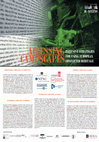
iC-ACCESS evaluates the role that material culture plays in enhancing, limiting or suppressing kn... more iC-ACCESS evaluates the role that material culture plays in enhancing, limiting or suppressing knowledge concerning former Nazi and Soviet campscapes. We adopt a broad definition of material evidence: objects (e.g. personal belongings, weapons, tools, domestic items, clothing), structural remnants (e.g. buildings, barracks, fences and guard towers, extermination infrastructures), human remains and forensic trace evidence (e.g. DNA of victims in mass graves) to understand their role in the development of camp memorials and heritage sites. We are equally concerned with material remains in archives and memorial museums, as with findings of previous archaeological investigation, but we also examine the ways in which material traces and forensic evidence have been used by revisionist groups, educators, the media and the public (in particular online) to engineer alternative interpretations of Nazi and Soviet atrocities. Working closely with the associated partners and other stakeholders, ...

Atopic objects: The afterlives of gold teeth stolen from Holocaust dead
Journal of Material Culture
Transfers of property are an integral part of armed conflicts and instances of mass political vio... more Transfers of property are an integral part of armed conflicts and instances of mass political violence. Not just the state and the military, but also civilians confiscate, dispossess, loot and redistribute wealth across ethnic, national, class or religious lines, in the process re-enacting and sustaining the boundaries of othering and belonging that stand behind the conflict. In this way, economic violence takes on an essentially political dimension. Although, to date, rarely conceptualized as such, even grave robbery perpetrated at the burial sites of a defeated enemy or a member of othered minority constitutes a practice of alterity and dehumanization. And while, in the aftermath of violence, this very fact has the ability to invest things taken from mass graves with a particularly disturbing potential, this article reflects on the practices and affective dynamics surrounding objects of a distinctively unsettling status: golden teeth and dental bridges in their ambivalent conditio...
Introduction: The Surviving Thing: Personal Objects in the Aftermath of Violence
Journal of Material Culture
Human Remains in Society, Jan 5, 2017
39 in Germany and Polish officials actively involved in the local commemoration of the former Nat... more 39 in Germany and Polish officials actively involved in the local commemoration of the former National Socialist camps. Condemned by the president of the Central Council of Jews in Germany, Paul Spiegel, as an act 'bordering on blasphemy' , the plan to bury the tooth of the Holocaust victim in the Berlin memorial, as well as the fact that it was left unburied for almost two decades, was a clear violation of Jewish religious law. To take a body part from its place of burial and to attempt to inhume it outside of the Jewish cemetery is patently against the norms of the Halakha. Moreover, the plan outlined for the future handling of the tooth skirted dangerously close to the cult of relics, which is strictly forbidden in Judaism. According to Albert Meyer, the chairman of Berlin's Jewish community, the implementation of Rosh's idea would therefore force its members to avoid visiting the Holocaust Memorial, which was, after all, not conceived as and should not be transformed into a Jewish cemetery. 4 He unequivocally castigated both the former treatment of the tooth and the intentions for its future handling. The Orthodox rabbi of the Jewish community of Berlin, Yitzhak Ehrenberg, who initially backed Rosh's plan, quickly withdrew his support in reaction to the widespread outrage caused by her address and proposed that the molar be buried with all due respect and deference to Jewish law at Berlin's Jewish cemetery at Scholzplatz. Yet the Polish officials adopted a slightly different line of reasoning. Focusing on the highly problematic-if not criminal-nature of Rosh's decision to take the tooth from the site of the former extermination camp, Krystyna Oleksy, a representative of the State Museum Auschwitz-Birkenau, framed it as 'bordering on theft' and a desecration of the grave. 5 The first director of the newly established museum-memorial site at Bełz ec, Robert Kuwałek, also pointed out the almost unlawful character of the deed: 'It is strictly forbidden to take "souvenirs" whilst visiting our premises'; 6 'I have no knowledge of another instance of laying hold of such a peculiar souvenir by one of the guests'. 7 Thus, he both intimated and explicitly demanded that the tooth be returned to the former camp. Even though a few accounts exist of Holocaust survivors and relatives of Bełz ec victims collecting bone fragments and human remains at the site and bringing them for burial in Israel or the United States, 8 apparently unbeknown to Kuwałek at the time, the public display of the 'Jewish' molar taken from the former Nazi camp in Poland clearly overstepped too many boundaries. Ultimately, on 16 July 2005, the tooth was brought back to Bełz ec and buried-in accordance with Jewish law and with the assistance of a rabbi-in a small box under one of
Dispossession Plundering German Jewry, 1933–1953, 2020
Ein nomadisches Europa? Zur Einleitung
Zeitschrift für Kulturwissenschaften
The »Spectral Turn« Jewish Ghosts in the Polish Post-Holocaust Imaginaire, ed. Zuzanna Dziuban, Bielefeld: Transcript , 2019
Special issue of the Austrian Journal of Historical Studies (OeZG), 2022
Current approaches in critical museology, visual and postcolonial studies challenge the establish... more Current approaches in critical museology, visual and postcolonial studies challenge the established ways in which historical museums, especially those relating to modern or contemporary history, create meaning. The single, homogenous, and nationalised historical narrative has lost credibility as the assumed standard of storytelling in historical exhibitions, so have traditional formats of exhibition and display in museums. As a result, many actors in the field have been left wondering how to animate the current buzzwords of museology, such as participation, multi-dimensionality, positioning and dialogue while still committing to the public's expectations in regard to education and guidance, so pertinent for museums devoted to legacies of political violence. Critics' demands from museums to reflect on ethical issues when exhibiting conflicted or violent histories has transformed what is considered "justifiable" curatorial practices and thus, what historical exhibitions should look like. Activists and scholars have pointed out, for instance, that by displaying relicts or documents of a violent past, especially when connected to colonialism, war or genocide, museums perpetuate historical semantics of power and, as a result, reify the humiliation of victims and leave frames of violence and power intact. Similarly, museological analysis has shown that the exhibition of political propaganda can contribute to a re-evoking of historical ideology, thereby museums are constituting (or contributing to) the allure of precisely that violent rhetoric which they are claiming to educate the public about. Some fear that a reflexive consideration of such questions might force museums to empty their display cases and thus create a void in historical narratives, obscuring altogether the history of oppression or violence. And yet, such stories can be told from a position of empathy with the victims, by representing multiplicity of voices, or by engaging the audience/participants with reflexive meta-questions. This special issue of the Austrian Journal of Historical Studies (OeZG) is collecting interdisciplinary perspectives from historical studies, theoretical museology and other fields of research that contribute to the advancement of debates on display of violence in museum exhibitions. We invite scholars to critically analyse contemporary museum practices and trace the shifting ethical standards of how to represent historical violence in museum spaces. We call for papers that identify trends and changes in museological standards pertaining to display of artifacts, photographs and other medial representation of violence. We are especially interested in combinations of theoretical considerations with analyses of specific cases and comparative exhibition analyses, which focus on the role of visual material, objects and stories in staging and perpetuating violence and victims' humiliation, and in discussion of strategies used by cultural institutions to deal with complex material, such as e.g. perpetrator photography and propaganda material or human remains. Of particular interest are papers examining emerging curatorial responses and exhibition techniques which seek to disrupt propaganda and violence. Authors are invited to discuss museums' positioning within the field of cultural power dynamics as such, alongside strategies of hegemony, (racialised, gendered etc.) marginalization, and exclusion. Possible lines of inquiry are: Why and how have exhibitions recently changed how they display artifacts or visual representation of violence? How does the often applied emphasis on individual and victim's perspectives tie in with questions of the renewal of violence and re-traumatisation? What positionalities vis-à-vis displayed violence are museum visitors/participants invited to adopt or perform? What relevance can be attributed to the binary between agency and structural approaches or the treatment of everyday life as illustrative of specific historical and contemporary contexts? Finally, what is the role and performance of violence in exhibitions that aim to create emotion and reach broader audiences via the exploitation of shock value or to justify their institution and mission?
Znak 724, 2015
Interview Zuzanne Dziuban had with me for the Polish magasin Snak
Pamięć przypisywano niemal... more Interview Zuzanne Dziuban had with me for the Polish magasin Snak
Pamięć przypisywano niemal wyłącznie ludziom. A rzeczy także pamiętają! Ich trwanie pozwala nam dostrzec przeszłość, odmienną od tej, którą piszemy dla siebie-przeszłość pełną porażek, bezużyteczną, która jednak nie przeminęła, ale ciągle nam towarzyszy.
Estela Schindel & Gabriel Gatti (eds.) Social Disappearance Explorations Between Latin America and Eastern Europe, 2020
Journal of Material Culture 25/4, 2020
The Secret Life of Objects, ISRF Bulletin, Issue XXI, 2020
Zeitschrift fuer Kulturwissenschaften, 2019
Im Juni des Jahres 2015 -auf dem Höhepunkt der so genannten ›Flüchtlingskrise‹ oder, besser gesag... more Im Juni des Jahres 2015 -auf dem Höhepunkt der so genannten ›Flüchtlingskrise‹ oder, besser gesagt, der Krise des Flüchtlingsschutzes in Europa -erregte ein Kunstprojekt des Berliner Künstlerkollektivs Zentrum für politische Schönheit (ZPS) öffentliche Aufmerksamkeit: Die Toten kommen. Die Arbeit war eine direkte Auseinandersetzung mit der sich zuspitzenden Problematik des Sterbens an den Grenzen der Europäischen Union. In einer Pressemitteilung wurde die Öffentlichkeit dazu aufgerufen, die Exhumierung und den Transport tausender Leichen von im Mittelmeerraum ertrunkenen Geflüchteten nach Berlin finanziell zu unterstützen, um diese dort zu bestatten. 1 Durch diese Meldung rief das Projekt von Beginn an Fassungslosigkeit und ungläubiges Staunen hervor. Dessen ungeachtet sollte nach Aussagen der Gruppe der erste Transport mit den sterblichen Überresten einer Frau, die aus einem anonymen Grab an der Küste Siziliens stammten, bereits Anfang Juni 2015 Deutschland erreichen. Ein weiterer Transport mit der Leiche eines sechzehnjährigen Jungen sollte kurze Zeit darauf in Berlin eintreffen. Die Toten waren anhand von Ante-Mortem-Daten identifiziert worden und, den Angaben des ZPS zufolge, mit dem Einverständnis der direkt kontaktierten Familienangehörigen aus ihren zeitweiligen Gräbern exhumiert worden. Und tatsächlich fand am 16. Juni 2015 die Beisetzung zweier Särge auf dem muslimischen Friedhof in Berlin-Gatow statt: In einem befanden sich die sterblichen Überreste einer syrischen Geflüchteten, der andere wurde symbolisch ihrer zweijährigen Tochter gewidmet, deren Leiche nicht geborgen werden konnte. Obgleich der genaue Zeitpunkt und Ort der Zeremonie nur wenige Stunden im Voraus bekannt gegeben wurden, nahmen mindestens 150 Personen an der Beerdigung teil, welche in Anwesenheit eines Imams aus Berlin-Moabit, Abdallah Hajjir, der die Aktion unterstützte, stattfand und sowohl in Deutschland als auch international auf breites Medieninteresse stieß. 2 1 Für die Dokumentation des Projekts und die Berichterstattung siehe https://www.politicalbeauty.de/toten.html (01.12.2017). 2 Ob die Leichen tatsächlich an diesem Tag begraben wurden, ist nicht eindeutig geklärt.
The 'Spectral Turn': Jewish Ghosts in the Polish Post-Holocaust Imaginaire (Introduction and Tabl... more The 'Spectral Turn': Jewish Ghosts in the Polish Post-Holocaust Imaginaire (Introduction and Table of Contents)



Uploads
Papers by Zuzanna Dziuban
Pamięć przypisywano niemal wyłącznie ludziom. A rzeczy także pamiętają! Ich trwanie pozwala nam dostrzec przeszłość, odmienną od tej, którą piszemy dla siebie-przeszłość pełną porażek, bezużyteczną, która jednak nie przeminęła, ale ciągle nam towarzyszy.