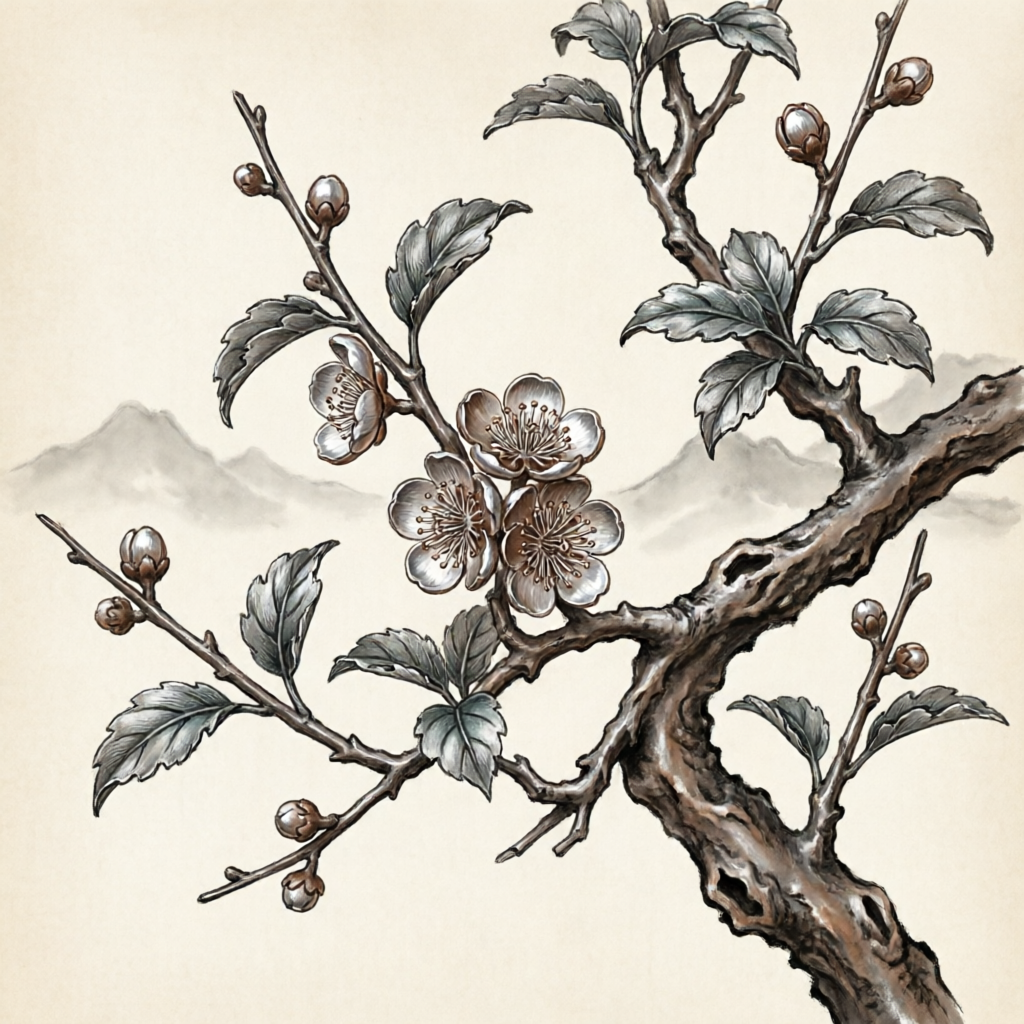
Iron Painting
Overview
Iron painting (铁画) is a distinctive Chinese art form that involves creating paintings from iron sheets and wires through forging, hammering, and welding techniques. This unique craft combines elements of traditional Chinese painting with metalworking skills, resulting in artworks that possess both the aesthetic qualities of painting and the three-dimensional nature of sculpture. Iron paintings are characterized by their bold lines, strong contrast between light and shadow, and distinctive visual texture that sets them apart from other art forms. The craft represents an important part of China's intangible cultural heritage and continues to be practiced and appreciated both within China and internationally.
History
The origins of iron painting can be traced to the late Ming and early Qing dynasties, with historical accounts suggesting it emerged around the Kangxi period (1661-1722) of the Qing dynasty. The art form is traditionally attributed to Tang Peng (汤鹏), also known as Tang Tianchi (汤天池), an iron artisan from Wuhu, Anhui province. According to historical records, Tang was originally from Huizhou, Anhui, but later moved to Wuhu, which had a well-established iron industry and numerous skilled ironworkers.
The development of iron painting was facilitated by Wuhu's position as a transportation hub and commercial center, particularly known for its dyeing industry and one of China's four major rice markets. The region's advanced metallurgy and forging techniques provided the technical foundation for this new art form.
Early accounts of iron painting appear in texts such as Cha Yu Ke Hua (《茶馀客话》, "Tea Idle Talks") by Rui Kuisheng of the Qing dynasty, which mentions Wuhu iron paintings alongside other decorative arts. Another source, Leng Lu Za Zhi (《冷庐杂识》, "Cold Hut Miscellaneous Notes") by Lu Yitian, describes Tang Peng's ability to "knead iron into paintings" of flowers, bamboo, insects, and birds with remarkable lifelike quality.
Key Information
| Aspect | Description |
|---|---|
| Chinese Name | 铁画 (Tiě Huà) |
| English Name | Iron Painting |
| Origin | Wuhu, Anhui Province, China |
| Founder | Tang Peng (Tang Tianchi), 17th century |
| Materials | Iron sheets, iron wires |
| Techniques | Forging, hammering, welding, bending |
| Artistic Influences | Traditional Chinese painting (guohua), paper cutting, wood carving, brick carving |
| Common Themes | Landscapes, flowers, birds, bamboo, pine trees, calligraphy |
Cultural Significance
Iron painting holds a significant place in Chinese cultural heritage as it represents a unique fusion of traditional painting aesthetics with metalworking craftsmanship. The art form embodies the Chinese principle of "using the ordinary to create the extraordinary" (化平凡为神奇), transforming raw iron into delicate artistic expressions.
The craft demonstrates how traditional artisans could draw inspiration from multiple art forms—adapting the composition, brushstrokes, and spatial arrangements of Chinese painting while incorporating techniques from metalworking. This synthesis created a new art form that was both technically innovative and artistically distinctive.
Iron paintings often feature themes from nature and traditional Chinese culture, particularly plants with symbolic meanings such as pine trees (symbolizing longevity), plum blossoms (resilience), orchids (nobility), and bamboo (integrity). These themes reflect traditional Chinese values and aesthetic preferences.
Notably, iron painting has been used in significant public spaces, including the Great Hall of the People in Beijing, where the large-scale iron painting "Welcoming Guest Pine" (迎客松) is displayed. This particular piece has become an iconic representation of Chinese hospitality and cultural pride.
Modern Status
Today, iron painting continues to be practiced as a traditional craft, with master artisans preserving and developing the techniques passed down through generations. The art form has evolved beyond its traditional formats to include new varieties such as three-dimensional iron paintings, porcelain-based iron paintings, and gold-plated iron works.
The craft has gained international recognition through exhibitions worldwide, including the Paris World Fair, the Budapest International Art Exhibition, and shows in Japan, Kuwait, Italy, Nigeria, Saudi Arabia, and Hong Kong. These exhibitions have helped introduce iron painting to global audiences and demonstrate its artistic value beyond China's borders.
Contemporary practitioners have expanded the applications of iron painting to include architectural decorations, interior design elements, and cultural gifts. The craft has also been adapted for educational purposes, with workshops and demonstrations helping to preserve the tradition for future generations.
Several notable contemporary artists have contributed to the preservation and innovation of iron painting. Among them is Chu Jinxia (储金霞), daughter of the master artisan Chu Yanqing, who has established the "Chu School Iron Painting" brand and continues to advance the craft while maintaining its traditional essence.
Despite modern technological advancements, iron painting remains fundamentally a手工 (handmade) craft, with each piece requiring considerable skill, patience, and artistic sensibility. The ongoing challenge for contemporary practitioners is to balance preservation of traditional techniques with innovation that keeps the art form relevant in contemporary contexts.
References
-
Li, X. (2018). Traditional Chinese Crafts: Iron Painting and Metalwork. Beijing: Cultural Relics Publishing House.
-
Wang, Y. & Zhang, H. (2020). The Art of Wuhu Iron Painting: History, Techniques, and Cultural Significance. Shanghai: Shanghai People's Fine Arts Publishing House.
-
Chen, L. (2019). "Intangible Cultural Heritage in Modern China: The Case of Iron Painting." Journal of Chinese Cultural Preservation, 12(3), 45-67.
"Iron painting, with its unique fusion of metalworking and painting traditions, represents one of China's most distinctive contributions to decorative art." — Li, X. (2018), Traditional Chinese Crafts