Overview
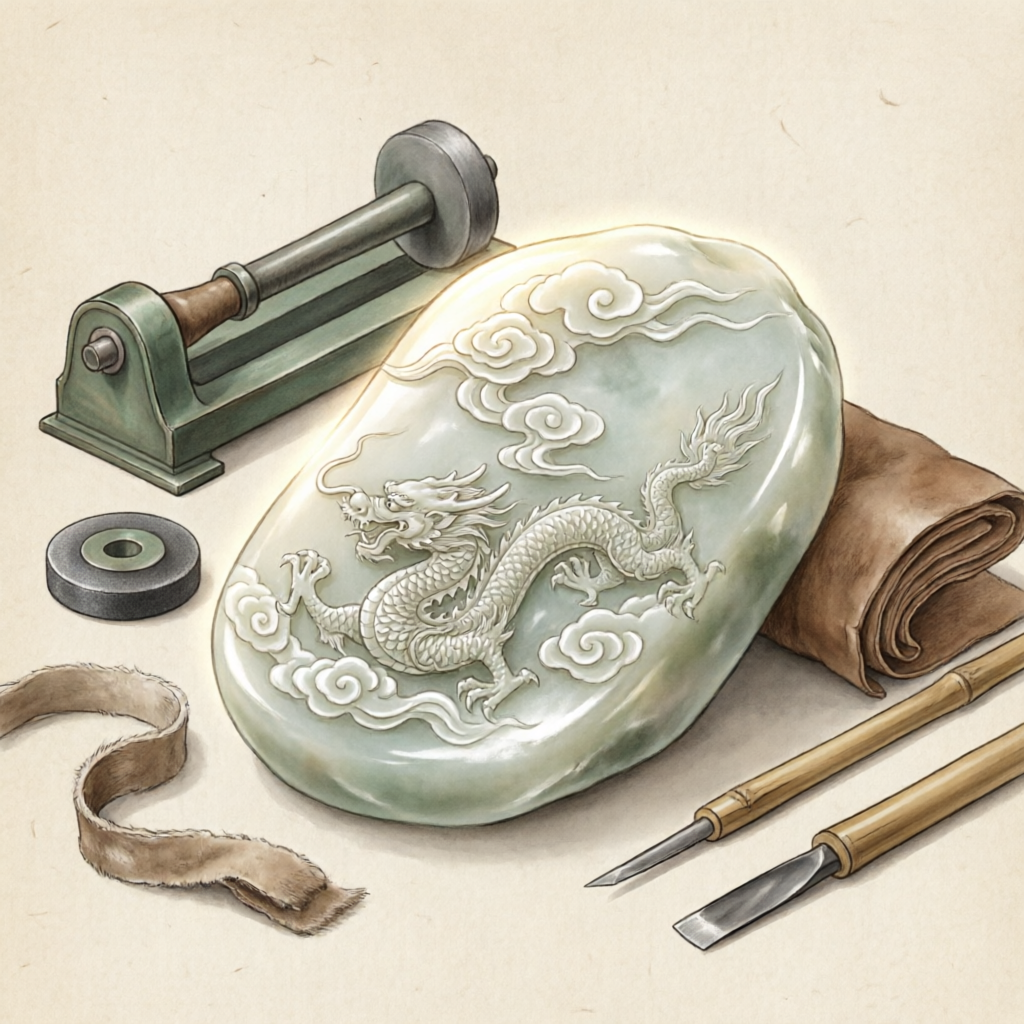
Chinese jade carving (玉雕) is a traditional art form with a history spanning thousands of years. Recognized as an intangible cultural heritage of China in 2008 (heritage number VII-57), it represents one of the most refined and sophisticated forms of decorative art in Chinese civilization. The craft encompasses various regional styles that have developed distinct characteristics based on local materials, cultural influences, and aesthetic preferences.
History
The origins of jade carving in China can be traced back to the Neolithic period, with archaeological evidence of jade artifacts from the Liangzhu culture (c. 3400-2250 BCE). These early pieces, including cong tubes, bi discs, and ceremonial axes, demonstrate sophisticated craftsmanship and ritual significance. Throughout Chinese history, jade carving has evolved through various dynasties, each contributing to the development of techniques and styles.
During the Ming Dynasty (1368-1644), jade carving entered a period of refinement, with Suzhou emerging as a center of excellence. The Ming scholar Song Yingxing noted in his work "Tiangong Kaiwu" (The Exploitation of the Works of Nature): "Although fine jade is gathered in the capital, the exquisite craftsmanship is found in Suzhou."
The Qing Dynasty (1644-1912) saw further development of regional styles, with Beijing becoming a center for imperial jade carving while maintaining strong traditions in Suzhou, Yangzhou, and other regional centers. The 19th and early 20th centuries witnessed the emergence of the "Haipai" (Shanghai style), which incorporated influences from both traditional Chinese art and Western aesthetics.
Key Information
| Feature | Description |
|---|---|
| Heritage Type | Traditional Fine Arts (传统美术) |
| Recognition Level | National Intangible Cultural Heritage |
| Heritage Number | VII-57 |
| Year of Recognition | 2008 |
| Main Regions | Beijing, Suzhou (Jiangsu), Zhenping (Henan) |
| Primary Materials | Nephrite jade, jadeite, various other gemstones |
| Key Techniques | Relief carving, openwork carving, round carving, inlay work |
Cultural Significance
In Chinese culture, jade has held profound symbolic meaning for millennia, representing virtues such as purity, wisdom, and immortality. The saying "gold has value, but jade is priceless" (黄金有价,玉无价) reflects the cultural importance of jade in Chinese society. Historically, jade objects served as status symbols, with nobility and officials wearing jade ornaments to signify their rank and virtue.
Different regional styles of jade carving reflect local cultural contexts and aesthetic preferences. Beijing jade carving, for example, often incorporates imperial motifs and demonstrates meticulous attention to detail, while Suzhou jade carving emphasizes elegant, refined craftsmanship. The Haipai style represents a more cosmopolitan approach, incorporating diverse artistic influences.
Modern Status
Today, Chinese jade carving faces both challenges and opportunities. The craft has been recognized as an intangible cultural heritage, with efforts to preserve traditional techniques through apprenticeship programs and official recognition of master craftsmen. However, the industry confronts significant challenges:
- Material scarcity: High-quality jade resources are increasingly limited, driving up costs
- Generational gap: Few young people are entering the profession due to its long learning curve and modest financial returns
- Market pressures: Mass production and changing consumer preferences affect traditional craftsmanship
Contemporary jade carving artists are working to balance traditional techniques with modern aesthetics. In regions like Suzhou, recognized masters such as Jiang Xi, Yang Xi, Ge Hong, and Qu Lijun are creating innovative works that respect traditional forms while exploring new artistic expressions. The annual "Nanyang Jade Carving Festival" in Henan Province helps promote both traditional and contemporary jade art.
References
- Rawson, J. (1995). Chinese Jade from the Neolithic to the Qing. British Museum Press.
- Sun, D. (2012). Chinese Jade: The Spiritual and Cultural Significance. Cambridge University Press.
- Wang, S. (2008). "The Regional Schools of Chinese Jade Carving." Journal of Chinese Decorative Arts, 14(2), 45-67.
- Li, J. (2010). Traditional Crafts of China: Jade Carving. Cultural Relics Publishing House.
- Zhang, Y., & Chen, L. (2015). "Intangible Cultural Heritage Preservation in China: The Case of Jade Carving." Asian Folklore Studies, 74(1), 123-145.