Chinese Gardens
Overview
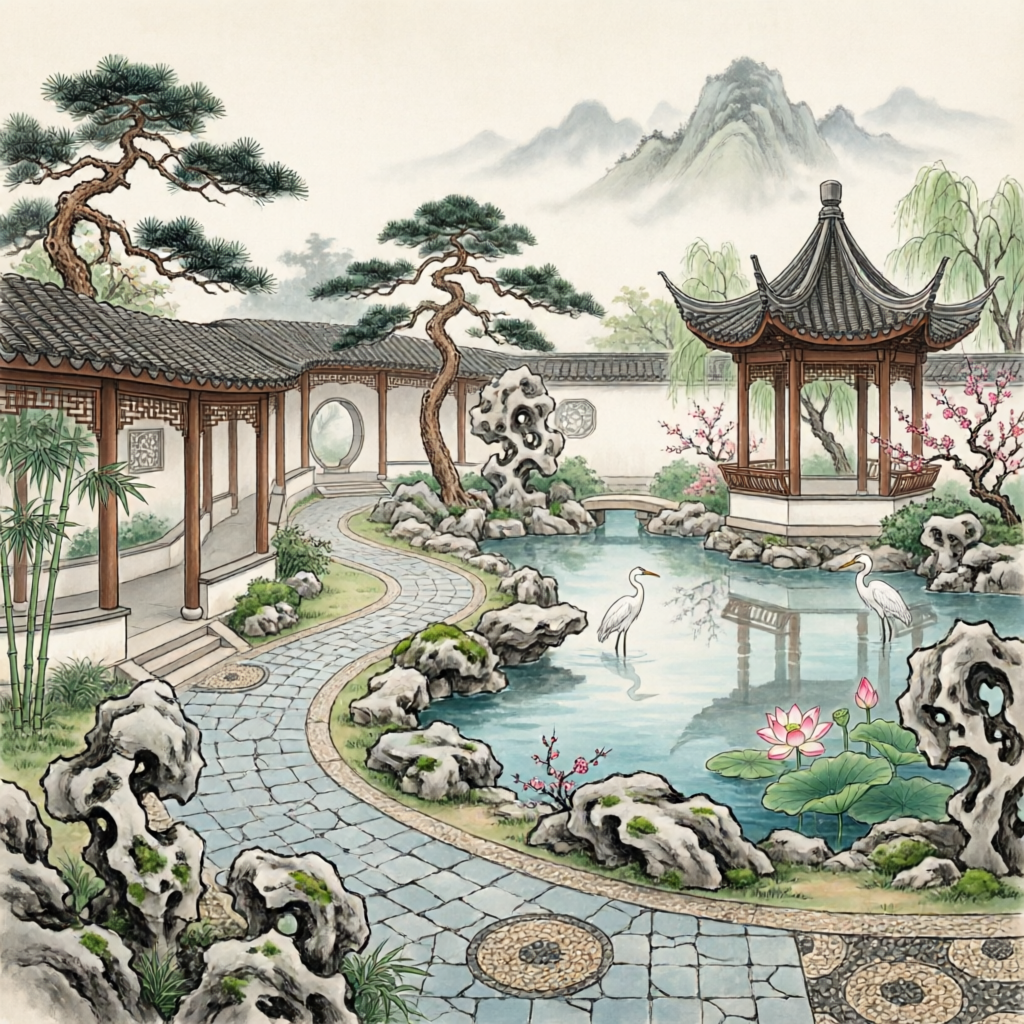
Chinese gardens (中国园林) are a significant form of landscape architecture that has developed over thousands of years in China. These gardens are designed to recreate natural landscapes in miniature, incorporating philosophical and aesthetic principles that reflect Chinese cultural values. The tradition encompasses various garden types, including imperial gardens, private gardens, and temple gardens, each with distinct characteristics but sharing common design elements such as rocks, water, plants, and architecture.
History
The history of Chinese gardens dates back to the Shang Dynasty (1600-1046 BCE), when the earliest forms of imperial hunting grounds and parks were established. During the Zhou Dynasty (1046-256 BCE), the concept of "you" (游), or leisurely strolling through natural settings, emerged as an important cultural activity.
The Han Dynasty (206 BCE-220 CE) saw significant developments in garden design, with the introduction of artificial lakes and hills. The Tang Dynasty (618-907 CE) witnessed the flourishing of imperial gardens, such as the famous Daming Palace in Chang'an (modern-day Xi'an).
The Song Dynasty (960-1279 CE) marked a golden age for garden design, with the development of the scholarly garden (文人园林) that emphasized literary and artistic expression. During this period, garden design became more refined, with greater attention paid to the relationship between architecture and nature.
The Ming (1368-1644) and Qing (1644-1912) dynasties continued to advance garden design, producing some of China's most celebrated gardens, such as the Summer Palace in Beijing and the Humble Administrator's Garden in Suzhou. These gardens exemplify the integration of architecture, landscape, and philosophy that characterizes Chinese garden design.
Key Information
| Feature | Description |
|---|---|
| Origin | Shang Dynasty (c. 1600 BCE) |
| Key Elements | Rocks, water, plants, architecture, pavilions |
| Philosophical Basis | Daoism, Confucianism, poetic expression |
| Famous Examples | Summer Palace, Humble Administrator's Garden, Lingering Garden |
| Design Principle | "Borrowing scenery" (借景), creating miniature landscapes |
Cultural Significance
Chinese gardens embody profound philosophical and cultural concepts. The design principles are deeply rooted in Daoist beliefs about harmony between humans and nature, as well as Confucian ideals of order and balance. The gardens serve as physical manifestations of these philosophical concepts, providing spaces for contemplation, artistic expression, and social interaction.
"A garden is a compressed landscape, a microcosm of the natural world that brings the mountains and rivers into the confines of the city." - Chinese proverb
The gardens also reflect the Chinese literary tradition, with many garden names, pavilions, and inscriptions drawing from classical poetry and literature. This integration of literature and landscape creates a multi-sensory experience that engages visitors on intellectual, aesthetic, and emotional levels.
Modern Status
Today, Chinese gardens continue to be important cultural landmarks and tourist attractions. Many historical gardens have been preserved as World Heritage Sites, such as the Classical Gardens of Suzhou. Contemporary landscape architects in China and around the world continue to draw inspiration from traditional Chinese garden design principles.
Modern interpretations of Chinese gardens can be found in public spaces, private residences, and commercial developments worldwide. These contemporary adaptations often maintain core principles such as the integration of built and natural elements, while adapting to contemporary needs and contexts.
The academic study of Chinese gardens has also flourished, with numerous publications and research institutions dedicated to their preservation, interpretation, and development. The journal Chinese Landscape Architecture (中国园林), founded in 1985, serves as an important platform for scholarly exchange on this subject.
References
- Johnson, David. The Art of Chinese Gardens. Yale University Press, 2008.
- Clunas, Craig. Fruitful Spaces: The Gardens, Parks, and Orchards of China. Reaktion Books, 2014.
- Wang, Eugene Y. The Garden as Art: The Gardens of China. Prestel, 2017.
- Chen, Ling. Chinese Garden Design: Origins, Elements, and Aesthetics. University of Hawaii Press, 2019.
- Pregill, Philip and Nancy Volkman. Landscape and Power in Imperial China: The Garden of Clear Ripples (Yuanming Yuan). University of Hawaii Press, 2021.