Overview
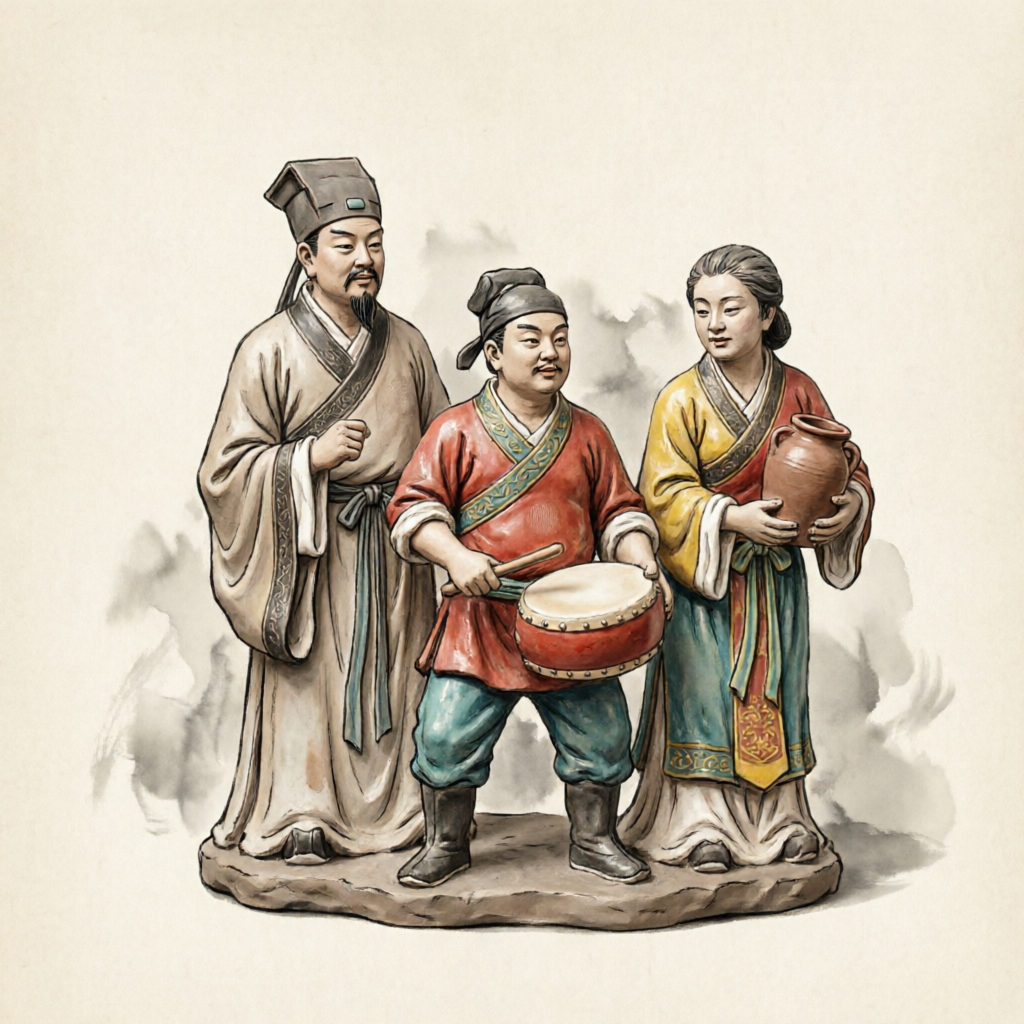
Chinese clay sculpture (泥塑, also known as colored clay sculpture, 彩塑) is a traditional folk art form that has been practiced in China for thousands of years. This art form uses natural clay as its primary material to create decorative objects, toys, religious figures, and artistic sculptures. Chinese clay sculpture is characterized by its vivid colors, exaggerated forms, and strong cultural symbolism, reflecting the aesthetic values and beliefs of various regions throughout Chinese history.
History
The origins of Chinese clay sculpture can be traced back to the Neolithic period, with archaeological evidence showing continuous development through various dynasties. By the Han Dynasty (206 BCE-220 CE), clay sculpture had become a significant art form, as evidenced by numerous terracotta figurines, animals, carriages, and boats unearthed from Han Dynasty tombs. These objects were created as burial goods to accompany the deceased in the afterlife, reflecting the belief that spirits required material possessions in the afterlife.
Following the Han Dynasty, the rise of Taoism, the introduction of Buddhism, and the proliferation of polytheistic worship practices led to increased demand for clay religious statues. This period saw the flourishing of temple and monastery construction, which directly promoted the development of clay sculpture as an art form. During the Tang Dynasty (618-907 CE), clay sculpture reached its zenith, with Yang Huizhi (杨惠之) emerging as a master sculptor often compared to the renowned painter Wu Daozi. The famous saying "Daozi's paintings, Huizhi's sculptures, have captured the divine brush of Sengyou" reflects the high regard for Tang Dynasty clay sculpture.
During the Song Dynasty (960-1279 CE), clay sculpture continued to thrive, with large religious sculptures maintaining popularity while smaller clay toys also gained prominence. Notable examples include "Mohele" clay toys sold in the Northern Song capital during the Qixi Festival (Seventh Day of the Seventh Lunar Month), which were purchased by both common people for "begging for skill" and nobles for worship and entertainment.
Key Information
| Feature | Description |
|---|---|
| Primary Material | Natural clay with varying compositions depending on region |
| Key Techniques | Hand modeling, mold making, painting, firing (in some cases) |
| Notable Styles | Tianjin "Clay Figurine Zhang", Wuxi Huishan clay figures, Fengxiang colored clay sculptures |
| Cultural Significance | Used in religious worship, as children's toys, decorative items, and cultural symbols |
| Heritage Status | National Intangible Cultural Heritage of China (since 2006) |
| Geographical Distribution | Major production areas include Tianjin, Jiangsu, Henan, Shaanxi, and other regions |
Cultural Significance
Chinese clay sculpture holds profound cultural significance as both an artistic expression and a cultural symbol. Different regional styles reflect local customs, beliefs, and aesthetic preferences. For example, Tianjin's "Clay Figurine Zhang" (泥人张) emphasizes realistic depictions of human figures, while Wuxi's Huishan clay figures are known for their bright colors and exaggerated forms that often depict characters from local operas and folk stories.
The art form has also become an important medium for cultural exchange. Chinese clay sculptures have traveled abroad, serving as cultural ambassadors that introduce Chinese folk art to international audiences. In contemporary society, clay sculpture represents a pursuit of "returning to simplicity" amid rapid technological development, while also embodying modern expressions of individuality and fashion.
Notable contemporary examples include the "Mengwa" (梦娃) clay figurine, created by Lin Gang of Tianjin's Clay Figurine Zhang Studio. This chubby-cheeked girl in a red floral jacket became widely known through public service advertisements promoting "civilization and new customs" and the "Chinese Dream." As Lin Gang explained, "Creating Mengwa was simply to convey beautiful aspirations for the future."
Modern Status
Today, Chinese clay sculpture continues to evolve while preserving traditional techniques. Many regional styles have been recognized as Intangible Cultural Heritage, receiving government support for preservation and promotion. The Tianjin "Clay Figurine Zhang" style, for instance, was designated as National Intangible Cultural Heritage in 2006 (heritage number VII-47), alongside other notable styles from Jiangsu, Henan, and Shaanxi provinces.
Contemporary artists are innovating by combining traditional clay sculpting techniques with other art forms. For example, Ma Luocheng, a nuclear carving artist from Changsha, has incorporated clay sculptural language into his nuclear carving works, blending traditional elements with cartoon imagery and landmarks from Huxiang culture to create cultural and creative products with both traditional charm and modern aesthetics.
The art form has also found new expressions in performing arts. In 2025, the group dance "Qiao Niwa" ("Cherished Clay Dolls") drew inspiration from national intangible cultural heritage clay sculpture, using a child's perspective to bring the static folk art to life on stage.
However, challenges remain in preserving traditional clay sculpting techniques. In some regions, younger generations are reluctant to learn these traditional crafts, leading to concerns about the continuity of these art forms. Additionally, commercial pressures have sometimes led to the simplification of traditional techniques to meet market demands, potentially diluting the cultural significance of the art form.
References
-
Gao, Y. (2018). Traditional Chinese Folk Arts: Clay Sculpture. Beijing: China Arts and Crafts Publishing House.
-
Li, J. (2020). Intangible Cultural Heritage in China: Preservation and Innovation. New York: Routledge.
-
Wang, H. (2019). Regional Folk Arts of China: A Comparative Study of Clay Sculpture Traditions. Shanghai: Shanghai People's Publishing House.