Overview
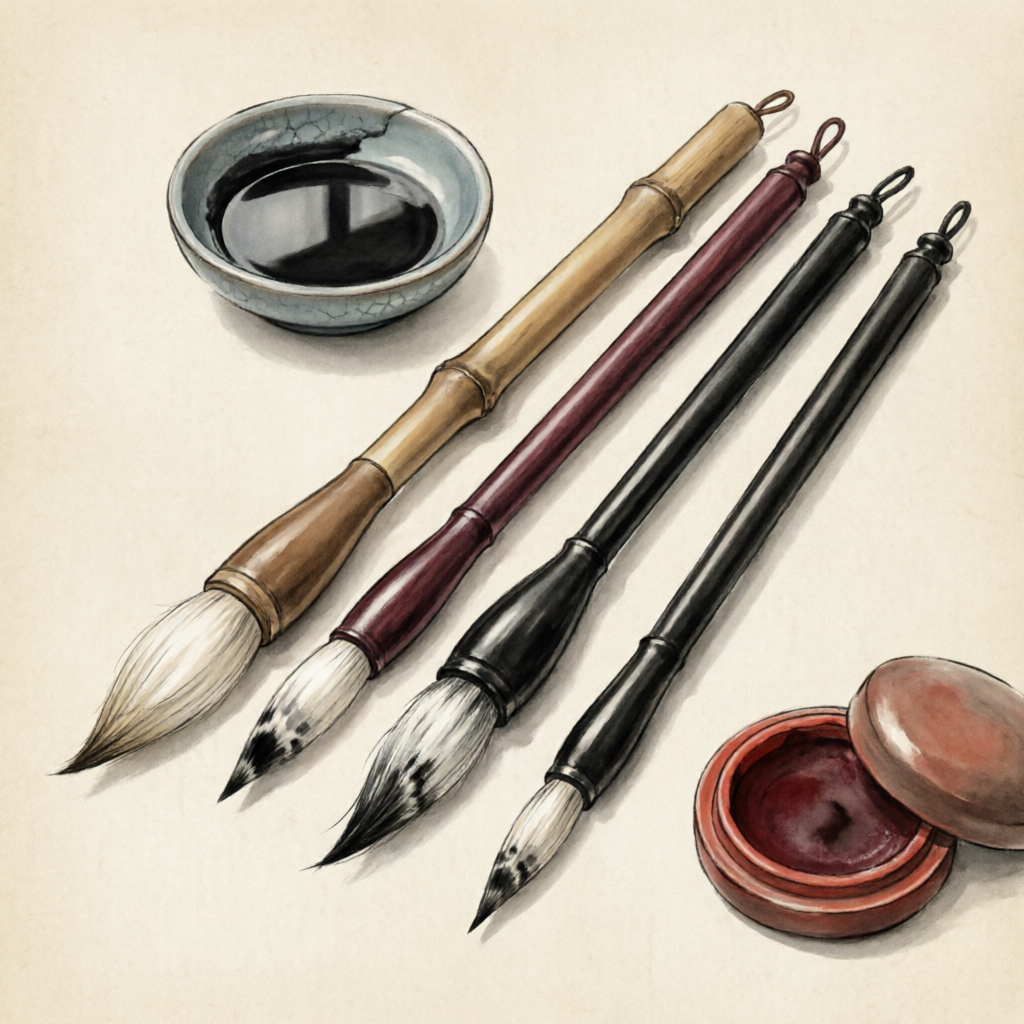
Hubi, also known as Huzhou writing brush or "Huying" (湖颖), is a traditional writing brush originating from Shanlian Town in Nanxun District, Huzhou City, Zhejiang Province. As one of the Four Treasures of the Chinese Study (文房四宝), Hubi has been celebrated for its exceptional quality and craftsmanship since the Southern Song Dynasty (1127-1279). The writing brush is distinguished by its "black core" (黑子), a transparent tip at the brush head that contributes to its superior ink absorption and writing performance. Hubi has been recognized as a National Intangible Cultural Heritage of China since 2006 and is protected as a geographical indication product.
History
The history of Hubi dates back to the Southern Song Dynasty, when brush makers from Xuanzhou (modern-day Xuancheng in Anhui Province) migrated to Huzhou to escape warfare. This migration brought advanced brush-making techniques to the region, which gradually evolved into what we now know as Hubi. During the Yuan Dynasty (1271-1368), Hubi gained prominence as it replaced Xuan brushes as the preferred writing instrument among scholars and officials.
The fame of Hubi is closely associated with the renowned calligrapher Zhao Mengfu (1254-1322) of the Yuan Dynasty. Zhao, a native of Huzhou, was so particular about his brushes that he would have them remade if they didn't meet his exacting standards. This attention to quality became a hallmark of Hubi production. According to historical records, Zhao once said that a good brush should possess four virtues: "sharpness, evenness, roundness, and resilience" (尖、齐、圆、健), which remain the standard criteria for evaluating Hubi quality today.
During the Ming and Qing Dynasties, Hubi production flourished, with workshops establishing branches in major cities across China. Notable Hubi shops included Daiyuexuan in Beijing, Yangzhenhua in Shanghai, and Wangyipin Zhai in Huzhou. These shops maintained the traditional techniques while adapting to changing market demands.
Key Information
| Aspect | Details |
|---|---|
| Chinese Name | 湖笔 (Húbǐ) |
| Also Known As | 湖颖 (Húyǐng) |
| Origin | Shanlian Town, Nanxun District, Huzhou, Zhejiang Province |
| Emergence | Southern Song Dynasty (1127-1279) |
| Recognition | National Intangible Cultural Heritage (2006) |
| Raw Materials | Goat hair (primary), weasel tail hair, rabbit hair, purple rabbit hair |
| Characteristics | Sharp tip (尖), even brush (齐), round body (圆), resilient core (健) |
| Production Process | Over 120 steps across 12 major工序 (processes) |
| Main Varieties | Goat hair brush (羊毫), weasel hair brush (狼毫), mixed brush (兼毫), purple hair brush (紫毫) |
Cultural Significance
Hubi represents the pinnacle of traditional Chinese brush-making craftsmanship and embodies the cultural essence of Huzhou. As a cultural ambassador, Hubi has influenced Chinese calligraphy, painting, and literature for centuries. The brush-making tradition in Shanlian Town is intertwined with local customs and beliefs, including the worship of Meng Tian, traditionally credited with inventing the writing brush during the Qin Dynasty. The town features the Mengtian Temple (蒙恬庙) and the Menggong Shrine (蒙公祠), where annual commemorations are held on the 16th day of the 3rd and 9th lunar months.
In contemporary culture, Hubi has found new expressions through various media. For instance, the short drama "My Clinic Connects Ancient and Modern Times" (《我的诊室通古今") has integrated Hubi and other intangible cultural heritage elements, encouraging visitors to experience brush-making firsthand. This fusion of traditional craftsmanship with modern media has helped preserve and promote Hubi culture among younger generations.
Modern Status
Today, Hubi production faces challenges from modern writing tools and changing cultural practices. However, concerted efforts have been made to preserve this traditional craft. The Huzhou Hubi industry has evolved to meet contemporary demands while maintaining traditional techniques. Modern Hubi producers offer a wide range of products, from traditional brushes for calligraphy and painting to specialized brushes for industrial use and decorative pieces.
Notable modern Hubi enterprises include Wangyipin Zhai Brush Store (王一品斋笔庄) in Huzhou, Shilian Hubi Factory (善琏湖笔厂), and Shaozhiyan Brush Store (邵芝岩笔庄) in Hangzhou. These institutions continue to produce high-quality brushes while also developing new products for the tourism market, such as decorative brushes named after cultural landmarks like "Lanting" (兰亭) and "Echi" (鹅池).
The Chinese government has implemented protective measures for Hubi, including geographical indication status and intangible cultural heritage recognition. These protections have helped stabilize the industry and ensure the transmission of traditional techniques to future generations.
References
- Li, X. (2015). The Art of Chinese Brush Making: Tradition and Innovation. Zhejiang University Press.
- Chen, Y. (2018). Four Treasures of the Study: Cultural History and Craftsmanship. Beijing: Cultural Relics Publishing House.
- Wang, H. (2020). Intangible Cultural Heritage in China: Preservation and Revitalization. Springer.
"The making of a Hubi brush is a meticulous process that requires not only technical skill but also a deep understanding of the relationship between brush, ink, and paper." — Li Xiang, master brush maker, Shanlian Town
Cultural References and Literary Names
Throughout Chinese history, writing brushes have been given various poetic and literary names. Hubi, as the premier brush of its kind, has been referred to by many such appellations:
- "Mao Ying" (毛颖): "Furry Tip"
- "Guan Chengzi" (管城子): "Master of Pipe City"
- "Zhongshu Jun" (中书君): "Palace Secretary"
- "Mao Zhui" (毛锥): "Sharp Point"
- "Long Xu" (龙须): "Dragon Whiskers"
These names reflect the cultural significance and artistic value placed on writing brushes in Chinese literary tradition.