Overview
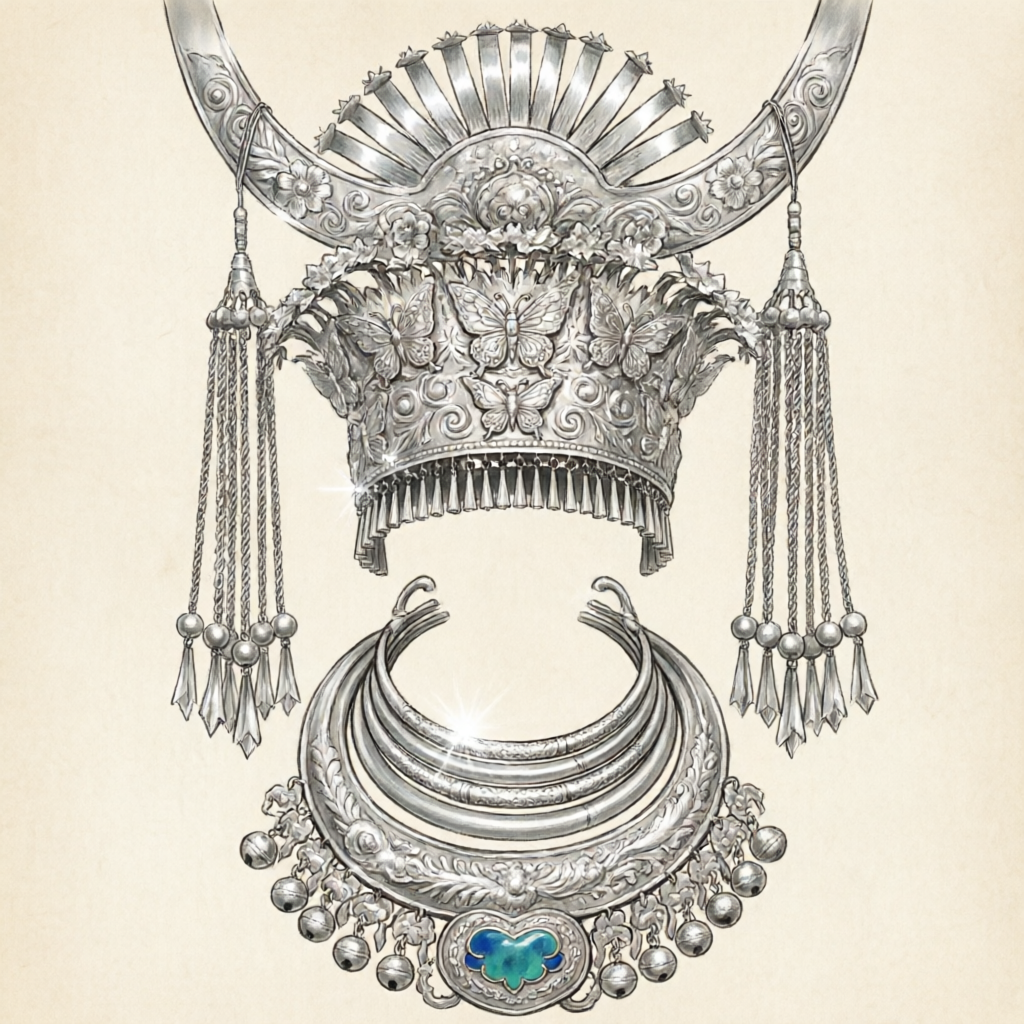
Miao silver ornaments (苗族银饰) represent one of the most distinctive and elaborate forms of traditional adornment among the Miao ethnic group in China. These ornaments are not merely decorative items but embody a complex artistic and cultural heritage that spans over a thousand years. The Miao people, historically scattered across mountainous regions of southern China, developed a sophisticated tradition of silver craftsmanship that reflects their aesthetic values, social status, and spiritual beliefs.
The silver ornaments of the Miao people are characterized by their diverse forms, intricate designs, and meticulous craftsmanship. They serve multiple functions including aesthetic enhancement, display of wealth, and spiritual protection. Unlike many other decorative traditions, Miao silver ornaments are worn extensively from head to toe, creating a complete ensemble that transforms the wearer into a living work of art.
History
The tradition of Miao silver ornaments began to take shape during the Ming Dynasty (1368-1644) and evolved over several centuries through a process of cultural assimilation and innovation. This development occurred as the Miao people adapted various silverworking techniques and design elements to their own aesthetic preferences and cultural needs.
Historically, silver ornaments in Miao society served practical functions beyond mere decoration. They functioned as a form of movable wealth that could be easily transported during migrations and served as financial security in times of need. The "money as ornament" (以钱为饰) practice, where silver coins and ingots were incorporated into jewelry, reflects this dual function of adornment and wealth preservation.
The 20th century witnessed significant developments in Miao silver ornamentation. Particularly after the 1980s, the production and popularity of these ornaments expanded dramatically, reflecting improved living standards among Miao communities. This period saw both preservation of traditional techniques and introduction of new design elements, demonstrating the dynamic nature of this cultural tradition.
Key Information
| Category | Description | Examples |
|---|---|---|
| Types | Head ornaments, neck ornaments, chest ornaments, hand ornaments, clothing ornaments, and children's hat ornaments | Silver horns, neck rings, pendants, bracelets, clothing ornaments |
| Aesthetic Features | Large size, heavy weight, and numerous components | Silver horns nearly half the wearer's height, neck rings weighing over four kilograms |
| Craftsmanship | Handmade in family workshops using traditional techniques | Hammering, engraving, casting, filigree, and inlay work |
| Materials | Primarily silver, sourced from silver coins and ingots historically | Varies in purity based on regional availability of silver |
| Cultural Significance | Symbol of wealth, social status, and spiritual protection | Used in festivals, weddings, and important ceremonies |
Cultural Significance
Miao silver ornaments embody three fundamental aesthetic principles that reflect the cultural values of the Miao people:
The Beauty of Size (以大为美)
Miao silver ornaments often emphasize large scale as a mark of beauty and status. The most striking example is the silver horn (银角) worn by Miao women in some regions, which can be nearly half the wearer's height. This preference for large-scale ornaments creates a sense of grandeur and visual impact that reflects both aesthetic values and the display of family wealth.
The Beauty of Weight (以重为美)
Weight is another significant aesthetic consideration in Miao silver ornaments. In some areas, women wear progressively larger ear rings from childhood, gradually stretching their earlobes to accommodate increasingly heavy ornaments. Some neck rings weigh over four kilograms (eight jin), demonstrating the cultural importance of substantial weight in these ornaments.
The Beauty of Abundance (以多为美)
The "more is better" principle is evident in how Miao people wear multiple ornaments simultaneously. It is common to see several pairs of earrings, multiple neck rings, and numerous pendants all worn together. This creates a rich, layered effect that showcases both the wearer's family wealth and the artisan's skill.
Beyond their aesthetic appeal, these ornaments carry deep cultural and spiritual significance. Silver is believed to possess protective qualities that ward off evil spirits and illness. The intricate designs often incorporate symbolic elements that represent wishes for prosperity, fertility, and protection. In Miao society, the quantity and quality of silver ornaments a woman wears traditionally reflect her family's economic status and social standing.
Modern Status
Today, Miao silver ornaments continue to play a vital role in Miao cultural identity while adapting to contemporary contexts. They remain essential elements of traditional dress worn during festivals, weddings, and other important ceremonies. At the same time, these ornaments have gained recognition beyond Miao communities as significant examples of Chinese folk art and craftsmanship.
In recent decades, there has been growing interest in preserving and promoting traditional Miao silver craftsmanship. Government cultural initiatives and tourism development have helped sustain this art form by providing markets for traditional ornaments and supporting artisans. Some contemporary Miao silversmiths have also begun experimenting with new designs while maintaining traditional techniques, creating a bridge between heritage and innovation.
The economic significance of Miao silver ornaments has also evolved. While they continue to serve as symbols of wealth and status, they have also become important sources of income for Miao communities through tourism and cultural exchange programs. This dual role—as both cultural artifacts and economic resources—presents both opportunities and challenges for preserving the authenticity of this tradition.
References
-
Li, S. (2010). The Silver Art of the Miao People: Tradition and Innovation. Cultural Publishing House. Beijing.
-
Zhang, W. (2015). Ethnic Adornment in China: Miao Silver Ornaments. National Museum of China Press. Beijing.
-
Wang, H. (2018). Material Culture and Identity: The Case of Miao Silver Jewelry. Journal of Ethnic Studies, 45(3), 215-238.
-
Chen, L. (2012). Traditional Crafts of China's Ethnic Minorities. Yunnan University Press. Kunming.
-
Guo, Y. (2017). Silver and Identity: Miao Women's Adornment in a Changing World. China Ethnic Publishing House. Beijing.