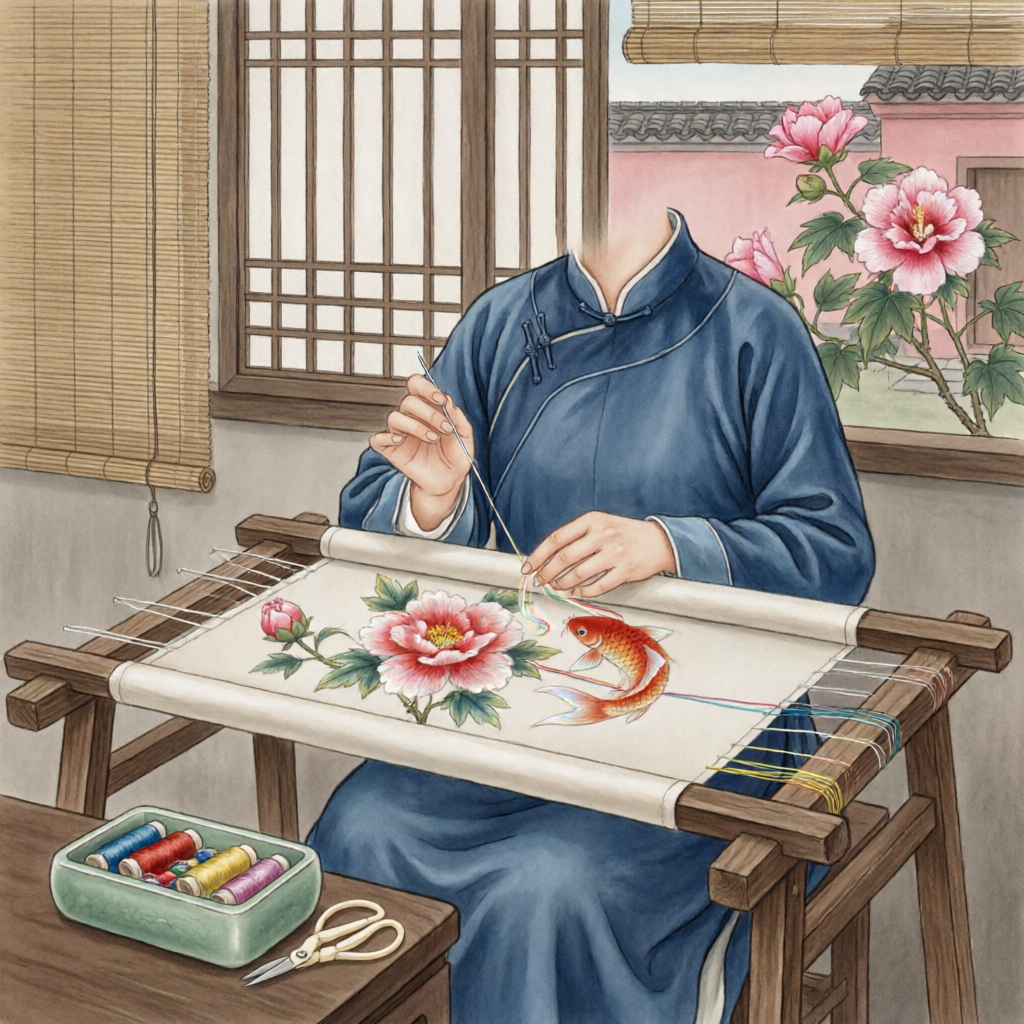
Shu Embroidery
Overview
Shu Embroidery (蜀绣) is a traditional Chinese embroidery style originating from the Sichuan region, particularly centered in Chengdu. It is one of the Four Great Embroideries of China, celebrated for its vibrant colors, three-dimensional effects, and rich cultural heritage. Recognized as a National Intangible Cultural Heritage of China in 2006, Shu Embroidery represents the artistic and technical achievements of Sichuan's traditional handicraft industry. The embroidery is characterized by its meticulous craftsmanship, diverse needle techniques, and distinctive aesthetic that combines both naturalistic and stylized elements.
History
The origins of Shu Embroidery can be traced back to ancient times in the Sichuan region, known historically as "Shu." The development of Shu Embroidery was facilitated by the fertile lands and favorable climate of the Chengdu Plain, which supported sericulture (silkworm farming) and silk production. As early as the Western Han Dynasty (206 BCE-220 CE), historical records such as Yang Xiong's "Fu on Shu" (《蜀都赋》) mention the abundance of embroidery in the region, describing scenes of "weaving brocade and embroidery" throughout Chengdu.
During the Three Kingdoms period (220-280 CE), Shu Embroidery had already gained fame for its quality and was used as valuable trade goods, often exchanged for warhorses and other necessities. The Tang Dynasty (618-907 CE) saw Shu Embroidery become prestigious enough to be presented as tribute to the imperial court. By the Song Dynasty (960-1279 CE), Shu Embroidery had reached its zenith, with contemporary descriptions praising its "exquisite craftsmanship and ingenuity."
In the mid-Qing Dynasty, Shu Embroidery developed into a formal industry with the establishment of guilds and specialized workshops. The Daoguang period (1821-1850) saw the creation of the Sanhuang Guild, which standardized production practices and quality standards. During this period, many Shu Embroidery pieces were designated as imperial tributes, and master artisans were granted official titles, further elevating the craft's status.
The 20th century brought both challenges and opportunities for Shu Embroidery. It received international recognition at the 1915 Panama-Pacific International Exposition, where it won a gold medal. However, during the Cultural Revolution (1966-1976), traditional embroidery was criticized as "feudal" and "bourgeois," causing significant disruption to the industry. The craft experienced a revival in the late 1970s and has since been revitalized through government support, educational initiatives, and renewed cultural appreciation.
Key Information
| Aspect | Details |
|---|---|
| Origin | Sichuan Province, particularly Chengdu |
| Recognition | National Intangible Cultural Heritage (2006) |
| Materials | Silk thread, silk fabrics (satin, damask, etc.) |
| Characteristics | Vibrant colors, three-dimensional effects, diverse needle techniques |
| Main Subjects | Flowers, birds, animals, landscapes, figures, folklore scenes |
| Notable Techniques | 12 categories with over 130 needle techniques, including unique ones like "Jinjin line" |
| Production Centers | Chengdu, with workshops in surrounding areas |
Cultural Significance
Shu Embroidery holds profound cultural significance as both an art form and a cultural symbol of Sichuan. The embroidery often incorporates themes from Chinese literature, mythology, and daily life, serving as a visual medium for storytelling and cultural transmission. Popular motifs include the "Eight Immortals Crossing the Sea," "Magu Presenting Longevity," and "Mandarin Ducks Playing in Water," each carrying auspicious meanings and cultural connotations.
The craft also reflects the regional identity and aesthetic preferences of Sichuan. Local specialties such as "Hibiscus and Carp," "Bamboo and Pheasant," and "Pandas in Landscape" showcase the region's natural beauty and biodiversity. These motifs have been embraced by both domestic and international audiences, making Shu Embroidery an important ambassador of Sichuan culture.
Modern Status
In contemporary times, Shu Embroidery has evolved from a traditional craft to a cultural industry with significant economic value. According to industry statistics, the Shu Embroidery industry in Chengdu achieved a total output value of 260 million yuan in 2015, with continued growth in subsequent years. The sector has created numerous employment opportunities, particularly for women in rural areas, with over 7,000 people trained in embroidery techniques since 2009.
Efforts to preserve and promote Shu Embroidery have been multifaceted. The establishment of production bases, workshops, and cooperatives has helped standardize quality while maintaining traditional techniques. Government initiatives have supported the training of artisans, with 476 embroiderers obtaining vocational qualifications by 2016. The recognition of master craftsmen at provincial and municipal levels has further incentivized skill development and innovation.
Despite these positive developments, Shu Embroidery faces challenges in the modern market, including competition from machine-made embroidery and the need for younger generations to take up the craft. However, growing interest in traditional Chinese arts and crafts, both domestically and internationally, provides new opportunities for Shu Embroidery to thrive as both a cultural heritage and a contemporary art form.
References
- Gao, H. (2010). Chinese Embroidery: Traditional Techniques. Yale University Press.
- Li, W. (2015). Intangible Cultural Heritage in China: Preservation and Innovation. Springer.
- Wang, Y. (2018). "The Revival of Traditional Chinese Embroidery in the 21st Century." Journal of Cultural Heritage, 42(3), 245-258.
- Chen, L. (2020). Sichuan Folk Arts and Crafts. Sichuan Publishing Group.
- Zhang, M. (2019). "Shu Embroidery: From Traditional Craft to Cultural Industry." Journal of Material Culture, 24(1), 78-95.