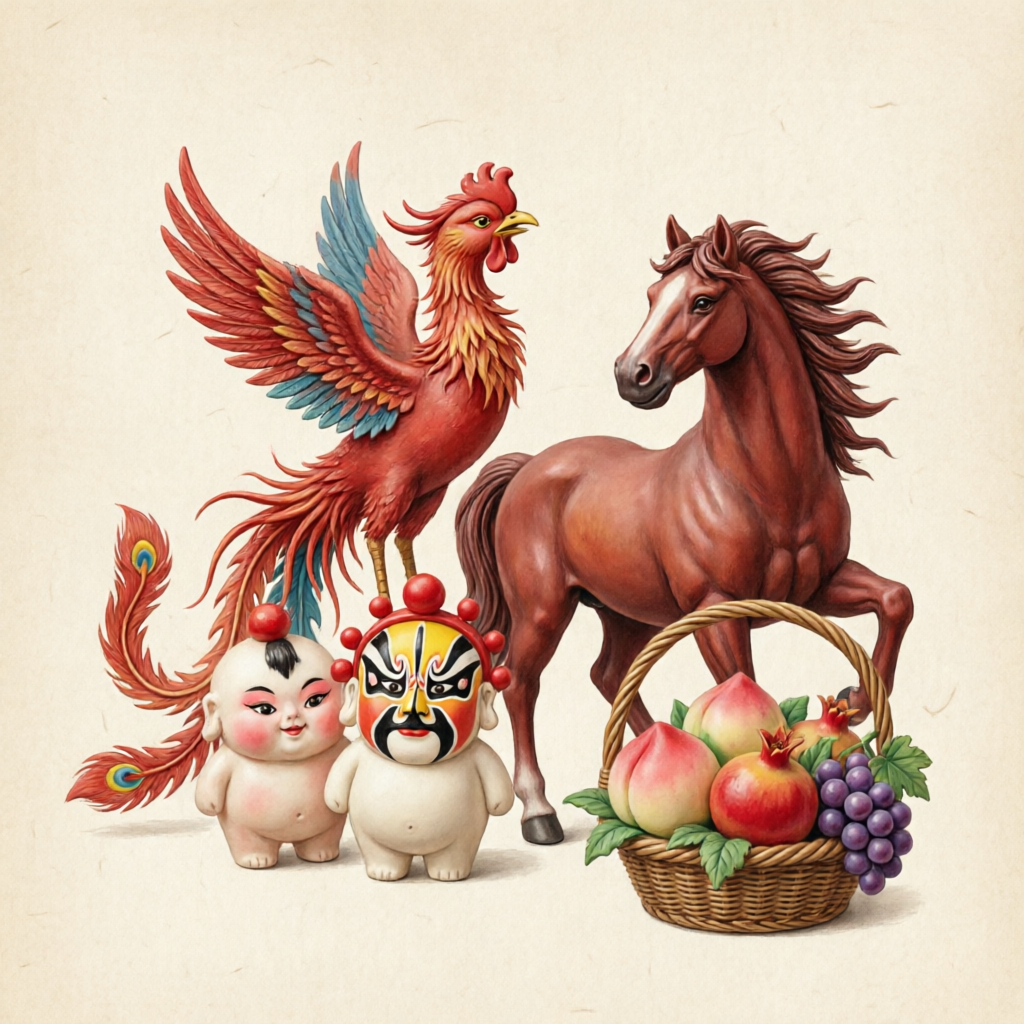
Dough Sculpture
Overview
Dough sculpture, also known as dough modeling, is a traditional Chinese folk art form that involves creating intricate sculptures from colored flour dough. This art form has a rich history spanning over 1,300 years and is an important part of Chinese cultural heritage. The craft is characterized by its vibrant colors, lifelike representations, and portability, making it both an artistic medium and a cultural symbol in various Chinese communities.
History
The art of dough sculpture in China dates back to the Han Dynasty, with historical records documenting its existence for thousands of years. Archaeological discoveries from the Tang tombs in Turpan, Xinjiang, have unearthed dough figurines and small pigs dating back at least 1,340 years. During the Southern Song Dynasty, the text "Dreams of Splendor in the Eastern Capital" (《东京梦华录》) mentions the creation of dough figures resembling smiling faces using oil, flour, sugar, and honey, which were edible and known as "fruit food" (果食).
A popular legend attributes the origin of dough sculpture to Zhuge Liang during the Three Kingdoms period. According to the story, when Zhuge Liang's army encountered strong winds while crossing the Lu River, he quickly fashioned dough figurines and sacrificial offerings to appease the river god. The troops then safely crossed the river and successfully conquered the southern tribes. As a result, practitioners of this craft have traditionally honored Zhuge Liang as their patron.
Key Information
| Feature | Description |
|---|---|
| Chinese Name | 面塑 (miàn sù) |
| Alternative Names | 捏面人 (niē miàn rén), 面花 (miàn huā), 礼馍 (lǐ mó), 花糕 (huā gāo) |
| Main Ingredient | Flour (面粉) |
| Type | Chinese traditional folk art |
| Techniques | Pinching (捏), rolling (搓), kneading (揉), lifting (掀) |
| Characteristics | Lifelike and vivid (栩栩如生) |
Cultural Significance
Dough sculpture plays a significant role in Chinese cultural traditions, particularly in festivals and life ceremonies across different regions.
Festive Foods
The combination of Qingming Festival and Cold Food Festival during the Tang Dynasty incorporated dough sculptures into rituals. In Shanxi province, offerings called "snake coils" (蛇盘盘), either single or double-headed, were used during ancestor worship. The younger generation would eat the snake heads to symbolize eliminating disaster and misfortune.
During the Cold Food Festival, various bird-shaped dough foods called "cold swallows" (寒燕) were created to signify the arrival of spring. These intricate sculptures, often less than an inch square, featured exaggerated proportions to capture the essence of animals and birds. The vibrant colors and lifelike representations made them popular gifts during the Qingming Festival.
Gift-Giving Customs
In Shanxi, the tradition of gifting dough sheep (送面羊) on the fifteenth day of the seventh lunar month is particularly significant. Originally associated with the "Ghost Festival" and the legend of Mulian saving his mother, this practice evolved into a celebration of harvest and human relationships. Families would create various animal and human figurines, with sheep gifted to boys (as a symbol of auspicious masculinity) and fish to girls (representing femininity and yin).
Life Cycle Ceremonies
Dough sculptures feature prominently in important life events:
- Birth celebrations: For a baby's first month, relatives would create large "whole" (囫囵) dough sculptures featuring the twelve zodiac animals, with a red dot marking the baby's own zodiac sign.
- Weddings: In northern Shanxi, couples would eat "joyful fish and auspicious rabbit" (欢鱼吉兔) figurines, and dough rabbits would be placed above the bridal room door to symbolize a blessed union.
- Birthday celebrations: Large peach-shaped dough sculptures (寿桃) would be gifted to elders to symbolize longevity and respect.
- Funerals: Different dough offerings were prepared based on the relationship to the deceased, ranging from elaborate "great offerings" for direct descendants to simpler "small offerings" for other relatives.
Regional Variations
Hezhou Dough Sculpture
Known locally as "lamb buns" (羊羔儿馍), Hezhou dough sculptures symbolize good fortune and prosperity. During the Cold Food Festival, "snake coils" were used as ancestral offerings. On the fifteenth day of the seventh lunar month, a wide variety of dough sculptures were created, including animal heads and household objects.
Xinzhou Dough Sculpture
Xinzhou features distinctive "flower buns" (花馍) often adorned with red dates. Large offerings called "date mountains" (枣山) were created for the New Year, while "cold food offerings to worthy men" featured human heads with vegetable fillings. The "cold swallows" (寒燕儿) were crafted to resemble birds perched on branches.
Jinzhou Dough Sculpture
Jinzhou dough sculptures, known as "flower buns" (花馍), are particularly noted for their colorful decorations and exaggerated animal shapes, especially the "animal flower buns" (走兽花馍). The tradition of creating these buns has fostered numerous skilled artisans who have passed down their techniques through generations.
Modern Development
Contemporary dough sculpture artists have continued to develop this traditional art form, with prominent schools emerging in Beijing, Tianjin, and Shandong. The Chen Mo Studio represents a new wave of innovation in artistic style and application. Modern dough sculptures have expanded beyond traditional uses to appear in cultural events, competitions, and as innovative products like chocolate figurines.
Modern Status
Today, dough sculpture is recognized as an important intangible cultural heritage in China. Artists and organizations are working to preserve and promote this traditional art form while adapting it to contemporary contexts. The craft has gained international recognition, with artists demonstrating their techniques and exhibiting their works both domestically and abroad.
References
-
Jing, S. (2018). Chinese Folk Arts: Traditional Crafts and Their Contemporary Expressions. Cambridge University Press.
-
Wang, L. & Chen, H. (2020). Edible Art: The Cultural Significance of Dough Sculpture in Chinese Festivals. Journal of Chinese Cultural Studies, 37(2), 145-167.
-
Zhang, Y. (2019). Intangible Cultural Heritage Preservation in China: Case Studies of Traditional Crafts. Routledge.
-
Li, M. (2021). Regional Variations in Chinese Dough Sculpture Techniques and Symbolism. Asian Folklore Studies, 80(1), 89-112.
-
Cultural Heritage Administration of China. (2022). National Inventory of Intangible Cultural Heritage: Dough Sculpture. Beijing: China Cultural Heritage Press.