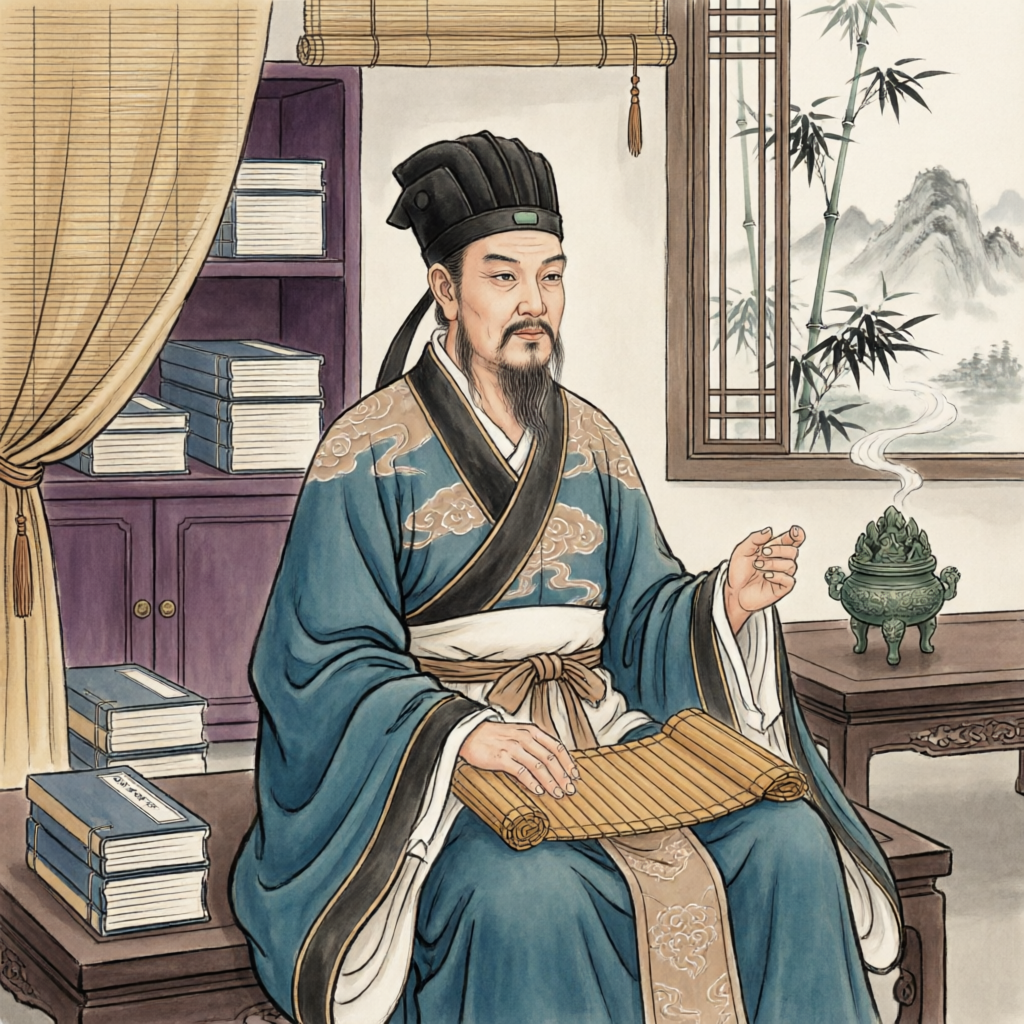
Mencius
Overview
Mencius (c. 372–289 BCE), born in the State of Zou (present-day Zoucheng, Shandong Province), was a Chinese philosopher who became one of the principal interpreters of Confucianism. Often referred to as the "Second Sage" of Confucianism (after Confucius himself), his interpretations of Confucian thought have been highly influential in the development of Chinese philosophy and political theory. Mencius traveled extensively throughout the states of the Warring States period, advocating for his political and philosophical beliefs to various rulers.
History
Early Education
Mencius was a descendant of the Mengsun clan, an aristocratic family from the State of Lu that had declined and moved to the State of Zou. According to the Records of the Grand Historian (Shiji), Mencius "studied under the disciples of Zisi" (Kong Ji), who was Confucius's grandson. However, Mencius himself stated, "I was not able to become a disciple of Confucius, but I privately learned from others." Based on historical records, it's more likely that Mencius studied under disciples of Zisi rather than directly under Zisi himself.
Mencius was raised primarily by his mother, who is famous in Chinese culture for her dedication to his education. The story of "Mencius's Mother Moving Three Times" (孟母三迁) illustrates how she moved their home three times to ensure Mencius grew up in a proper educational environment. This maternal influence played a crucial role in shaping Mencius's character and intellectual development.
Travels Among the States
Mencius traveled extensively throughout various states during the Warring States period, spending over two decades advocating for his political philosophy. Like Confucius, he attempted to translate Confucian political theories into practical governance policies.
His travels included:
- State of Qi: Mencius first visited Qi during the reign of King Wei (356–320 BCE). He promoted his doctrine of "benevolent governance is invincible" but left disappointed when his advice wasn't fully accepted.
- State of Song: Around 329 BCE, Mencius traveled to the State of Song, where he met Duke Wen of Teng. He emphasized the importance of following the ways of ancient kings.
- Return to Zou: After receiving seventy yi of gold from the ruler of Song, Mencius returned to Zou. When Duke Mu of Zou consulted him about a conflict with Lu, Mencius explained that the ruler's treatment of his people determined their response in crisis.
- State of Teng: Mencius later advised Duke Wen of Teng on governance, emphasizing that "the people's affairs cannot be delayed." He discussed the well-field system (井田制) and the importance of giving people fixed property to ensure social stability.
- State of Wei (Liang): In 320 BCE, at age 53, Mencius visited Wei. When King Hui asked how to benefit the state, Mencius replied that only benevolence and righteousness mattered, not profit. He explained his vision of benevolent governance but didn't receive the practical solutions the king sought.
- Second Visit to Qi: Around 318 BCE, Mencius returned to Qi, where King Xuan asked about achieving hegemony like Duke Huan of Qi. Mencius instead advocated for "preserving the people and becoming king" rather than seeking dominance through force.
- Second Visit to Song: When Qi and Chu were on the brink of war, Mencius traveled to Song and met Song Keng. He emphasized that rulers should speak of righteousness, not profit, when dealing with other states.
- Return to Lu: In his later years, Mencius returned to Lu but was prevented from meeting Duke Ping due to slander by a court official. He retired to Zou at around age 60, ending his travels.
Teaching and Writing
In his later years, Mencius returned to his hometown of Zou, where he dedicated himself to teaching and writing. He maintained a large following of students, at times having "dozens of carriages and hundreds of followers." With his disciples, particularly Wan Zhang, Mencius compiled and edited the Mencius (孟子), a collection of his dialogues, anecdotes, and philosophical arguments that became one of the Four Books of Confucianism.
Key Information
| Aspect | Details |
|---|---|
| Full Name | Mencius (孟子) |
| Courtesy Name | Ziche/Ziyu (有争议) |
| Era | Warring States Period (战国时期) |
| Ethnicity | Huaxia (华夏族) |
| Birthplace | State of Zou (邹国, present-day Zoucheng, Shandong) |
| Birth Date | c. 372 BCE (一说约前385年) |
| Death Date | c. 289 BCE (一说约前304年) |
| Major Works | Mencius (《孟子》) |
| Honorific Titles | Confucian Representative (儒家代表人物), Second Sage (亚圣) |
Cultural Significance
Mencius's interpretation of Confucian philosophy, particularly his development of the concepts of human nature as inherently good (性善论) and the importance of benevolent governance (仁政), has profoundly influenced Chinese thought and political theory. His ideas about the relationship between rulers and subjects, emphasizing that "the people are most important, the state其次, and the ruler least important" (民为贵,社稷次之,君为轻), represent a significant development in Confucian political philosophy.
The elevation of Mencius's status in Chinese intellectual history began in the Tang Dynasty with Han Yu's Original Way (原道), which identified Mencius as the sole transmitter of Confucius's orthodox tradition. This initiated a "Mencius promotion movement" that continued through the Song Dynasty. In 1071, the Mencius was first included in the imperial examinations. In 1083, Mencius was posthumously enfeoffed as Duke of Zou, and in 1330, he was honored as the "Second Sage" (亚圣公), second only to Confucius himself.
During the Ming Dynasty, Emperor Zhu Yuanzhang initially ordered the removal of certain passages from the Mencius that he found critical of rulers, including the famous "the people are most important" passage. However, after protests from scholars and officials, Zhu restored Mencius's place in the Confucian temple, recognizing his importance in defending orthodox Confucian teachings against heterodox ideas.
Modern Status
Today, Mencius remains one of the most influential figures in East Asian philosophy. His works are studied worldwide as part of Confucian philosophy, and his ideas about human nature, governance, and ethics continue to resonate in contemporary discussions. The Mencius is one of the Four Books that became the basis of civil service examinations in imperial China and remains a central text in Confucian education.
Modern scholars continue to debate various aspects of Mencius's philosophy, including his views on human nature, his political theory, and his relationship with other schools of thought in the Warring States period. His emphasis on the potential for human goodness and the importance of proper moral education has influenced both Eastern and Western educational theories.
References
-
Lau, D.C. (trans.). Mencius. Penguin Classics, 1970.
-
Mengzi. The Works of Mencius. Translated by James Legge, 1895. Available at Project Gutenberg.
-
Nivison, David S. The Ways of Confucianism: Investigations in Chinese Philosophy. Open Court, 1996.
-
Tu Wei-ming. Centrality and Commonality: An Essay on Chung-yung. State University of New York Press, 1989.
-
Wang, Robin R. Yin-Yang: The Way of Heaven and Earth in Chinese Thought and Culture. Cambridge University Press, 2012.