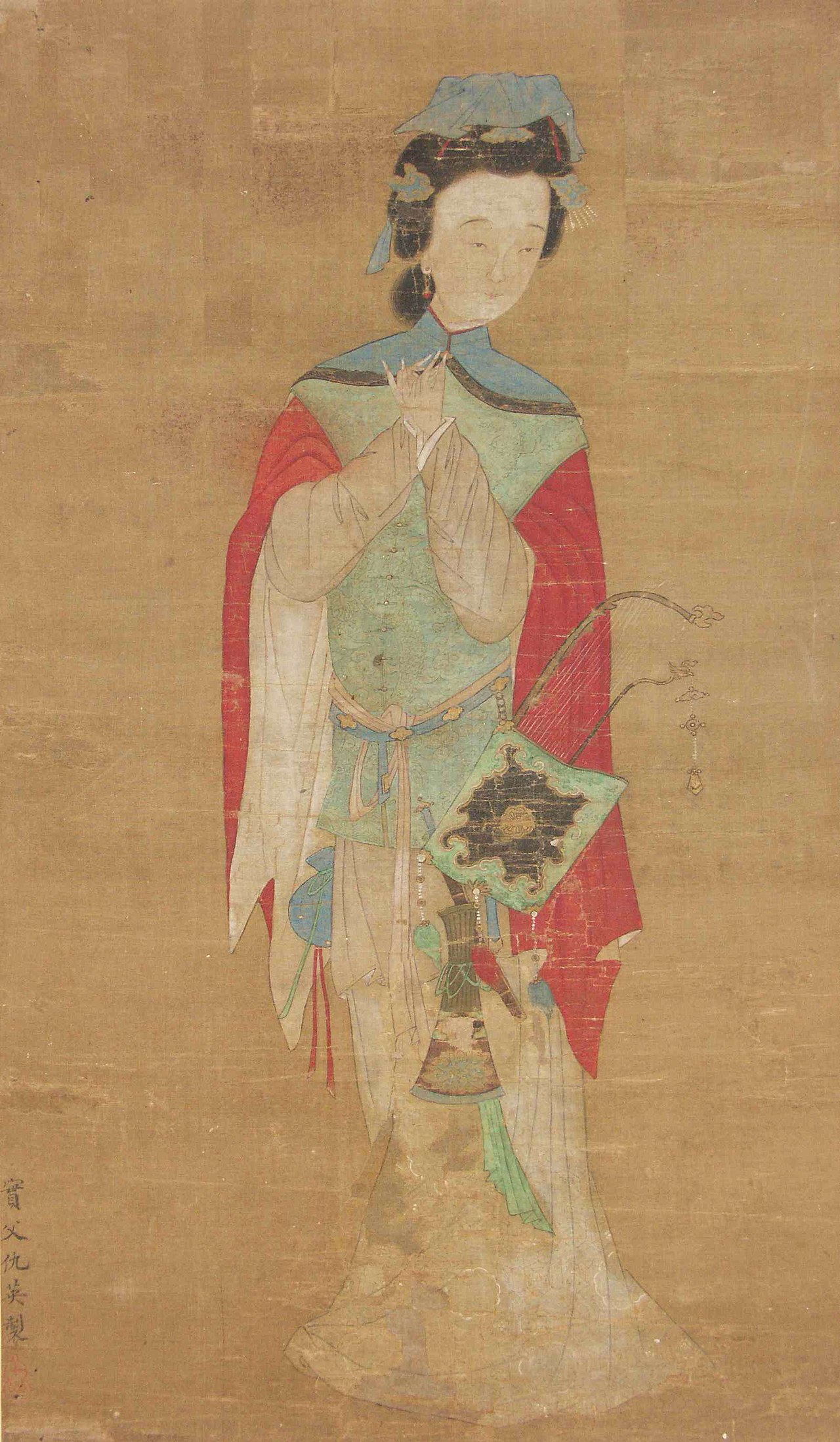
Synopsis
Hua Mulan is a legendary Chinese heroine from the Northern Dynasties period. Her story, told in the 'Ballad of Mulan,' follows a woman who disguised herself as a man to take her father's place in the army, serving for twelve years and becoming a symbol of filial piety and courage in Chinese culture.
Overview
Hua Mulan is one of the most celebrated heroines in ancient Chinese legend. Her story originates from the Ballad of Mulan (Mùlán Cí or Mùlán Shī), a Northern Dynasties folk song dating to approximately 386-534 AD. This Yuefu (Music Bureau) poem, collected in the Collection of Music Bureau Poetry (Yuefu Shiji) compiled by Guo Maoqian during the Song Dynasty, is just over 300 characters long yet tells an extraordinary tale of a woman who went to war in her father's stead.
The story of Hua Mulan has been known to every Chinese household for over 1,500 years. Her image — disguising herself as a man, taking her father's place in the army, fighting on the battlefield, and refusing official honors upon her return — has become a paradigm of loyalty, filial piety, and female strength in traditional Chinese culture.
The Ballad of Mulan
The Ballad of Mulan is a masterpiece of Northern Dynasties folk poetry, telling Mulan's story in narrative verse:
Mulan was originally an ordinary weaving girl. When the court issued conscription orders, her father's name appeared on every page of the military registers. But her father was elderly, and her younger brother was still a child. Mulan decided to disguise herself as a man and take her father's place in the army. She purchased a fine horse and saddle, crossed the Yellow River and Heishan (Black Mountain), and arrived at the frontier.
In the army, Mulan concealed her identity as a woman, enduring the hardships of military life alongside her comrades. The poem contains famous lines: "Ten thousand li she went to the front / Crossing passes and mountains as if flying / Northern air carried the sound of night watches / Cold light shone on iron armor," vividly depicting the bleakness and grandeur of frontier military life.
After twelve years of campaigning, Mulan distinguished herself in battle. The Emperor offered her high office and generous rewards, but she politely declined, wishing only to return home to care for her parents. When she removed her battle robes, donned women's clothing, and appeared before her comrades, they were astonished — "Twelve years we marched together / None knew Mulan was a maiden."
Historical Background
Whether Hua Mulan was a real historical figure remains a subject of academic debate. The Ballad of Mulan, as a folk song, likely represents collective folk creation and may not correspond to a specific historical person. However, the Northern Dynasties period did have a social environment where women could serve in the military — among the nomadic peoples of northern China, female horsemanship and archery were not uncommon.
Mulan's place of origin is debated, with claims from modern-day Shangqiu in Henan (Yucheng), Huangpi in Hubei, and Bozhou in Anhui. Each location has built Mulan temples or shrines, with the temple in Yucheng, Henan being the most famous. Originally constructed during the Tang Dynasty, the existing structure dates to a Qing Dynasty reconstruction.
| Item | Details |
|---|---|
| Story Source | The Ballad of Mulan (Mulan Ci / Mulan Shi) |
| Historical Period | Northern Dynasties (Northern Wei, c. 386-534 AD) |
| Documentary Record | Collection of Music Bureau Poetry (Song Dynasty, Guo Maoqian) |
| Poetry Form | Yuefu folk song |
| Poem Length | Approximately 300 characters |
| Disputed Birthplace | Yucheng (Henan), Huangpi (Hubei), Bozhou (Anhui) |
| Notable Site | Mulan Temple, Yucheng, Henan |
Cultural Impact
The image of Hua Mulan has had a profound influence on Chinese and world culture:
Opera and Literature: Since the Tang Dynasty, the Mulan story has been adapted into numerous opera forms. Ming Dynasty playwright Xu Wei created the zaju play Female Mulan Takes Her Father's Place in the Army. Various regional opera traditions throughout the Qing Dynasty all featured Mulan repertoires.
Film and Television: China produced its first Mulan-themed film in 1939. In 1998, Disney released the animated film Mulan, bringing this Chinese story to a global audience. In 2020, Disney followed with a live-action version starring Liu Yifei. China has also produced several Mulan-themed TV dramas and films, including the 1999 series starring Anita Yuen and the 2009 film starring Zhao Wei.
Feminist Symbol: Hua Mulan is widely regarded as one of China's earliest feminist icons. She broke through the traditional gender hierarchy of male superiority, proving that women could equally achieve greatness on the battlefield. "Who says women are inferior to men?" has become her most representative spirit.
International Influence: Hua Mulan is one of the very few ancient Chinese figures with widespread recognition in the Western world. Disney's animated Mulan grossed over $300 million worldwide, transforming this Chinese folk tale into a genuinely global cultural symbol.
References
- Guo Maoqian, Collection of Music Bureau Poetry (Yuefu Shiji), Zhonghua Book Company
- Baidu Baike - Hua Mulan: baike.baidu.com/item/花木兰
- Baidu Baike - Ballad of Mulan: baike.baidu.com/item/木兰辞
- Wikipedia - Hua Mulan: en.wikipedia.org/wiki/Hua_Mulan
- Wikipedia - Ballad of Mulan: en.wikipedia.org/wiki/Ballad_of_Mulan
Stills & Gallery
Comments (0)