Overview
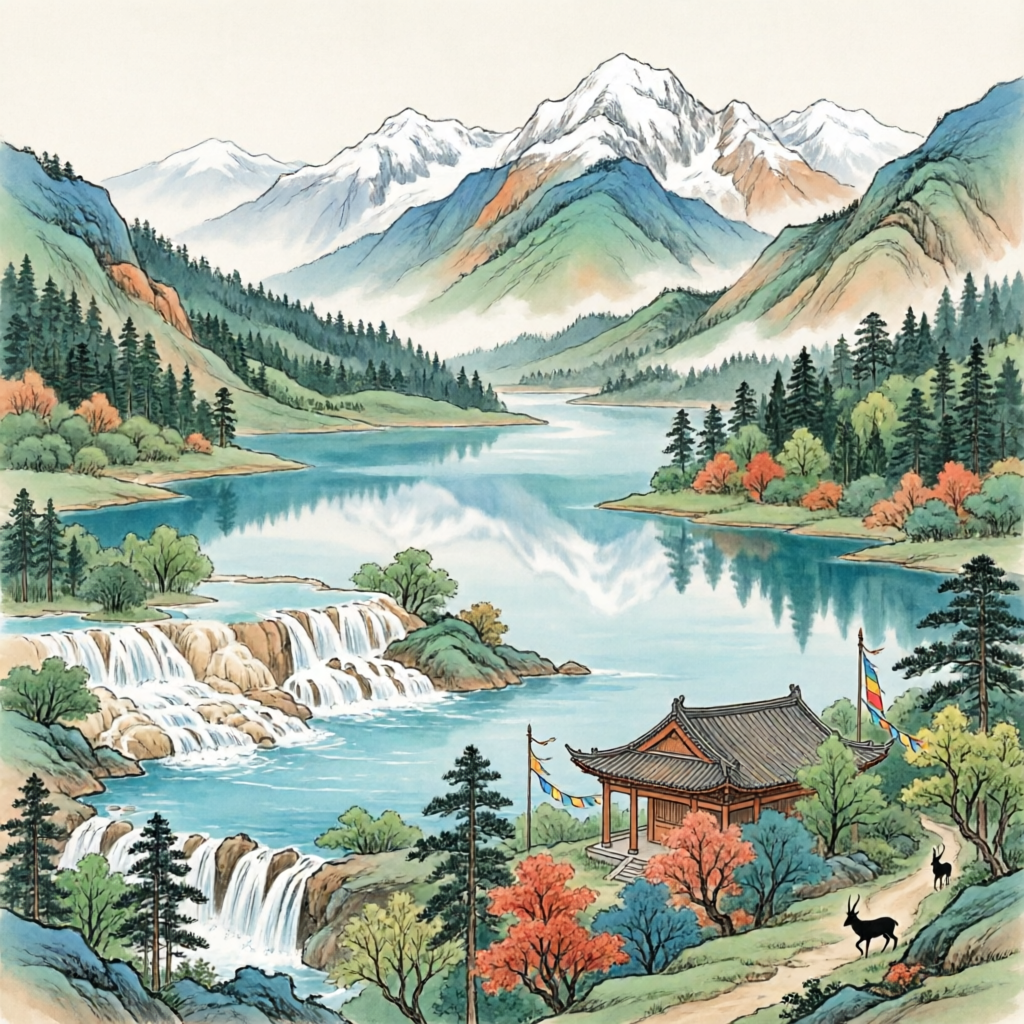
Jiuzhai Valley Scenic Area, also known as Jiuzhaigou, is a nature reserve and national park located in Jiuzhaigou County, Aba Tibetan and Qiang Autonomous Prefecture, Sichuan Province, China. The valley is known for its multi-colored lakes, waterfalls, snow-capped peaks, and diverse wildlife. Jiuzhai Valley was declared a UNESCO World Heritage Site in 1992 and has become one of China's most popular tourist destinations.
History
The name "Jiuzhai" (Nine Villages) originates from the nine Tibetan villages (Shuzheng, Zhecha, Heijiao, Heye, Panya, Yala, Jianpan, Rexi, and Guodu) located in the valley, also known as "Heyao Jiuzhai". The name reflects the fact that Tibetan people have inhabited these villages for generations.
1972 marked the beginning of significant human impact on the area when Nanping Forestry Bureau established Rize Forest Farm (also known as Forest Farm 126) for timber harvesting.
On November 8, 1982, the State Council of China approved the listing of Jiuzhaigou in Nanping County as one of the first National Key Scenic Areas.
In 1984, Jiuzhai Valley Scenic Area officially opened to the public.
In 2000, the scenic area implemented the "tour inside the valley, stay outside the valley" policy to reduce environmental impact.
On May 1, 2001, all hotels and guesthouses within the Jiuzhai Valley scenic area were closed to further protect the environment.
On August 8, 2017, at 21:19, a magnitude 7.0 earthquake occurred in Jiuzhaigou County, severely affecting the tourism infrastructure of the scenic area. To ensure visitor safety, Jiuzhai Valley stopped receiving tourists from August 9 onwards.
On September 28, 2021, Jiuzhai Valley Scenic Area fully reopened to visitors after extensive post-earthquake restoration efforts.
Key Information
| Feature | Details |
|---|---|
| Location | Jiuzhaigou County, Aba Tibetan and Qiang Autonomous Prefecture, Sichuan Province, China |
| Geographic Coordinates | East longitude 100°30′~104°27′, North latitude 30°35′~34°19′ |
| Area | 62 square kilometers (total), 50 square kilometers (tourist area) |
| Climate | Plateau humid climate |
| Opening Hours | Off-season: 8:30~14:00 |
| Ticket Price | Off-season: ¥80/person (ticket), ¥80/person (bus) Peak season: ¥190/person (ticket), ¥90/person (bus) |
| Notable Features | Multi-colored lakes, waterfalls, snow-capped mountains, Tibetan villages |
Cultural Significance
Jiuzhai Valley holds significant cultural importance due to the Tibetan and Qiang ethnic communities living in the region. The nine Tibetan villages within the valley represent the cultural heritage of the Tibetan people in this area. Traditional Tibetan architecture, colorful paintings, and local customs can still be observed, particularly in Shuzheng Village.
The restoration efforts after the 2017 earthquake incorporated traditional building techniques. In March 2025, "glue rice mortar" (a traditional construction material similar to that used in the Forbidden City and Great Wall) was innovatively improved and used to repair the Sparkling Lake dam, demonstrating the integration of traditional wisdom with modern conservation efforts.
Modern Status
Jiuzhai Valley continues to be one of China's premier tourist destinations. As of October 24, 2025, the scenic area had received 6.028 million visitors, a 24.13% increase compared to the previous period, setting a new record in its 40+ years of being open to the public. Domestic tourists accounted for 93.81% of total visitors, while international tourists reached 373,000, a 45.60% increase year-on-year.
The management of Jiuzhai Valley follows a comprehensive approach with the Jiuzhai Valley National 5A-Level Scenic Area Management Bureau established in July 2011. This bureau operates concurrently with the Scenic Area Administration, World Heritage Administration, National Nature Reserve Administration, and National Geopark Administration, implementing a "five signs, one team" management system.
The scenic area utilizes smart tourism platforms to monitor visitor flow in real-time, optimize tourist distribution, and scientifically schedule tourist vehicles, reducing waiting times for visitors.
References
-
Li, W., & Wang, Q. (2018). Ecological Tourism Management in Jiuzhai Valley. Beijing: China Environmental Science Press.
-
Zhang, H., & Chen, J. (2020). Post-Disaster Recovery and Sustainable Tourism Development in Jiuzhai Valley. Chengdu: Sichuan University Press.
-
UNESCO World Heritage Centre. (1992). Jiuzhaigou Valley Scenic and Historic Interest Area. Retrieved from https://whc.unesco.org/en/list/637
-
Tourism Bureau of Aba Prefecture. (2023). Jiuzhai Valley Tourism Development Report 2022. Aba: Aba People's Publishing House.