Overview
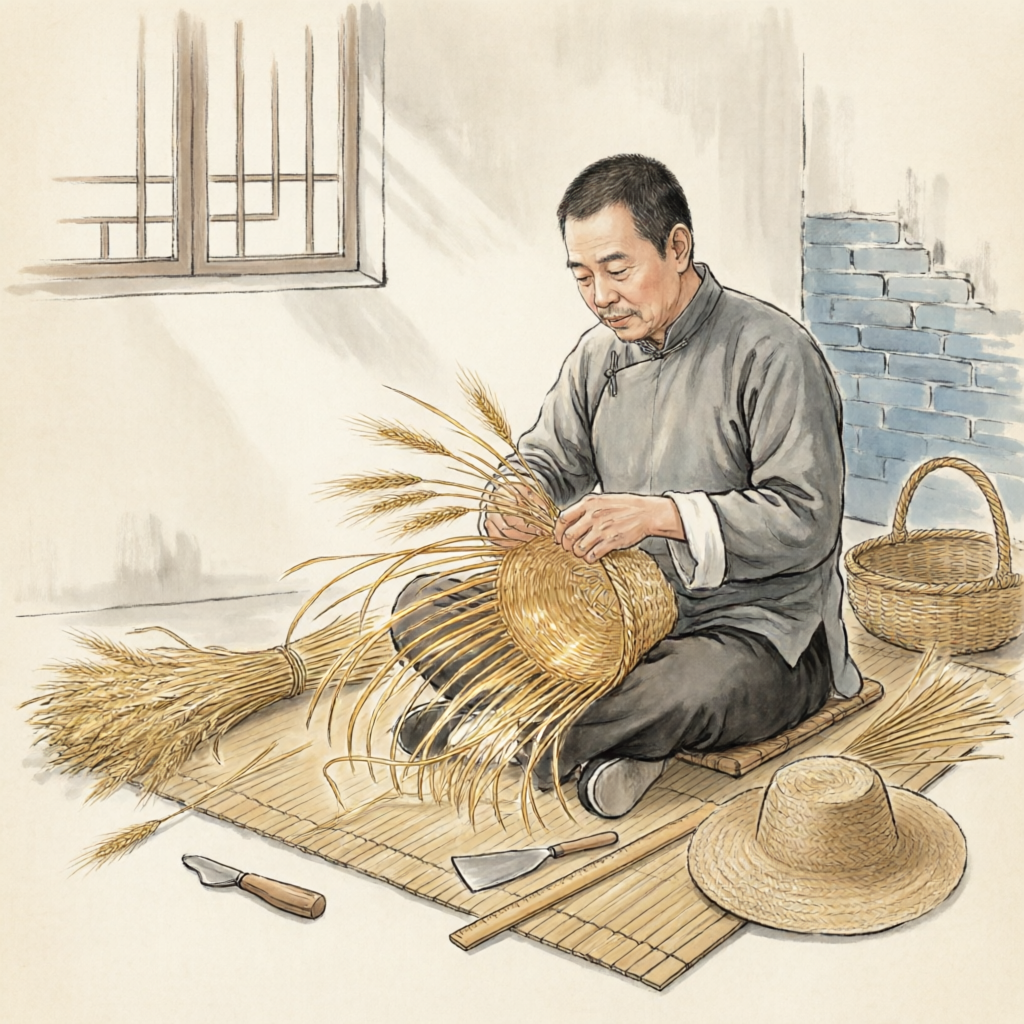
Grass weaving (草编) is a traditional Chinese handicraft that involves weaving various items from flexible grass and other plant fibers. This craft has a long history in China and is recognized as an important part of the country's intangible cultural heritage. The craft is valued for both its practical utility and aesthetic appeal, with techniques and styles varying across different regions of China.
History
The history of grass weaving in China dates back thousands of years. Archaeological evidence shows that the earliest known Chinese grass weaving artifacts were made by the Hemudu people and are approximately 7,000 years old. According to the Book of Rites (礼记), the Zhou Dynasty already had professional grass workers ("草工") who specialized in making items from reeds and rushes.
During the Spring and Autumn and Warring States periods, straw hats made from daylilies and cattails were common. By the Qin and Han dynasties, grass weaving was widely used in daily life, producing items such as straw sandals, mats, fans, curtains, and meditation cushions for monks and believers. The craft continued to develop through the Han Dynasty and into the Tang Dynasty, with cattail leaves being used to make clothing and sails.
Key Information
| Aspect | Details |
|---|---|
| Recognition | National intangible cultural heritage (国家级非物质文化遗产) |
| Approval Year | 2008 |
| Heritage Number | Ⅶ-54 |
| Heritage Type | Traditional art form (传统美术) |
| Declared Regions | Daming County, Hebei Province; Jiading District, Shanghai, etc. |
| Protection Unit | Tuoli County Cultural Center (托里县文化馆) |
Cultural Significance
Grass weaving holds significant cultural value in China as both a practical craft and an art form. Its value extends beyond mere economic utility to include aesthetic appreciation and cultural preservation. The craft represents the ingenuity of rural communities and their ability to utilize local resources effectively.
Different regions have developed distinctive styles and products:
- Shandong's grass weaving is known for its diversity, including items made from wheat straw, corn husks, and cattails
- Zhejiang Province is a major production center for grass weaving, with products exported internationally since the 1840s
- Sichuan's palm weaving (棕编) is noted for its durability and comfort
- Jiading's yellow grass weaving (黄草编) features simple yet beautiful designs for hats, bags, and other items
Modern Status
In contemporary China, grass weaving continues to evolve while maintaining traditional techniques. Recent years have seen efforts to promote this traditional craft both domestically and internationally. Heritage promoters like Cai Qing have helped bring Zhejiang's grass weaving techniques to global attention.
Modern grass weaving artisans have also found success by collaborating with international brands, achieving standardized production and market transformation while preserving traditional craftsmanship. For example, Wengling grass weaving inheritors in Zhejiang Province have partnered with international companies to create marketable products.
In Japan, grass-woven bags have become particularly popular among career women, valued for their lightweight nature and versatility in summer fashion. In Nepal, traditional grass sandals remain part of everyday dress, particularly for rural populations. African grass weaving has also gained attention in the international fashion market, with designers incorporating traditional techniques into modern products.
References
- Zhang, Wei. (2019). Traditional Chinese Handicrafts: History and Techniques. Beijing: Cultural Relics Publishing House.
- Li, Ming. (2020). "Intangible Cultural Heritage Preservation in Contemporary China: The Case of Grass Weaving." Journal of Cultural Heritage Studies, 15(3), 45-62.
- Wang, Hong. (2018). Grass Weaving of China: Regional Variations and Cultural Significance. Shanghai: Shanghai People's Publishing House.